

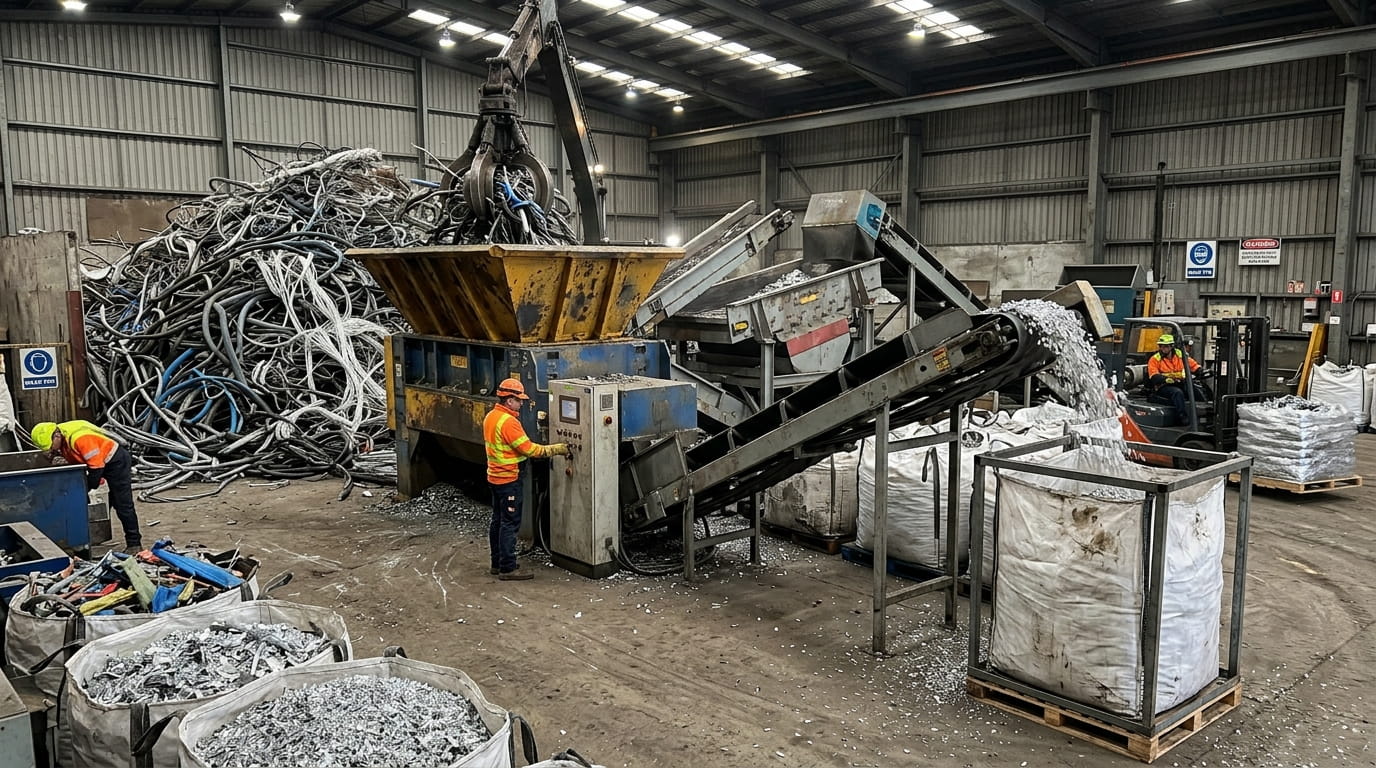
Although aluminium cables may appear easy to recycle, the type of cable will greatly influence the value and method of reprocessing. Types of aluminium cable that can be recycled include un-insulated aluminium cable, building cable, aerial cable and aluminium conductor steel-reinforced (ACSR) cable. Insulation, steel and various fittings will therefore affect the way in which aluminium cable can be recycled and then marketed.
Why Aluminium Cable Is Worth Recycling
The aluminium cable recycling process typically involves inspection, sorting, stripping or granulation, separation and grading. For cable traders and recyclers, identifying the conductor correctly is important before deciding whether to sell it as bare aluminium, insulated cable or ACSR scrap. This guide explains the main types of aluminium cable, how they are processed, what affects their commercial value and why legitimate sourcing and documentation matter.
Aluminium is a choice for electrical wires. It mixes electrical flow with a light weight. You can find it in power lines, utility cables, building wiring and many industrial electrical setups.
When Aluminium cable has served its purpose and stops working, the metal can be taken apart. Sent back into aluminium recycling.
Recycling Aluminium cable offers practical advantages:
- Metal recovery: The Aluminium conductor can be pulled out and turned into a new raw material.
- Material reuse: The recovered Aluminium can find its way back into factories for new products.
- Reduced waste: Recycling cable saves useful metal and other parts from ending up in landfill.
- Specialised trading opportunities: Various cable grades can be sold to buyers who know how to process them.
- Material classification: Pulling Aluminium apart from insulation and steel makes the material easier to sort.
I think cable should not be seen as just one product. A clean Aluminium conductor and an insulated cable that contains Aluminium need preparation steps and may appeal to different buyers.
Common Types of Aluminium Cable Scrap
I see that Aluminium cable scrap is made by infrastructure, construction, utilities, industrial equipment and building projects. Knowing how it is built is the step to recycle it correctly.
Overhead Lines and ACSR
I notice that overhead electrical conductors can contain aluminium as the conductive material. Some are built from aluminium strands wrapped around a steel reinforcing core.
This construction is commonly called ACSR, aluminium conductor steel-reinforced cable.
ACSR mixes aluminium strands with a steel core. The aluminium supplies the conductive path, while the steel core adds mechanical strength.
For recyclers, ACSR is therefore not the same as bare aluminium wire. The aluminium and steel parts must be. Processed based on the buyers needs.
When preparing ACSR scrap, suppliers should identify it accurately of selling it only as clean aluminium wire. The steel present changes the material composition and the processing route.
Insulated Building Wire
Aluminium is also used in some building and electrical wiring jobs.
Insulated aluminium cable usually has a metal conductor wrapped in insulation. The insulation keeps the metal conductor safe. Separates the electricity.
For recycling, the insulated aluminium cable can be run through stripping or granulation machines to pull the aluminium away from the plastic insulation.
The exact build of an aluminium cable can change. Some insulated aluminium cables have layers, shielding, connectors or other parts. So sellers should look at the aluminium cable before deciding which grade it belongs to.
Cable with Steel Core
Some aluminium cables have a steel core, so it is very important to spot this before processing.
ACSR is the famous type, but cable designs can differ. A steel core can show up when you cut or strip the aluminium cable, but you should check the real build instead of just how it looks.
After processing, the aluminium part and the steel part of the aluminium cable can go into different recycling lines.
The main difference for traders is clear: insulated aluminium cable with a steel core is not the same as bare aluminium cable.
How Cable Gets. Taken Apart
The way a cable is recycled comes down to how it is built, how much there is and what you want to end up with.
Stripping by Hand
Some kinds of cable can have their cover taken off by a stripping machine, which leaves the aluminium wire showing.
Stripping tends to work when the cable is built in a fairly even way and the wire inside can be pulled out without much fuss.
For some cable sizes, you can strip by hand or with a machine to help.. Whether it pays off depends on the workers, the gear, the cable design and how long it takes.
Breaking It Down With Machines
Granulation is another way people handle cable.
Than peeling the cover off in one long piece, the cable gets chopped into small bits. Then a sorting system splits the aluminium from the -metal parts.
A usual granulation setup might go like this:
Inspection → Sorting → Cutting → Granulation → Separation → Screening → Aluminium recovery
Each site sets up its gear a little differently.
Granulation can help with batches of cable that are too much trouble to strip one by one. Still, how good the end result is depends on what goes and how well the sorting works.
Impact of Insulation and Steel Cores on Price
The commercial value of aluminium cable depends on several factors rather than aluminium content alone.
The most important consideration is the recoverable aluminium content.
Clean, bare aluminium conductor is already separated from insulation and other materials. Insulated cable contains additional non-metal material that the recycler must process or dispose of.
Similarly, ACSR contains both aluminium and steel. Its commercial classification therefore differs from a conductor consisting entirely of aluminium.
Buyers may consider:
| Factor | Why it matters |
|---|---|
| Aluminium content | Determines the amount of recoverable non-ferrous metal |
| Insulation | Requires stripping or granulation and separation |
| Steel core | Changes composition and requires separate processing |
| Cable type | Determines the appropriate recycling route |
| Cleanliness | Contamination can affect acceptance and processing |
| Attachments | Connectors and fittings may add unwanted materials |
| Quantity | Larger, consistent lots can suit industrial buyers |
| Location | Transportation affects the overall economics |
Because market prices vary by location, grade, metal markets and buyer specifications, sellers should obtain current buyer offers rather than relying on a generic aluminium cable price.
A useful listing should describe the cable accurately and provide photographs. Where composition is uncertain, a buyer may request additional information or inspection before confirming commercial terms.
Safe Sourcing and Documentation
It matters a lot to source cable the way when you trade electrical cable.
Cable theft can be a problem in some places. This is especially true where valuable electrical infrastructure is a target. So scrap businesses should keep buying steps. They should also stay away from material with ownership or a suspicious past.
A responsible sourcing process can include:
Writing down the sellers business or identity details where the law requires it.
Keeping purchase records and invoices.
Writing down where the cable came from and what it is.
Checking who owns infrastructure-related material or who has the right to get rid of it.
Keeping photos and records of each deal.
Following the rules for scrap dealers and waste management.
Saying no to material when you cannot reasonably work out where it came from or who owns it.
For cable that comes from construction, infrastructure replacement or industrial shutdowns, paperwork can help show it was sourced legitimately.
The rules differ from country to country and from one jurisdiction to another. Businesses should check the rules that apply where they are before they buy, move or export cable scrap.
For deals across borders, more customs, waste shipment and export rules may apply. It depends on how the material's classified.
Where to Sell Aluminium Cable
Aluminium cable can be sold through aluminium recyclers, cable processors, scrap metal dealers, industrial recycling companies and specialised B2B buyers.
However, the right buyer depends on the form of the material.
A supplier with clean bare aluminium wire should not necessarily approach the same buyer as a supplier with insulated building cable or ACSR.
Before listing the material, prepare details such as:
- Cable type
- Aluminium or aluminium-alloy conductor information, if known
- Presence of insulation
- Presence of a steel core
- Estimated quantity
- Current physical condition
- Processing status
- Location
- Clear photographs
- Available ownership or source documentation
This makes it easier for buyers to determine whether the material fits their processing requirements.
ScrapTrade provides a global online marketplace where businesses can connect around recyclable materials. Sellers can list aluminium cable scrap and present material details to potential buyers.
FAQs
What's ACSR scrap recycling?
ACSR scrap recycling means removing aluminium and steel from aluminium conductor steel-reinforced cable. By using separation equipment, ACSR scrap recycling can send the aluminium and steel parts to their right recycling streams.
Can aluminium building wire be recycled?
Yes. Aluminium building wire can usually be recycled if it is gathered and processed through a cable-recycling route. Insulated wire may need stripping or granulation so that ACSR scrap recycling can separate the aluminium conductor from its insulation.
Is insulated aluminium cable worth recycling?
Insulated aluminium cable can bring value because it holds recoverable aluminium. The worth of aluminium cable depends on how much aluminium conductor it has, the type of insulation, any contamination, the quantity and the processing needed. Buyers normally look at the material composition of insulated aluminium cable, not just its total weight.
What affects the value of aluminium cable scrap?
The value of aluminium cable scrap is shaped by things. Aluminium content, cable construction, insulation type, steel reinforcement, contamination, attachments, quantity and location all matter. Clean bare aluminium usually needs processing than a mixed or heavily insulated cable. Still, the final commercial terms are set by buyer specifications.
Conclusion
Recycling aluminium cable gives electrical wires a new life as usable metal. It also pulls apart things like insulation and steel so each can go to the place. How the cable gets recycled depends on how it's built. Bare aluminium needs little work. Insulated building wire might need stripping or chopping up.. Acsr needs the aluminium taken apart from the steel core.
For people selling cable, knowing what you have is key. Say clearly what kind of cable it is, what insulation it has, whether there is a steel core, how much there is, what shape it is in and what papers you have. Do this before you talk to buyers. It cuts down on guesswork. Helps recyclers figure out the best way to handle it.