

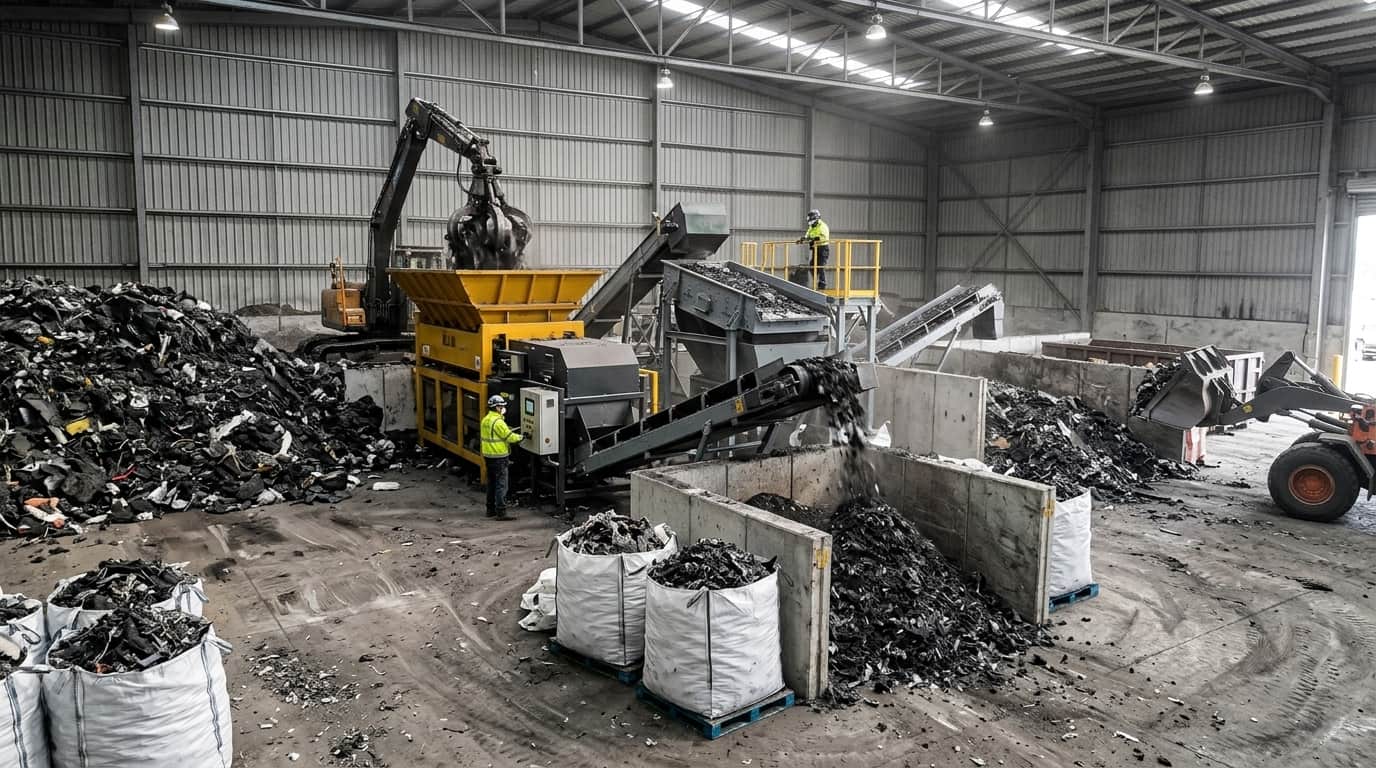
When an end-of-life vehicle enters an automotive shredder, the process does not end when the main metal fraction is separated. A remaining stream known as automotive shredder residue (ASR), sometimes called auto fluff, can contain plastics, foam, textiles, glass, dirt and other non-metallic materials, along with residual metal particles. What happens to this material depends on the shredder configuration, available separation technology, market conditions and local regulations.
For shredder operators, recyclers and scrap buyers, understanding ASR recycling is important because the material represents both a processing challenge and an opportunity to recover additional resources. This guide explains what automotive shredder residue is, what remains after shredding, how residual metals can be separated, and the environmental and regulatory considerations that influence its handling.
What Is Automotive Shredder Residue?
Automotive shredder residue is the material left after vehicles or other complex products are shredded and the primary recyclable metal fractions have been separated.
In the automotive recycling chain, a vehicle may first undergo depollution and dismantling before the remaining shell and components are processed through a shredder. Magnetic, eddy-current and other separation systems can recover significant metal streams, but the material that remains is not a single uniform substance.
ASR can contain a mixture of:
- Plastics
- Foam
- Textiles and fibres
- Glass
- Rubber
- Dirt and fines
- Residual ferrous and non-ferrous metal particles
- Other materials from the original vehicle
The exact composition varies according to the vehicles being processed, dismantling practices, shredder configuration and separation systems.
This variation is one reason automotive shredder residue recycling requires more specialized processing than conventional scrap metal sorting.
What Remains After Shredding
After the primary shredding and metal recovery stages, the remaining residue can contain several different material groups.
Plastics, Foam and Textiles
Modern vehicles contain many non-metallic components, including plastics used in dashboards, trim, bumpers, housings and other vehicle parts.
Foam can come from seating and interior components, while textiles and fibres may be present in carpets, upholstery and other interior materials.
These materials can become part of the residual stream after shredding.
Their presence makes ASR more difficult to process because the material is heterogeneous rather than a clean, single commodity.
The recycling or recovery route for these materials depends on their composition, contamination level, available technology and local market demand.
Residual Metals
Even after the primary metal separation stage, ASR can contain smaller metal particles.
These may include ferrous and non-ferrous metals that were not captured during earlier separation stages.
Recovering these particles can improve the overall material recovery process, but the economics depend on factors such as particle size, concentration, contamination and processing costs.
How Metals Are Recovered from ASR
ASR processing can involve several stages rather than one single machine.
The exact configuration varies between facilities, but the general objective is to separate useful material fractions from the heterogeneous residue.
Further Size Reduction
Depending on the facility, ASR may undergo additional processing to make the material more suitable for downstream separation.
Particle size can influence how effectively separation equipment works.
Magnetic Separation
Magnetic separation can target ferrous metal particles.
Because iron-containing material responds to magnetic fields, magnetic equipment can remove suitable ferrous fractions from a mixed stream.
This technology is already common throughout scrap processing and can also form part of downstream ASR treatment.
Eddy-Current Separation
Eddy-current systems can be used to separate certain non-ferrous metals from non-metallic material.
The technology works differently from magnetic separation and is particularly relevant when recovering non-ferrous metal particles from mixed material streams.
Sensor and Advanced Sorting Technologies
Some facilities may use optical, sensor-based or other advanced sorting technologies to identify specific materials.
The technology selected depends on the composition of the incoming ASR and the intended recovered products.
Not every shredder operation requires the same processing line. A system designed for one feedstock may not produce the same results when handling another.
For a broader discussion of scrap separation, see mixed scrap separation technology.
Secondary Processing
After initial separation, recovered fractions may require additional cleaning, sizing or processing before they are suitable for downstream recycling or sale.
The goal is to create material stre
What ASR Means for Scrap Quality and Pricing
ASR should not automatically be treated like conventional clean scrap metal.
For scrap buyers and shredder operators, the commercial value of an ASR-related material stream depends on its composition, recoverable metal content, contamination, processing requirements, transportation costs and current market demand.
Why Composition Matters
A residue stream containing recoverable metals may have a different commercial profile from a stream dominated by plastics, foam, glass and other non-metallic material.
This is why sellers should provide buyers with accurate information about the material rather than assuming that all ASR has the same specification.
Processing Costs Matter
Recovering additional metals from ASR requires equipment, labour, energy, maintenance and downstream handling.
A material may contain recoverable metal but still require substantial processing before that metal becomes a marketable product.
Buyer Specifications Matter
Different buyers may accept different material specifications.
When listing an ASR-related material stream, provide details such as:
- Material source
- Approximate quantity
- Processing stage
- Available composition information
- Photos where appropriate
- Packaging or loading method
- Location
- Required delivery or collection arrangements
FAQs
What is automotive shredder residue?
Automotive shredder residue, or ASR, is the mixed material remaining after vehicles or similar complex products are shredded and primary recyclable metal fractions are separated. It can contain plastics, foam, textiles, glass, rubber, fines and residual metal particles.
Can metal be recovered from ASR?
Yes. Residual ferrous and non-ferrous metal particles can potentially be recovered using technologies such as magnetic separation, eddy-current separation and other sorting systems. The practicality and economics depend on the actual composition and characteristics of the ASR.
Is ASR considered hazardous waste?
Not automatically in every jurisdiction. The classification of ASR depends on its composition and the applicable local regulations. Operators should characterize the material and verify current requirements before deciding how it must be stored, transported, treated or disposed of.
Why is ASR difficult to recycle?
ASR is a heterogeneous mixture containing different material types with different physical and chemical properties. Separating valuable metals from plastics, foam, textiles, glass, dirt and other residues requires appropriate processing technology and can involve significant operating costs.
Conclusion
Automotive shredder residue recycling is an important downstream stage in the vehicle recycling chain. After primary shredding and metal separation, the remaining ASR can contain a complex mixture of plastics, foam, textiles, glass, rubber, fines and residual metals.
Further processing can recover additional metal fractions, but the appropriate technology depends on the characteristics of the residue. Magnetic separation, eddy-current systems and other sorting technologies can contribute to downstream recovery, while environmental requirements determine how the remaining material can be handled.
For shredder operators and scrap buyers, the key is to understand the material before trading it. Accurate characterization, appropriate separation, documented specifications and compliance with applicable regulations make ASR management more practical and commercially transparent.