

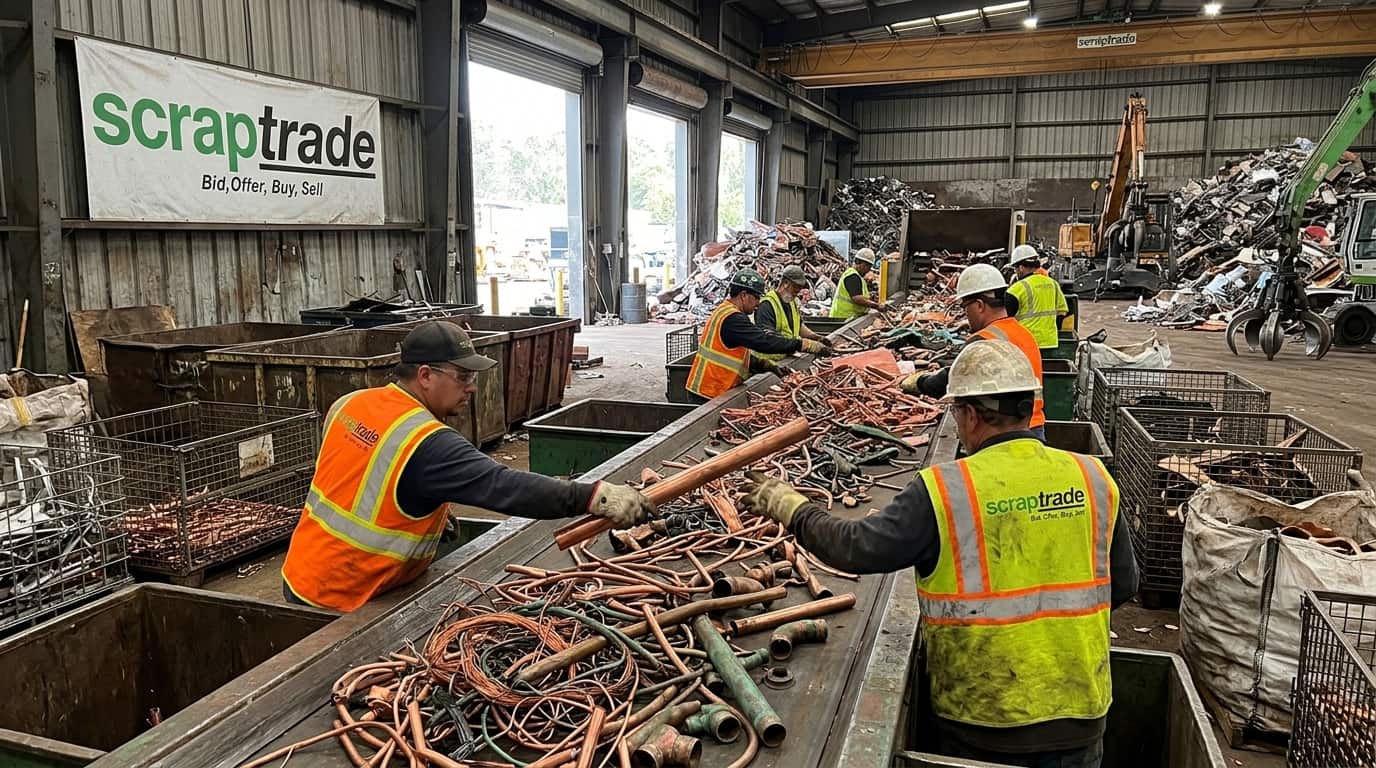
Copper scrap can look similar at first glance, but small differences in cleanliness, coatings, attachments and contamination can determine how a recycler classifies a load. A pile containing bare copper wire, tubing, soldered pieces, insulated cable and mixed copper scrap should not automatically be treated as one grade.
For recyclers, dealers, electricians, demolition contractors and scrap sellers, accurate copper scrap sorting helps create cleaner material streams and makes buyer specifications easier to meet. This guide explains the commonly referenced Bare Bright, No. 1, No. 2 and mixed/light copper categories, how to sort copper step by step, what can downgrade a load, and how to prepare sorted material for sale.
Because grade terminology is not identical in every country or contract, always confirm the buyer's specification before final classification.
Why Sorting Copper Scrap Pays Off
Sorting copper is more than separating metal by appearance. It is about creating a consistent material stream that a buyer can understand and evaluate.
Copper scrap can come from electrical installations, construction projects, demolition, plumbing, manufacturing, machinery and many other sources. Those streams can contain different levels of cleanliness and different forms of copper.
For example, a recycler may receive:
- Bare copper wire
- Copper tubing
- Insulated copper cable
- Soldered copper
- Painted or coated copper
- Mixed copper pieces
- Copper attached to other metals
- Brass and bronze components
If these materials are mixed together, the resulting load may be harder to classify.
Recognized industry specifications provide a framework for buying and selling scrap, but the actual transaction remains subject to the agreed specification between buyer and seller. ISRI, for example, describes its specifications as guidelines for scrap transactions rather than a universal pricing system.
Good sorting therefore starts with one principle: do not classify a copper load only by color.
Common Copper Scrap Grades
The terms Bare Bright, No. 1 and No. 2 are widely used in parts of the scrap industry, particularly in North American trading. Other markets may use different terminology, local specifications or buyer-specific categories.
The best practice is to compare your material with the specification requested by the buyer.
Bare Bright and Clean Wire
Bare Bright copper is commonly associated with clean, uncoated and unalloyed copper wire.
Under the ISRI specification, No. 1 copper wire, commonly known as Bare Bright copper wire, consists of No. 1 bare, uncoated, unalloyed copper wire. Wire gauge is subject to agreement between buyer and seller.
In practical sorting, look for wire that is:
- Bare rather than insulated
- Free from coatings
- Unalloyed
- Clean and uncontaminated
- Free from attached non-copper materials
Do not assume that every shiny copper-colored wire qualifies as Bare Bright. Coatings, solder, alloy content, insulation or other contamination can change how the material is classified.
The exact buyer specification should always take priority.
No. 1 and No. 2 Copper
No. 1 and No. 2 copper are broader categories that can include different forms of copper scrap.
Recognized specifications distinguish these categories based on factors such as cleanliness, material type and contamination.
For example, the ISRI specification for No. 1 heavy copper solids and tubing includes clean, unalloyed, uncoated copper clippings, punchings, bus bars, commutator segments and clean copper tubing. Its No. 2 copper solids and tubing specification allows a broader range of miscellaneous unalloyed copper scrap but places restrictions on excessive solder, tin, lead, iron and non-metallic contamination, among other materials.
This distinction matters because two loads can both contain "copper" while requiring different downstream processing.
A recycler should therefore inspect:
- Whether the copper is coated or uncoated
- Whether solder or other metals are attached
- Whether the material contains insulation
- Whether the copper is mixed with non-metallic contamination
- Whether the material matches the buyer's agreed specification
Mixed Light Copper
"Light copper" or similar terminology can be used in some markets for lower-density or mixed copper material, but the exact definition should not be assumed to be universal.
Historical copper industry references have used separate terminology for light copper scrap, while modern transactions may follow different regional or buyer-specific specifications.
This is why a recycler should avoid assigning a grade solely from a general online definition.
Instead, document the material's actual condition and ask the buyer which specification applies.
If the load contains thin copper pieces, mixed tubing, coated material or other copper scrap that does not clearly fit a cleaner category, describe the material honestly rather than forcing it into a higher grade.
How to Sort Copper Scrap Step by Step
Effective copper sorting begins before the material reaches the final storage pile.
Step 1: Identify the Source
Separate material according to where it came from.
Electrical wire, plumbing tube, demolition scrap and manufacturing offcuts may have very different characteristics.
Knowing the source helps the recycler anticipate insulation, solder, coatings, fittings or other attachments.
Step 2: Remove Insulation and Non-Copper Attachments
Where practical and safe, separate insulated wire from bare copper.
Remove easily detachable plastic, rubber, steel fittings and other non-copper components.
Do not use burning as a shortcut for removing insulation. Apart from creating environmental and safety concerns, burned wire may not meet the specifications expected for cleaner copper categories. The ISRI No. 2 copper wire specification specifically excludes copper wire from burning and brittle burnt wire.
Step 3: Separate Copper From Brass and Bronze
Copper alloys should not automatically be placed into a copper-only pile.
Brass and bronze contain copper but have different compositions and commercial specifications.
Keep identifiable brass and bronze separate unless the buyer specifically requests a mixed material stream.
Step 4: Inspect for Solder, Coatings and Joints
Look carefully at:
- Pipe connections
- Soldered joints
- Tinned wire
- Painted surfaces
- Plated material
- Attached steel
- Dirt and other contamination
These characteristics can affect the appropriate grade.
Step 5: Create Consistent Stockpiles
Once material has been inspected, create separate piles based on the buyer's specifications.
A simple system might separate:
Clean bare wire → clean copper solids/tubing → more contaminated copper → insulated copper → copper alloys
The exact categories should be adapted to the buyer's requirements.
Step 6: Document Each Load
Record the source, approximate weight, material description and photographs.
For commercial recyclers, this creates a clearer trail between incoming material and outgoing sales.
Tools That Help: Magnets, Scales, Testers
Simple tools can improve sorting accuracy.
Magnet
A magnet can help identify ferrous attachments or steel contamination.
Copper itself is non-ferrous, so a magnetic response can be a useful initial indication that another metal is present.
A magnet is not, however, a complete metal-identification system.
Scale
An accurate scale helps record the weight of each material stream.
Separate weighing is useful when a recycler has multiple grades or categories in the same incoming load.
Metal Testers
For uncertain materials, dedicated metal-identification equipment can provide more information than visual inspection alone.
Some scrap operations may use conductivity testing, alloy analyzers or other identification equipment depending on their scale and requirements.
Testing is particularly useful when appearance alone cannot distinguish between copper, copper alloys or coated materials.
Visual Inspection
Technology does not replace good sorting practices.
A close inspection of wire ends, tubing, fittings, coatings and attachments remains an important part of preparing copper scrap.
Selling Sorted Copper
Once copper has been sorted, the next step is finding a buyer whose specification matches the material.
Do not start with the highest possible grade name and then try to make the material fit it. Start with the actual material and identify the appropriate specification.
When creating a copper scrap listing, provide:
- Material description
- Grade or specification, if confirmed
- Approximate quantity
- Photos
- Source of the material
- Presence of coatings or attachments
- Location
- Available delivery or collection information
FAQs
What is Bare Bright copper?
Bare Bright is commonly used for clean, bare, uncoated and unalloyed copper wire. The exact specification can vary by market and contract. Under the ISRI specification, No. 1 copper wire is commonly known as Bare Bright copper wire, with wire gauge subject to agreement between buyer and seller.
What is the difference between No. 1 and No. 2 copper?
The distinction generally relates to cleanliness, material characteristics and allowable contamination. Recognized specifications describe No. 1 copper as cleaner material, while No. 2 categories allow a broader range of copper scrap with specified limitations. Always confirm the buyer's regional specification before assigning a grade.
Can insulated copper wire be sold as Bare Bright?
No. Bare Bright refers to bare copper wire rather than insulated cable. Insulation should be separated where practical, and the resulting copper should only be classified according to the specification it actually meets.
Does burning copper
wire improve its grade?
No. Burning insulation is not a suitable way to create a cleaner copper grade. It can create safety and environmental problems, and burnt or brittle wire may be excluded from recognized scrap specifications. Mechanical processing and proper separation are preferred.
Conclusion
Copper scrap sorting is one of the most important steps for recyclers who want to prepare consistent material for the market. Bare Bright, No. 1, No. 2 and mixed or light copper are not simply visual categories; their definitions depend on material characteristics and the specification being used.
Start with the actual material. Separate bare wire, copper solids, tubing, insulated cable and copper alloys. Remove easily detachable contamination, avoid burning wire, use magnets and scales for basic checks, and use specialized testing when material identification is uncertain.
Most importantly, remember that grade names can vary between markets. Confirm the buyer's specification before assigning a final grade.
Once the material is properly sorted and documented, list your copper scrap on ScrapTrade and present buyers with clear information about the material, quantity and condition.