

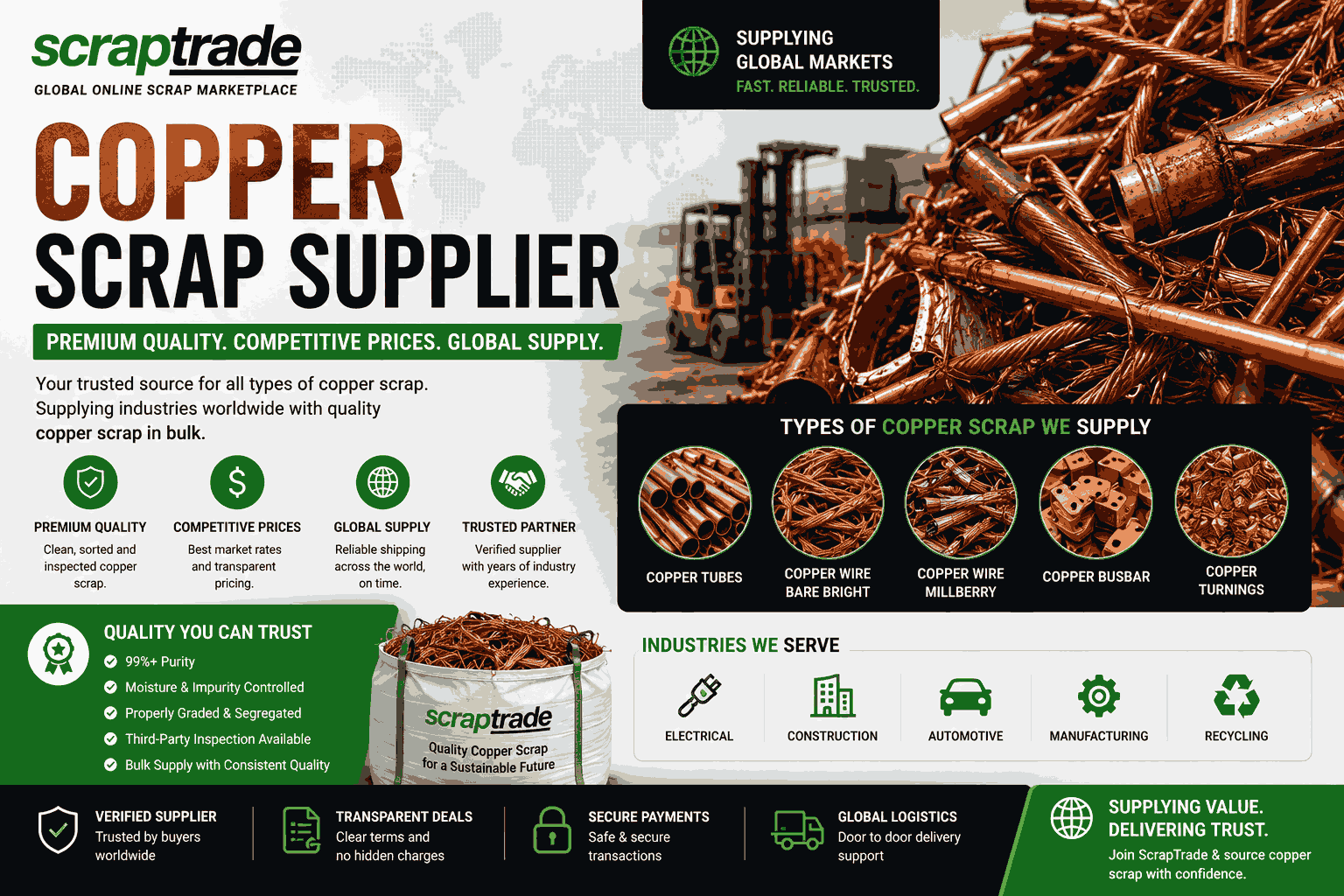
Copper scrap is an important recyclable material used across electrical manufacturing, construction, electronics, plumbing, and industrial production. For copper scrap suppliers, finding reliable buyers and providing consistent material quality can create opportunities to build long-term trading relationships.
However, selling copper scrap involves more than finding a buyer. Suppliers need to identify the material correctly, understand grade requirements, provide accurate quantity information, compare offers, and account for transport and handling costs.
Online marketplaces also give suppliers another way to reach potential buyers beyond their existing local networks. Through ScrapTrade, businesses can explore a global online marketplace for scrap trading opportunities and connect with potential trading partners.
What Does a Copper Scrap Supplier Do?
A copper scrap supplier collects, purchases, processes, or aggregates copper-bearing materials and sells them to suitable buyers. Depending on the business model, a supplier may handle small quantities from workshops or manage bulk loads from industrial facilities.
Common sources include electrical contractors, cable manufacturers, plumbing businesses, demolition companies, manufacturing plants, and recycling operations.
Copper scrap can include clean copper wire, insulated cables, copper pipes, plumbing offcuts, electrical components, and copper-bearing industrial materials. Each type may require a different assessment and preparation process.
Professional suppliers help buyers understand what is available by providing accurate material descriptions, realistic quantities, photographs, and relevant grade information.
Common Types of Copper Scrap
Understanding the material category is essential because buyers may evaluate different copper scrap types according to composition, cleanliness, form, and processing requirements.
Bare bright copper
Bare bright copper generally refers to clean, uncoated, unalloyed copper wire that meets the applicable grade specification. Buyers may require specific dimensions and condition standards, so suppliers should confirm the buyer's definition before classifying a load.
No. 1 copper scrap
No. 1 copper commonly includes clean copper tubing, busbars, and other suitable copper material that meets the relevant grade requirements. Exact acceptance criteria can vary by buyer and market.
No. 2 copper scrap
No. 2 copper may include copper material with greater oxidation, solder, coatings, or other characteristics permitted under the buyer's specification. Not every material with a similar appearance will qualify, so inspection and accurate description remain important.
Insulated copper wire
Insulated wire contains copper conductors covered by insulation. Buyers assess it differently from bare copper because the load includes non-copper material and may require additional processing.
Copper pipes and plumbing scrap
Copper pipes and plumbing offcuts may come from building renovations, construction, and maintenance work. Attachments, solder, coatings, and mixed fittings can affect how buyers classify the material.
Suppliers should avoid assuming that all copper-bearing scrap belongs to the same grade. Accurate identification helps reduce disagreements and supports more informed offers.
What Affects Copper Scrap Value?
Copper scrap value depends on several factors, and the highest quoted price does not always produce the best transaction outcome.
Material grade and cleanliness: Clean, correctly sorted copper may meet more specific buyer requirements than mixed or contaminated material.
Copper content and form: Buyers assess bare wire, insulated cable, pipes, and mixed copper-bearing components differently. Processing requirements can affect the offer.
Quantity: Available volume may influence which buyers can handle the load and whether bulk trading is practical.
Market conditions: Reference copper prices and buyer demand can change over time. A reference price is not a guaranteed purchase price for a particular scrap load.
Location and logistics: Transport distance, loading arrangements, packaging, and delivery costs affect the seller's net return.
Inspection and weighing: The final accepted grade and weight may differ from an initial estimate if the material is not fully inspected or weighed.
Before accepting a deal, suppliers should compare the expected revenue with purchase, collection, sorting, handling, and transportation costs.
How to Find Reliable Copper Scrap Buyers
Copper suppliers can build a buyer network through direct business relationships, referrals, recycling companies, industrial processors, and online marketplaces.
Start by identifying buyers that accept the specific copper grade and quantity you have available. A buyer specialising in clean copper wire may not accept mixed insulated cable or copper-bearing electronic components under the same terms.
When contacting potential buyers, prepare the material description, estimated quantity, photographs, location, and any available inspection or testing information. Ask about grade specifications, minimum quantities, payment arrangements, collection responsibilities, and weighing procedures.
For larger transactions, verify the counterparty and confirm the commercial terms in writing before dispatching the material.
Comparing several suitable buyers can help suppliers evaluate the complete deal, including transport, payment timing, inspection conditions, and potential quality deductions.
Sell Copper Scrap Online Through ScrapTrade
Finding buyers through an existing network can work well, but it may limit access to new customers. An online marketplace provides another channel for presenting available copper scrap to potential trading partners.
ScrapTrade is a global online scrap marketplace where buyers and sellers can explore listings and trading opportunities.
Copper scrap suppliers can use a marketplace listing to describe their available material and help potential buyers assess whether it matches their requirements.
To prepare a useful listing:
- Identify the material: Specify the copper scrap type and grade where known.
- Describe the quantity: State the available weight and whether it is estimated or verified.
- Upload clear photographs: Show the actual material, packaging, and visible attachments or contamination.
- Provide location details: Help buyers assess collection, transport, or delivery arrangements.
- Clarify commercial terms: Discuss pricing, inspection, weighing, payment, and logistics with interested counterparties.
A listing does not guarantee a sale or a particular price. Suppliers should continue to verify buyers, assess offers, and agree on transaction conditions before proceeding.
How Copper Suppliers Can Build Long-Term Buyer Relationships
Consistent material quality and reliable communication can help copper suppliers develop repeat business.
Keep different grades separated where practical and maintain records of material sources, estimated and accepted weights, photographs, inspection results, and previous transactions.
Provide realistic information about availability. If a load is mixed, oxidised, insulated, or contains attachments, describe it accurately rather than promising a grade that has not been confirmed.
Suppliers should also agree on how the final weight will be established, who arranges transport, when payment is due, and how discrepancies will be handled.
Review buyer feedback after each transaction. If a buyer regularly requests a particular grade or packaging method, use that information to improve future preparation where commercially practical.
Common Mistakes Copper Scrap Suppliers Should Avoid
Misclassifying copper scrap can lead to rejected loads or unexpected price adjustments. Suppliers should confirm grade specifications rather than relying only on appearance.
Mixing different copper grades or including unwanted attachments can also complicate assessment. Sorting may help, but only when the expected benefit justifies the additional labour and handling cost.
Another mistake is comparing offers without considering logistics. A higher price may not produce a better return if transport expenses or payment conditions are less favourable.
Finally, suppliers should avoid dispatching valuable material without clear agreements and appropriate counterparty checks. Accurate documentation and agreed inspection procedures help protect both sides of a transaction.
FAQs
Who buys copper scrap in bulk?
Potential buyers include metal recyclers, copper processors, manufacturers, scrap dealers, and other industrial businesses. Suitable buyers depend on the grade, quantity, location, and acceptance requirements.
How do I sell copper scrap online?
Identify the material, estimate the quantity, prepare clear photographs, and create a listing on a suitable marketplace such as ScrapTrade. Review enquiries, verify potential buyers, compare offers, and confirm payment and logistics before completing the transaction.
Which copper scrap grade is best to sell?
There is no single best grade for every supplier. The commercial outcome depends on the material's actual condition, buyer specifications, quantity, processing requirements, and transport costs.
Can I sell insulated copper wire as copper scrap?
Yes, suitable insulated copper wire can be traded as a copper-bearing scrap category. It should be described accurately because insulation affects the material's composition and buyer assessment.
Conclusion
A successful copper scrap supplier needs accurate material identification, reliable sourcing, clear documentation, and access to suitable buyers. Understanding grade requirements and calculating the full cost of a transaction can help suppliers make better commercial decisions.
Building direct buyer relationships remains valuable, while online marketplaces provide an additional way to discover trading opportunities beyond existing contacts.
For suppliers looking to expand their reach, ScrapTrade offers a global online marketplace to list scrap materials and connect with potential buyers.