

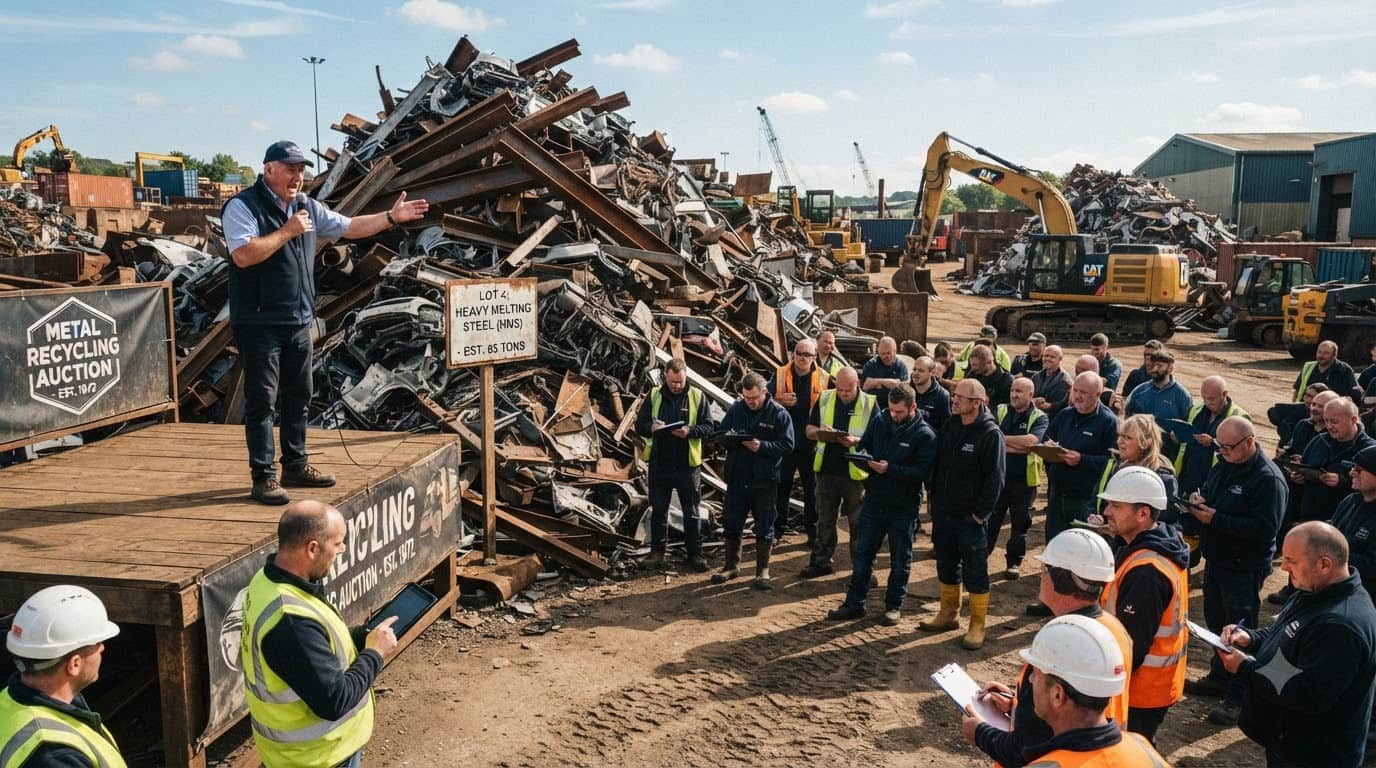
Scrap metal auctions give buyers an online way to compete for available scrap lots while sellers can present material to multiple potential buyers. Instead of relying entirely on individual negotiations, an online auction or bidding marketplace can create a structured process for listing material, reviewing offers, and agreeing on transaction terms.
The exact auction model can vary. A traditional auction usually involves buyers competing by increasing their bids, while a scrap marketplace may use reverse bidding, where buyers compete by submitting offers to a seller for a listed lot.
What Is a Scrap Metal Auction?
A scrap metal auction is a structured buying and selling process in which a seller makes a quantity of scrap available to potential buyers and buyers submit bids or offers according to defined conditions.
A lot may contain copper, aluminium, brass, steel, stainless steel, HMS, or other recyclable materials. The seller can provide information about the material, quantity, location, condition, and other specifications so buyers can evaluate the opportunity.
Traditional Auction
In a traditional auction, a seller offers a lot and buyers compete by increasing their bids.
For example, if a scrap lot starts at a particular price, one buyer may submit a higher bid, followed by another buyer offering more. The auction can continue until the bidding period ends or another defined closing condition is reached.
The seller may then accept the highest qualifying bid according to the auction rules.
Online Scrap Bidding
Online bidding moves this process into a digital environment.
Instead of physically attending an auction, buyers can review available lots, examine listing information, submit bids or offers, and monitor the status of their participation through an online platform.
This can make scrap trading more accessible to buyers and sellers operating in different locations.
Reverse Bidding vs Traditional Auctions
One of the most important concepts to understand is the difference between a traditional auction and reverse bidding.
How Traditional Auctions Work
In a traditional auction, buyers compete against one another by increasing the amount they are willing to pay.
The bidding direction is therefore generally upward from the starting price.
For example:
Seller → Scrap lot → Buyers → Increasing bids
The buyer offering the highest qualifying amount may become the selected buyer, subject to the auction rules.
How to List a Lot for Auction
A successful online scrap auction or bidding process starts with a clear and accurate listing.
Identify the Material
Specify exactly what is being sold.
Instead of using a broad description such as "metal scrap," provide information such as copper scrap, aluminium extrusion, brass scrap, stainless steel, HMS, or another relevant category.
If the grade or specification is known, include it. If it has not been verified, sellers should avoid making unsupported grade claims.
State the Quantity
Provide the estimated quantity and measurement unit.
For example, a seller may have a single available load or recurring monthly supply. The buyer needs to understand the scale of the opportunity before calculating an offer.
Describe the Condition
Explain whether the material is clean, mixed, contaminated, prepared, baled, loose, dismantled, or otherwise processed.
For some scrap categories, attachments and contamination can significantly affect the buyer's evaluation.
Add Photos
Actual photographs can help buyers assess the material before bidding.
Images should show the real scrap lot rather than generic material photographs. Where practical, include overall images and close-ups showing grade characteristics, contamination, attachments, and preparation.
Include Location and Logistics
The material location is important because transportation can significantly affect the economics of a scrap transaction.
The listing should provide the relevant location and explain known pickup or delivery arrangements.
Define the Commercial Terms
The listing should provide enough information for potential buyers to understand what they are bidding or offering on.
Relevant information can include the pricing basis, quantity, inspection arrangements, pickup conditions, payment terms, and any other requirements.
Clear terms can reduce confusion once bidding begins.
How to Place a Winning Bid
For buyers, successful participation is not simply about submitting the highest number as quickly as possible.
The buyer first needs to determine what the scrap is actually worth based on its specifications and the total cost of acquiring and processing it.
Review the Material Carefully
Read the entire listing before submitting a bid.
Check the material type, grade, quantity, location, photos, condition, contamination, and any available documentation.
If important information is missing, clarify it before making an offer where the marketplace process allows.
Calculate the Total Cost
The purchase price is only one part of the transaction.
A buyer may also need to account for:
- Transportation and loading
- Processing and sorting
- Inspection
- Labour
- Storage
- Applicable transaction costs
- Other logistics expenses
A commercially attractive bid should take these factors into account.
Understand the Bidding Rules
Before participating, check how the particular auction or bidding process works.
Important details may include the opening price, minimum bid or offer requirements, closing time, bid changes, inspection conditions, and what happens after the bidding period ends.
Not every online scrap marketplace uses the same bidding mechanism.
Submit a Realistic Offer
A buyer should base the offer on the actual material and expected economics rather than simply trying to outbid another participant.
For reverse bidding, the objective is to submit a competitive purchase offer that still makes commercial sense for the buyer.
Monitor the Listing
Where the platform provides live bidding or offer updates, buyers can monitor the status of their participation and respond according to the marketplace rules.
However, buyers should avoid making decisions based solely on another participant's offer. The material specification and total transaction economics should remain the foundation of the decision.
Tips for First-Time Bidders
First-time buyers can make the online bidding process easier by preparing before submitting an offer.
Start by understanding the material specification. Scrap categories can contain significant variations, so a general material name may not provide enough information to calculate a suitable offer.
Check the quantity and location carefully. Freight can have a substantial impact on the economics of bulky or lower-value scrap.
Review photographs and supporting information rather than relying only on the listing title. If inspection is available, understand how and when it can take place.
It is also important to understand the difference between market reference prices and actual scrap transaction prices. A published reference can provide context, but the final commercial value depends on the physical material and agreed terms.
Finally, understand the payment and logistics arrangements before submitting an offer. Knowing who handles loading, transportation, inspection, and other transaction responsibilities can prevent unexpected costs.
FAQs
What is a scrap metal auction?
A scrap metal auction is a structured process where sellers offer scrap lots to potential buyers who submit bids or offers according to defined marketplace or auction rules.
How does reverse bidding work in scrap trading?
In reverse bidding, a seller lists scrap for sale and potential buyers submit competing purchase offers. Rather than buyers increasing their bids to purchase an item, buyers compete to provide an acceptable offer to the seller.
Is reverse bidding the same as a traditional auction?
No. In a traditional auction, buyers generally compete by increasing the amount they are willing to pay. In reverse bidding, buyers submit purchase offers to a seller and may compete by improving those offers.
What information should a seller include in a scrap auction listing?
A seller should provide the material type, grade where known, quantity, condition, location, photographs, contamination or attachments, preparation, and relevant commercial terms.
Conclusion
Scrap metal auctions provide a structured way for buyers and sellers to trade recyclable materials online. However, not every digital bidding process works like a traditional auction.
Traditional auctions generally involve buyers increasing their bids, while reverse bidding allows buyers to submit competing purchase offers for material listed by a seller. Understanding this distinction helps participants use the correct strategy when evaluating scrap opportunities.
For sellers, accurate descriptions, quantities, photographs, condition information, location, and clear commercial terms can make a listing easier for buyers to evaluate.
For buyers, reviewing the material carefully, calculating total transaction costs, understanding bidding rules, and submitting a realistic offer are essential parts of the process.