

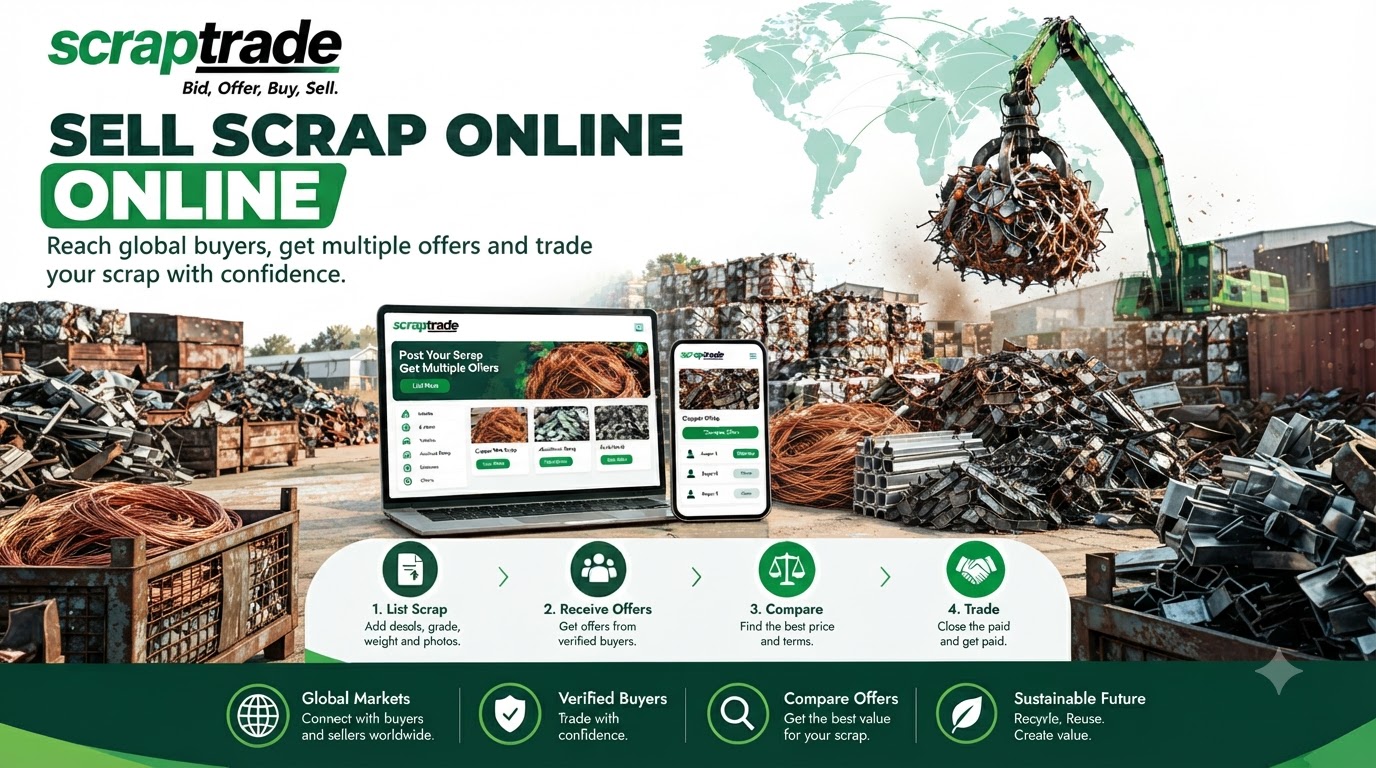
Selling scrap online gives businesses a way to present available materials to a wider pool of potential buyers instead of relying only on local contacts. Whether you have copper, aluminium, steel, brass, e-waste, machinery, vehicles, plastics, paper, or another recyclable material, an online marketplace can make it easier to showcase the material and start conversations with interested buyers.
The process is more than simply uploading a photograph and waiting for an offer. A successful scrap sale starts with accurate material information, realistic pricing, a clear listing, and good communication with potential buyers.
This guide explains how to sell scrap online, from preparing the material and creating a listing to handling offers, confirming payment, and arranging delivery.
Why Sell Scrap Online Instead of Locally
Local scrap buyers can be convenient, particularly for small quantities or materials that need immediate collection. However, selling only through a local network can limit the number of buyers who see your material.
Online scrap marketplaces provide another route. A seller can create a digital listing and potentially reach buyers outside their immediate geographic area.
This can be useful for businesses with larger quantities, recurring scrap generation, specialized materials, or material that may attract buyers in other regions.
Online selling can also make the initial discovery process more efficient. Instead of contacting potential buyers individually, sellers can present material information in one listing and allow interested buyers to respond.
However, online selling does not guarantee a higher price. The final value still depends on material grade, quality, quantity, location, market conditions, logistics, buyer requirements, and negotiated terms.
Step 1: Prepare and Sort Your Scrap
Before creating a listing, identify exactly what you are selling.
Mixed or poorly described scrap can make it difficult for buyers to determine its value. Where practical, separate materials by type and grade before listing them.
For example, copper, aluminium, brass, steel, stainless steel, and other metals should not simply be described as generic “scrap metal” when their specific type can be identified.
Pay attention to contamination and unwanted attachments. Buyers may price material differently depending on purity, condition, composition, and processing requirements.
You should also establish the approximate quantity available. Depending on the material, this may be measured in kilograms, tonnes, units, or another suitable measurement.
Before listing, gather useful information such as:
- Material type and grade
- Approximate quantity
- Location
- Condition and quality
- Photos or videos where useful
- Availability or collection timeframe
Accurate information at this stage can reduce unnecessary questions later and help attract buyers who are actually interested in the material.
Step 2: Create a Listing That Sells
Once your scrap is prepared, create a listing that gives buyers a clear understanding of what is available.
The title should identify the material rather than using a vague description. For example, “Copper Wire Scrap” is more useful than simply “Scrap for Sale.”
The description should explain the material, quantity, grade, condition, location, and any other details that could affect the buyer's decision.
Good photographs can also improve a listing. Use clear images that show the actual material rather than generic stock images. If the material has different sections, grades, or visible quality characteristics, photographs can help buyers understand what they are considering.
For larger B2B transactions, sellers may also need to provide additional information during the buyer's verification or inspection process.
The goal is simple: give a serious buyer enough information to determine whether the listing matches their requirements.
On a digital marketplace such as ScrapTrade, sellers can create online listings and make their available materials visible to potential buyers in the marketplace.
Step 3: Set a Fair, Competitive Price
Pricing is one of the most important parts of selling scrap online.
A seller should understand the current market reference for the material before setting an asking price. Scrap prices can change based on market conditions, material grade, quality, location, quantity, demand, and other commercial factors.
A reference price is useful for establishing a starting point, but it should not automatically be treated as the final transaction price.
For example, two lots that appear to contain the same metal may receive different offers because one has better purity, a different quantity, lower contamination, or a more convenient delivery location.
A practical pricing approach is to consider:
Market reference + material quality + quantity + location + logistics + buyer demand = realistic transaction expectation
If the asking price is too high, buyers may ignore the listing. If it is unrealistically low, the seller may leave value on the table.
ScrapTrade also provides a scrap calculator that can help sellers obtain a market reference for applicable materials and locations. The resulting reference should be treated as an indication rather than a guaranteed dealer or transaction price.
Step 4: Handle Offers and Negotiation
After your listing is live, interested buyers may contact you or submit offers depending on the marketplace process.
Do not evaluate an offer based only on the headline price.
A buyer offering a slightly lower price may have more suitable payment terms, logistics arrangements, quantity requirements, or collection timing. Conversely, a higher offer may come with conditions that affect the overall economics of the transaction.
When reviewing offers, consider the complete commercial proposal, including:
- Offered price and currency
- Quantity the buyer wants
- Material specifications
- Payment terms
- Pickup or delivery arrangements
- Inspection requirements
- Transaction timing
Clear communication is especially important when selling to buyers in another region or country.
If a buyer asks for additional photographs, material details, inspection information, or documentation, provide accurate information where available. Avoid making claims about quality or quantity that cannot be supported.
Negotiation should ultimately produce terms that both sides understand and can realistically fulfil.
Step 5: Confirm Payment and Arrange Delivery
Once you and the buyer agree on the transaction, confirm the final terms before releasing the material.
Make sure both sides understand the agreed price, quantity, payment conditions, collection or delivery arrangements, and any inspection requirements.
For larger transactions, written documentation can help establish what has been agreed.
Payment arrangements can vary depending on the transaction and the parties involved. Where a marketplace provides secure payment or escrow functionality, review the applicable terms carefully before proceeding. Escrow should only be described as applicable where it is actually available for the transaction.
Logistics should also be planned in advance. Depending on the deal, the buyer or seller may arrange transportation, while larger international transactions can involve freight providers and additional export or import documentation.
Do not assume that agreeing on a price automatically completes the sale. The transaction is only properly managed when payment, collection or delivery, documentation, and other agreed conditions are addressed.
FAQs
How can I sell scrap online?
You can sell scrap online by identifying and preparing the material, creating a detailed listing, setting a realistic price, reviewing buyer offers, negotiating terms, and arranging payment and delivery. A digital scrap marketplace can help connect your listing with potential buyers.
What information should I include when selling scrap?
Include the material type, grade, quantity, location, condition, quality, photographs, and availability. For larger transactions, buyers may also request inspection information, specifications, business details, or supporting documentation.
How should I price scrap for sale online?
Start by checking an appropriate market reference for the material and then consider grade, quality, quantity, location, logistics, and current buyer demand. The final selling price is normally determined through the specific transaction and negotiation.
Can I sell scrap to international buyers?
Potentially, yes. Online marketplaces can help sellers reach buyers outside their local market. International transactions may involve additional requirements relating to documentation, customs, transportation, import and export rules, and payment arrangements.
Conclusion
Learning how to sell scrap online starts with getting the basics right: identify the material accurately, prepare and sort it, create a detailed listing, research the market, and communicate clearly with potential buyers.
Online marketplaces can give sellers access to a broader buyer network and make the initial discovery and negotiation process more efficient. However, the fundamentals of scrap selling remain important. Material quality, accurate quantity, competitive pricing, verification, payment, and logistics all influence whether a transaction can be completed successfully.
For businesses ready to move beyond traditional local selling, digital marketplaces provide another way to present scrap to potential B2B buyers.
List your scrap for sale on ScrapTrade and connect your material with buyers looking for scrap through a global digital marketplace.