

The market price for copper Australia on 16 November 2026 was about A$19.79 a kilogram. That comes from the LME cash settlement of US$13,375 a tonne, converted at the exchange rate. If you're being offered $12 a kilo for bare bright wire today, you now have a way to check whether that's fair.
One warning before anything else: that A$19.79 figure is refined cathode copper, straight off the exchange. No yard will ever pay it for scrap. It's the benchmark everything else is measured against, not a payout.
The price moves with global copper supply and demand, full stop. And there's no single national scrap price that answers "what's copper worth per kilo today". There's a dated benchmark, and then there's what a particular buyer will pay for your particular material on a particular day. The method below tells you how to judge the second against the first.
Why scrap always sells below the market price for copper Australia
Between your pile of scrap and that benchmark figure sits a stack of costs: sorting, handling, stripping insulation, freight to a smelter or port, refining, and the buyer's margin. Every one of them comes off the top before you get paid.
So when the news says copper is at record highs and the yard offers you $14 a kilo, that gap isn't a rip-off by default. Scrap copper is cheaper than the benchmark because the buyer has to process what you hand over into something a smelter will accept, and they carry the freight and refining risk getting it there.
But the benchmark still matters, and here's why: it's the only way to tell a fair discount from a lowball. The yard pays what it pays, sure. Knowing the benchmark takes one division and tells you whether "what it pays" is reasonable or opportunistic.
The three parts of any payout
Every copper payout breaks into three parts:
- The weighed weight, on the buyer's scale.
- A grade rate, either a set per-kilo price or a share of the benchmark.
- Deductions for insulation, solder, steel, dirt or handling.
Yards quote the grade rate, because that's the number that sounds good. The deductions and the weighing method are where offers quietly differ. One buyer might pay a higher headline rate but deduct heavily for anything attached to the copper; another pays less per kilo on a clean scale reading. Agree both before collection, not at the gate.
There's also a timing gap. Yards update their rates on a regular cycle, while the benchmark moves daily. That's why any quote needs a date attached. A rate set on the 1st of the month can be well behind a market that's moved sharply since.
The grades in plain terms
Grade is the biggest lever on your payout, bigger than haggling. The main grades:
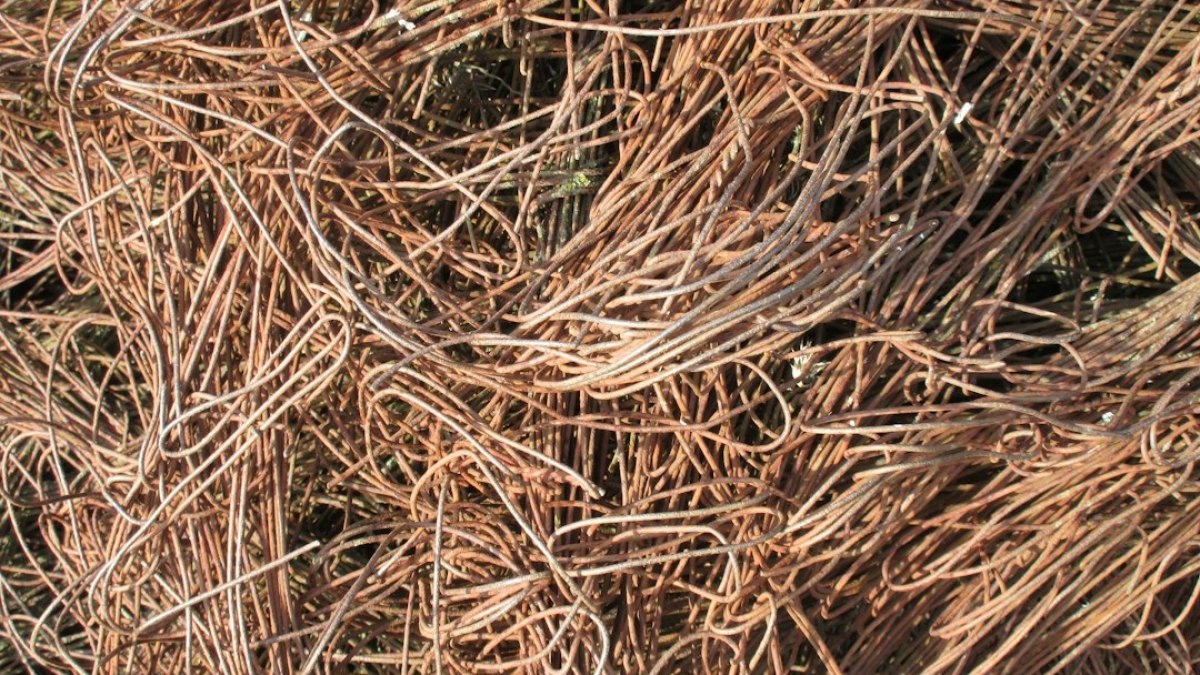
- Bare bright: clean, uncoated, unalloyed copper wire with all insulation removed. No paint, no solder, no tarnish worth mentioning. The top grade, the top rate.
- Copper #1: clean copper tubing, bus bar or wire at least 1/16 inch thick, no coatings.
- Copper #2: copper that may have solder, paint or light oxidation on it. Still solid copper, lower rate.
- Insulated cable: priced differently from everything else, see below.
Insulated cable deserves its own explanation because it trips people up most often. The buyer doesn't pay on the scale weight of the cable. They pay on expected copper recovery, and insulated wire typically yields 60 to 70% copper by weight. So 100 kg of cable might be paid as 60 to 70 kg of copper at the applicable rate, with the insulation treated as waste. That's how much copper is in insulated wire, and that's how it's priced: on recovery, not on what the scale says.
On #1 versus #2: it comes down to solder, paint and oxidation, not thickness alone. A thick pipe with soldered joints is #2. A thinner clean tube with nothing on it is #1. Thickness matters for the #1 definition, but contamination is what drops you a grade.
How to check a yard offer in one division
Here's the whole method. Divide the per-kilo offer by the benchmark per kilo. On 16 November that benchmark was A$19.79.
Say you're offered $14 a kilo for bare bright wire. Fourteen divided by 19.79 is about 71% of benchmark. That's your number. It's an invented example, but the arithmetic works the same on any offer, any day.
Then ask the buyer two questions: what share of benchmark do you pay, and what do you deduct? A buyer who answers both plainly is easier to deal with than one who won't.
Don't chase a fixed percentage as though 85% is the rule and 70% is theft. Compare two or three buyers instead. That's how you know if a yard is fair: not against a magic number, but against what other buyers will actually do for the same material on the same day.
One honest limit: for small loads, the extra driving to chase a slightly better rate may not be worth the time. A convenient local buyer can be the right call for a ute tray of offcuts. Do the division anyway so you know what you're trading away.
The exchange rate moves your price too
Copper trades in US dollars, so the exchange rate sits between the benchmark and your payout. The local price shifts when the dollar moves against the US dollar, and when you see prices differing between sites, who's right? All of them, on different days, at different exchange rates. That's why the date matters more than the number.
Where the money gets lost
Trap one: the stale price. A figure saved last month can be well off once the benchmark and the exchange rate both move. Never trust a copper price quoted without a date.
Trap two: insulated cable. It's paid on 60-70% recovery, not scale weight. Sellers who weigh the whole cable and expect full-copper pricing get a rude shock at the scale. Now you know the mechanism before it happens to you.
Trap three: treating a reference index as an offer. ScrapTrade's own index put bare bright at about 57% of benchmark on 26 October, well below what a direct buyer might pay. Treat it as a floor-level reference, not a quote.
The edge case: mixed or ungraded material. If you're not sure what you've got, describe it plainly as mixed, photograph it clearly, and make the buyer confirm the classification before you accept a price. Don't let the buyer decide the grade after it's on their scale.
And the objection that comes up every time: why bother sorting when the yard sorts anyway? Because unsorted loads get graded down as a whole. One bucket of brass or steel in the copper drags the price on the entire lot. The yard isn't going to pick it out for free.
What to do before you sell

- Sort grades into separate piles. Separate copper from steel, aluminium, brass and plastic.
- Disclose solder, paint, insulation, oil and moisture honestly.
- Never burn cable. It's dangerous, it's the wrong way to strip insulation, and it downgrades the copper you're trying to sell.
- Agree the weighing method and the price before collection, not at the scale.
On stripping wire: strip thin, clean wire if the labour is yours and the load is worth the hours. Sell thick cable insulated if stripping costs more time than the recovery gap pays. There's no universal answer, only the arithmetic for your load.
Where to check the market price for copper Australia today
Use ScrapTrade's calculator to check the market price for copper Australia across grades like Copper Bare Bright Wire, Copper #1, Copper #2 and Insulated Copper Cable. Then get live marketplace offers or buyer bids. The calculator's values are not live bids or guaranteed payouts.
Isn't the calculator the price? No. It's an estimate, and the index itself says actual yard prices vary by location, grade, condition and quantity.
How often do prices change? The benchmark moves daily. Yard rates move on a regular cycle. Check the dated benchmark, then ask for firm offers.
List your scrap on ScrapTrade and get offers from verified buyers across Australia.
FAQs
Why is scrap copper cheaper than the copper price on the news?
The news figure is the exchange price for refined copper, not a scrap payout. It's a wholesale per-tonne number for pure metal, and a yard pays a cut of it because they still have to grade, sort, freight and resell your scrap. Mixed or dirty loads get a smaller cut again.
What's the difference between #1 and #2 copper?
#1 is clean copper, #2 is copper with surface faults. ScrapTrade's material guide describes #1 as clean tubing, bus bar and wire at least 1/16 inch (about 1.6 mm) thick, while #2 may carry solder, paint or light oxidation. #2 pays less because the buyer has more cleaning to do. Above both sits bare bright: clean, uncoated, unalloyed wire with the insulation off.
How much copper is in insulated wire and how is it priced?
It depends on the cable. Thin household cable carries a much lower copper share than heavy earth cable, so buyers either estimate the metal recovery and pay on that, or pay a set rate per kilo of cable. That's why two similar-looking coils can attract different prices. Insulated Copper Cable is its own category on ScrapTrade's calculator for exactly this reason, so say what the cable actually is in the listing.
Should I strip wire or sell it insulated?
Strip only the thick cable where the insulation pulls off cleanly. You end up with bare bright or #1 wire, which pays a higher rate, and the time is worth it on heavy cable. Thin cable takes too long per kilo, so sell it as insulated cable and describe it honestly. Never burn the insulation off. Burnt wire is easy to spot and buyers will refuse it or pay next to nothing.
Does the exchange rate affect what I get for my copper?
Yes, indirectly. Copper trades on world markets in US dollars, so Australian buyers convert that price into AUD before setting their rates. A weaker dollar generally lifts the local price you're offered, and a stronger one pulls it down.
How often do scrap copper prices change?
Daily, and sometimes within the same day. Yards reset their rates as the world copper price moves, so last week's number is already out of date. Check a live calculator such as ScrapTrade's, then compare current offers or buyer bids rather than copying an old figure into a listing.