

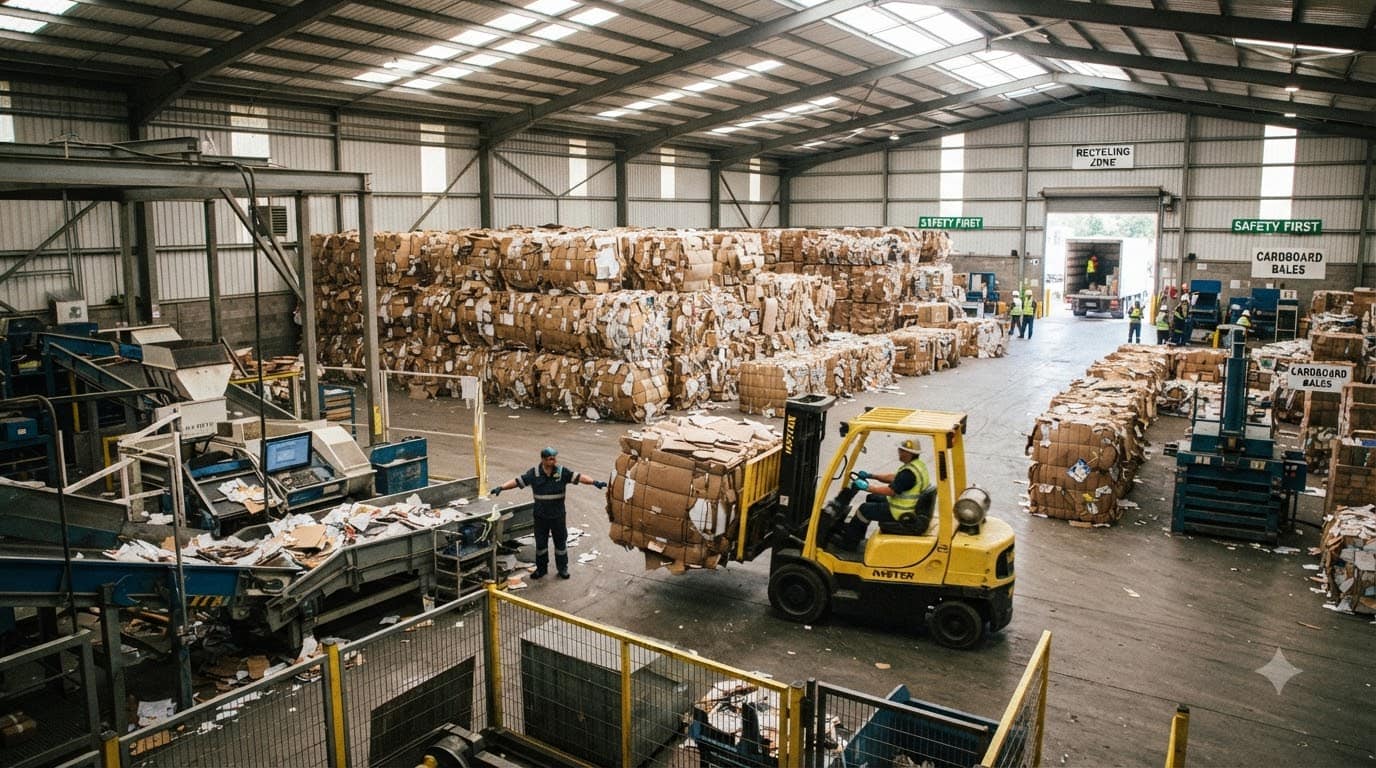
Paper scrap trading involves buying and selling recovered paper and cardboard materials for recycling and further processing. Businesses generate paper scrap from packaging, manufacturing, printing, retail, offices, warehouses, distribution centres, and other commercial activities.
Among the most commonly traded grades is OCC scrap, short for Old Corrugated Containers. OCC generally consists of used corrugated cardboard boxes and similar fibre-based packaging that can be collected, sorted, baled, and supplied to recycling operations.
Paper scrap is not a single uniform material. OCC, office paper, newspapers, magazines, mixed paper, and other recovered paper grades can have different fibre characteristics, contamination levels, preparation requirements, and buyer specifications.
What Is OCC (Old Corrugated Cardboard)?
OCC, or Old Corrugated Containers, generally refers to used corrugated cardboard packaging recovered for recycling.
Corrugated cardboard typically consists of paperboard layers with a fluted middle layer. Used shipping boxes and transport packaging are common sources of OCC.
OCC is widely generated by businesses that receive, store, distribute, or ship products.
Commercial Sources of OCC
Warehouses, retailers, manufacturers, distribution centres, supermarkets, logistics businesses, and other commercial operations can generate significant quantities of used cardboard.
The material may be collected continuously as products are unpacked and distributed.
Businesses with regular cardboard waste can potentially create recurring supply rather than treating each load as an isolated transaction.
OCC Preparation
Preparation can affect how buyers evaluate cardboard scrap.
OCC may be collected loose or compressed into bales. Flattening and baling can improve handling and transportation efficiency, depending on the buyer's requirements.
Sellers should clearly describe whether the material is loose, flattened, baled, or otherwise prepared.
OCC Contamination
Clean cardboard is generally easier to process than material containing significant contamination.
Potential contaminants can include plastic, food residue, liquids, metal, polystyrene, excessive tape, and other non-paper materials.
Sellers should disclose visible contamination rather than assuming that all cardboard will be treated as the same grade.
Other Common Recyclable Paper Grades
OCC is just one category of recyclable paper. Businesses can also generate several other paper grades.
Office Paper
Includes printer, copier, and writing paper. It is often collected separately because its fibre characteristics differ from cardboard and mixed paper.
Newspaper
Generated by publishers, retailers, distributors, and households. Buyers may consider moisture, contamination, and the amount of other paper mixed in.
Magazines
Magazines often contain coated paper and other materials, so sellers should accurately describe their composition and preparation.
Mixed Paper
Contains multiple paper grades collected together. Sellers should provide details about the approximate mix of cardboard, office paper, newspapers, magazines, and other materials.
Paperboard
Commonly generated from food packaging, consumer products, retail, and manufacturing. Coatings, adhesives, colours, and fibre composition can vary between grades.
Trading Paper and Cardboard Scrap Online
An online marketplace can connect businesses generating paper and cardboard scrap with potential buyers looking for recyclable fibre.
The process begins with a clear description of the material.
Create an Accurate Listing
A useful listing should identify the paper grade, quantity, condition, location, preparation, and available photographs.
For OCC, sellers should make clear whether the cardboard is loose, flattened, baled, clean, mixed, or contaminated.
Add Photos
Photos can help buyers assess the actual condition of the material.
Images should show representative cardboard or paper rather than generic stock photographs. For larger loads, sellers can provide both overall photographs and closer images showing the material's condition.
Explain Recurring Supply
If a business generates paper scrap regularly, it should indicate whether the material is available weekly, monthly, or on another recurring basis.
This can be useful for buyers seeking consistent supply.
Receive Buyer Offers
Once a listing is available, potential buyers can review the material information and submit offers according to the marketplace process.
Sellers should compare the complete commercial terms, including price, payment, pickup or delivery responsibilities, inspection requirements, and other agreed conditions.
Businesses can use the ScrapTrade marketplace to list paper or cardboard scrap and connect with potential buyers.
Confirm the Transaction
Before completing a deal, both parties should confirm the material grade, quantity, condition, pricing basis, inspection arrangements, payment terms, and logistics.
Clear documentation can help ensure that the material supplied matches the material described in the listing.
FAQs
What does OCC mean in scrap trading?
OCC stands for Old Corrugated Containers. It generally refers to used corrugated cardboard packaging collected for recycling, such as shipping and transport boxes.
Is OCC the same as all cardboard?
No. OCC is a specific recovered cardboard category. Other paperboard and cardboard materials can have different compositions, coatings, contamination levels, and buyer specifications.
What affects OCC scrap prices?
OCC pricing can be affected by material grade, cleanliness, moisture, preparation, bale quality, quantity, location, freight, market conditions, and buyer demand.
How can I sell cardboard scrap?
Identify the cardboard type, estimate the quantity, describe its condition and preparation, provide the location and photographs, and list the material through an online marketplace to connect with potential buyers.
Conclusion
Paper scrap trading covers a broad range of recovered fibre materials, with OCC being one of the most commonly recognized cardboard categories. Office paper, newspapers, magazines, mixed paper, and paperboard can also enter commercial recycling streams.
For sellers, accurate grading and preparation are important. A strong listing should explain the material type, quantity, condition, moisture, contamination, preparation, location, and whether the supply is recurring.
For buyers, evaluating the grade, fibre quality, contamination, moisture, bale condition, logistics, and total transaction costs can help determine whether a particular load fits their requirements.