

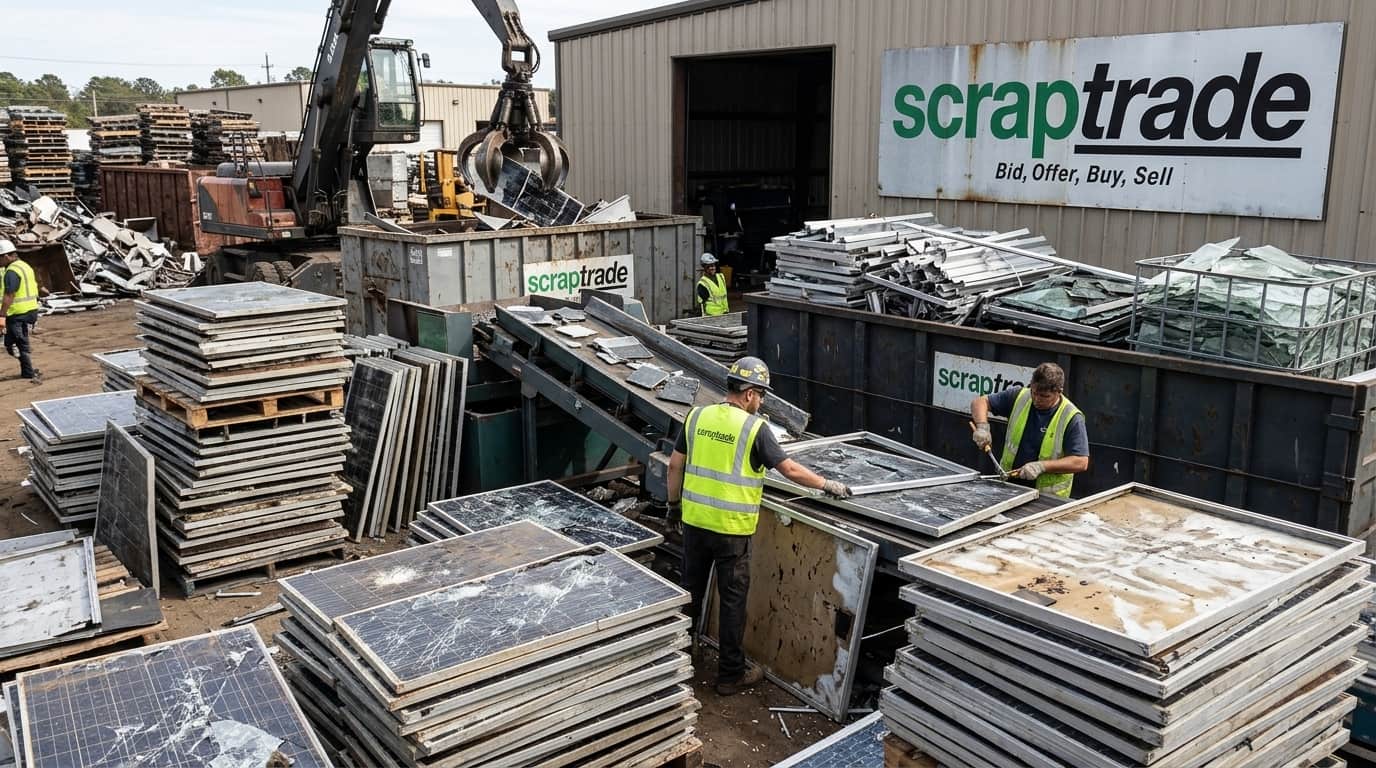
Solar panels are designed to generate electricity for decades, but they eventually reach the end of their useful life. Damaged modules, ageing installations, repowering projects and manufacturing waste all create a growing need for responsible solar panel recycling. The challenge is that a photovoltaic (PV) panel is not made from one material. It contains glass, aluminium, silicon, copper, silver, polymers and other components that require different handling and processing methods.
Understanding the solar panel recycling process helps solar operators, recyclers, scrap traders and material buyers identify potential recovery opportunities. This guide explains what solar panels contain, how their materials are separated, the challenges involved and how recovered materials can enter the recycling supply chain.
Why Solar Panel Recycling Is Becoming Important
Solar energy installations are expanding across residential, commercial and utility-scale projects. As existing systems age, more panels will need repair, replacement or end-of-life management.
Recycling matters because photovoltaic modules contain materials that may be recovered and reused in manufacturing or other industries. Without appropriate treatment, discarded panels can occupy landfill space and create avoidable waste. Some modules may also contain substances that require controlled handling under applicable waste regulations.
Several factors are increasing the importance of solar panel recycling:
- Growing end-of-life waste: Older installations, damaged panels and replaced modules create a need for organised collection and processing.
- Material recovery: Glass, aluminium, copper and selected valuable materials can be recovered through suitable recycling methods.
- Resource efficiency: Recycling can return secondary raw materials to industrial supply chains.
- Waste management compliance: Businesses may have responsibilities for collection, transportation, treatment and disposal depending on local regulations.
- Commercial opportunities: Recyclers and material traders can participate in collection, dismantling, processing and recovered-material trading.
Solar panel recycling is therefore both a waste-management activity and an emerging secondary-material supply chain.
What Is Inside a Solar Panel?
Most conventional crystalline-silicon solar panels contain several layers assembled into a protective module. The exact construction varies by manufacturer, technology and product generation.
Understanding these components is essential because each material has a different recovery route.
Aluminium Frame and Glass
The aluminium frame supports the solar module and helps it remain structurally secure during installation. It is generally one of the more accessible materials to separate during dismantling.
After the panel is removed from its mounting system, recyclers can detach the frame using suitable tools. The recovered aluminium may then be sorted, prepared and supplied to aluminium recyclers or secondary metal buyers.
Glass is another major component of many conventional solar panels. It protects the photovoltaic cells while allowing sunlight to pass through. Depending on the module design and recycling technology, glass can be separated through mechanical processing, thermal treatment or other specialised methods.
Recovered glass may be processed for potential use in appropriate glass or construction-related applications. However, its suitability depends on purity, contamination, particle size and the requirements of the receiving industry.
Cells, Copper and Silver
Solar cells convert sunlight into electricity. In conventional crystalline-silicon modules, these cells contain silicon wafers along with conductive materials and other layers.
Copper is commonly found in electrical connections, ribbons, cables and junction-box components. These parts can be separated and sorted for metal recovery.
Silver is used in electrical contacts within many conventional photovoltaic cells. Although the quantity in an individual panel is relatively small, it can be commercially relevant when collected and processed at scale. Recovering silver generally requires specialised processing rather than ordinary manual dismantling.
Silicon recovery is more technically demanding. The cells are often bonded to other materials and protected by encapsulants. Separating silicon for potential reuse requires additional treatment and purification. Recovered silicon is not automatically suitable for manufacturing new solar cells; its quality must meet the specifications of the intended application.
How Solar Panels Are Recycled
The solar panel recycling process depends on the panel type, its condition, available equipment and the materials a facility intends to recover. A typical process for crystalline-silicon modules involves several stages.
1. Collection and Inspection
End-of-life or damaged panels are collected from solar farms, rooftops, commercial installations, distributors or manufacturing facilities.
Before processing, recyclers inspect the modules to identify their type, condition and potential hazards. Panels that may still function can sometimes be assessed for repair, resale or reuse, subject to safety and performance checks.
2. Removal of Frames and Electrical Components
The aluminium frame is separated from the module using suitable dismantling equipment. Junction boxes, cables and other removable electrical components may also be detached.
These components are sorted according to their material composition. Aluminium can enter an aluminium recycling stream, while copper-bearing cables and connectors can be directed to appropriate metal recovery operations.
3. Glass Separation
Once the frame and accessible components have been removed, the remaining laminated panel structure requires further processing.
Depending on the technology, the module may undergo mechanical treatment, controlled heating or specialised delamination. These methods aim to separate the glass from the encapsulant, cells and other layers.
The recovered glass must be evaluated for contamination and quality before it can be sold or reused. Not every recycling process produces glass suitable for the same applications.
4. Cell and Material Recovery
After the glass and other layers are separated, the remaining material can undergo additional processing to recover silicon, copper, silver and other components.
Mechanical separation may help divide materials by size or physical characteristics. More advanced processes can use thermal or chemical treatment to separate bonded layers and recover selected materials.
Silver and other valuable metals may require specialised refining. Silicon may also need purification before it can be considered for a higher-value application.
5. Sorting and Preparing Recovered Materials
Recovered materials are sorted, graded and prepared for buyers. The requirements vary by material and end market.
For example, aluminium buyers may assess alloy type and contamination, while glass processors may require specific particle sizes and cleanliness. Metal refiners may also request information about the composition and quality of copper-bearing or silver-bearing fractions.
The final output is not one uniform product. It is a group of material streams with different specifications, values and potential buyers.
Challenges and Costs
Solar panel recycling involves more than removing an aluminium frame and crushing the remaining module. The laminated construction, material combinations and differences between panel technologies can make recovery complex.
Material separation is technically demanding. Glass, cells and polymers are bonded together. Separating them without contaminating the recovered materials requires suitable equipment and process control.
Collection and transportation can be expensive. Solar panels are bulky and can be fragile, particularly when damaged. Transport planning, packaging and handling requirements can affect the overall economics of recycling.
Processing costs vary. Equipment, labour, energy, transportation, treatment methods and local compliance requirements all influence the cost of recycling. The economics also depend on the quantity and quality of material recovered.
Material quality affects resale value. Contaminated glass, mixed metals and poorly sorted fractions may attract lower-value outlets or require further processing.
Technology differences matter. Crystalline-silicon panels and thin-film modules do not have identical material compositions or recycling requirements. A process designed for one type may not be appropriate for another.
For recyclers and scrap traders, the key is to understand the material specifications and processing costs before buying or selling recovered solar panel materials.
Regulation and Market Outlook
Solar panel waste regulations vary between countries and jurisdictions. Some regions have specific rules for photovoltaic module collection, producer responsibility, electronic waste management or end-of-life treatment. Other markets manage discarded panels under broader waste and environmental frameworks.
Businesses involved in solar panel recycling should verify the rules that apply to their location and activities. Important areas to check include:
- Whether solar panels are classified as electronic waste, industrial waste or another regulated category.
- Requirements for collection, storage, transportation and authorised treatment.
- Whether producer responsibility or take-back obligations apply.
- Rules for exporting or importing used panels and recovered materials.
- Documentation, reporting and environmental controls required by local authorities.
For international shipments, businesses should also check applicable waste-shipment rules and destination-country requirements before arranging transport.
The market outlook is linked to the expansion of solar installations, the ageing of existing systems, recycling technology development and demand for recovered materials. However, the scale and timing of future recycling activity will differ by region and depend on collection infrastructure, regulation and commercial viability.
Businesses should avoid relying on broad global volume forecasts without checking the underlying data, assumptions and reporting period.
FAQs
Can solar panels be recycled?
Yes. Many solar panels can be processed to recover materials such as aluminium, glass, copper and selected valuable metals. The recovery method depends on the panel technology, condition and available recycling equipment.
What materials can be recovered from old solar panels?
Commonly targeted materials include aluminium from frames, glass from protective layers, copper from cables and electrical connections, and silicon and silver from photovoltaic cells. Recovery quality and commercial suitability vary by process.
Is silver recovered from solar panels?
Silver can be recovered from many crystalline-silicon solar panels because it is used in cell electrical contacts. However, recovery generally requires specialised processing and refining rather than basic dismantling.
Are all solar panels recycled in the same way?
No. Recycling methods differ according to panel technology and construction. Crystalline-silicon and thin-film modules have different material compositions, so facilities need suitable processes for the panels they handle.
Conclusion
Solar panel recycling is an important part of managing end-of-life photovoltaic equipment and recovering useful secondary materials. Aluminium frames and copper components can enter established metal recycling streams, while glass, silicon and silver may require more specialised separation and treatment.
For recyclers and scrap traders, the opportunity lies in understanding the material, verifying its quality and connecting with suitable buyers. As recycling infrastructure and processing technologies develop, reliable material information and responsible trading practices will become increasingly important.
Explore the ScrapTrade marketplace to connect with businesses trading recyclable materials, including aluminium, copper and other recovered scrap categories.