

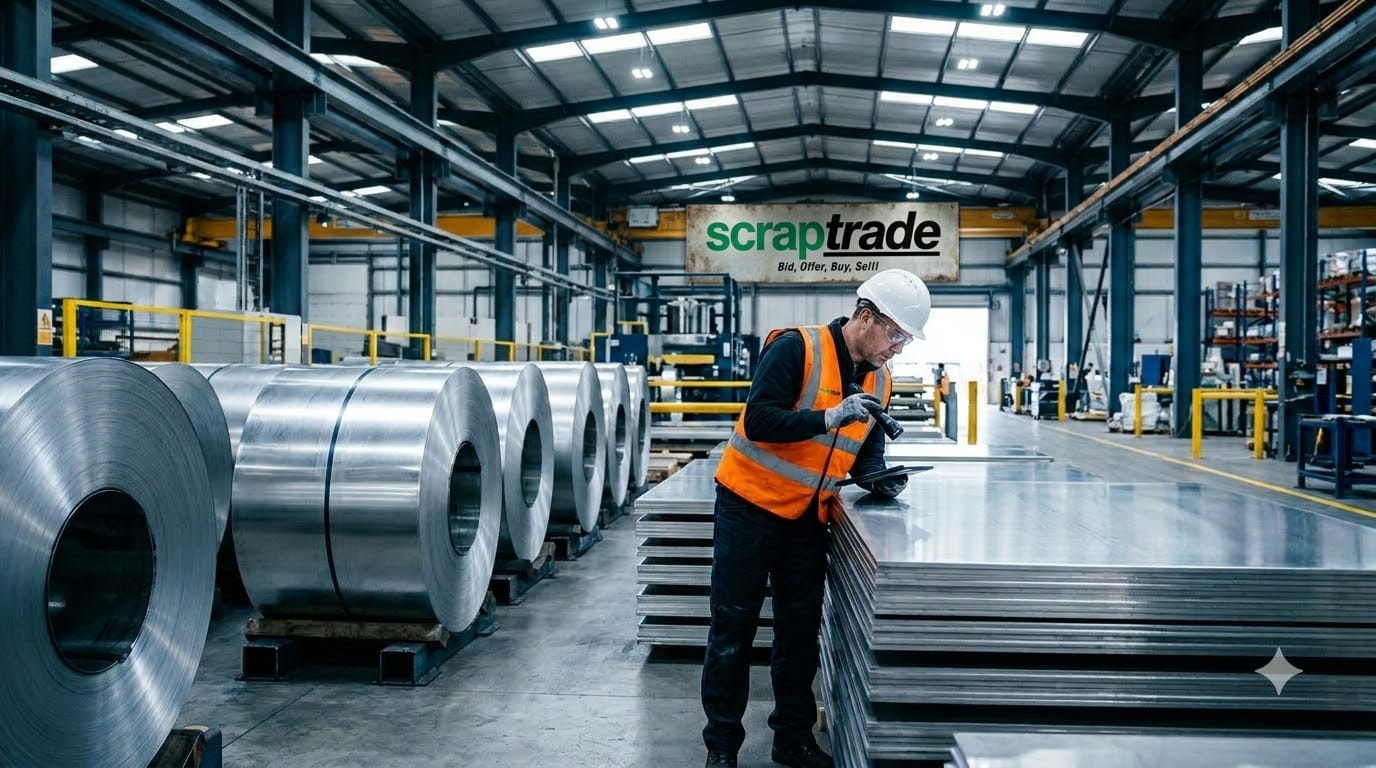
Stainless steel recycling plays an important role in the global metal industry. Used stainless steel products, industrial equipment, manufacturing offcuts, pipes, tanks, and machinery can be collected and processed into feedstock for new stainless steel production.
Unlike ordinary carbon steel, stainless steel contains alloying elements such as chromium and, depending on the grade, nickel and other metals. These elements give stainless steel its distinctive properties and make correct scrap identification important during recycling.
The recycling process involves collecting, sorting, preparing, melting, and refining stainless steel scrap before it is reused in manufacturing. For scrap dealers, recyclers, and industrial suppliers, understanding these stages helps explain why grade separation and accurate material descriptions matter.
This guide explores how stainless steel scrap is recycled, how alloy recovery works, and how businesses can find potential buyers for different stainless steel grades.
Why Stainless Steel Is Recycled
Stainless steel is used in construction, transport, food processing, chemical equipment, manufacturing, medical equipment, and household products. Its corrosion resistance and durability make it suitable for applications where ordinary steel may not provide the required performance.
When stainless steel products reach the end of their useful life, the material can often be recovered and returned to the metal production cycle.
Recycling provides manufacturers with another source of metallic raw material. It also creates commercial opportunities for scrap collectors, demolition businesses, industrial suppliers, and metal recyclers.
Common sources of stainless steel scrap include:
- Manufacturing offcuts, sheets, plates, and fabrication waste.
- Pipes, tubes, tanks, and industrial processing equipment.
- Food-processing machinery and commercial kitchen equipment.
- Automotive and transport components.
- Construction and demolition materials.
- Used industrial machinery and plant equipment.
The material must be assessed before recycling because different stainless steel grades have different alloy characteristics. Separating suitable grades helps recycling facilities manage their furnace feedstock and produce metal that meets the required specifications.
How Stainless Scrap Is Sorted by Grade
Sorting is one of the most important stages in stainless steel recycling. Stainless steel is not a single material with one fixed composition. It includes several families and grades with different properties and applications.
Identifying common stainless steel grades
Two widely traded stainless steel grades are 304 and 316. Both are commonly encountered in industrial and commercial scrap, but they are not interchangeable.
Grade 304 is used in equipment, kitchen products, tanks, pipes, and many general-purpose applications. Grade 316 is used in applications where additional corrosion resistance is required, including certain marine, chemical, and industrial environments.
Other stainless steel categories include ferritic, martensitic, and duplex grades. Their properties and alloy compositions differ, so buyers may require more specific identification before accepting a load.
A visual inspection alone is not always sufficient to determine the grade. Surface appearance, corrosion, and magnet response may provide clues, but they should not be treated as definitive proof of alloy composition.
Sorting and separation methods
Recycling businesses may use several methods to identify and separate stainless steel scrap:
Visual inspection: Experienced operators examine the material's appearance, form, markings, and known application to make an initial assessment.
Documentation and markings: Product labels, manufacturing records, material certificates, and grade markings can help establish the material identity.
Magnetic testing: Magnet response can help distinguish certain stainless steel families, but it cannot reliably identify every grade.
XRF analysis: X-ray fluorescence analysers can help identify alloying elements in suitable materials and support grade verification. Testing procedures and equipment limitations should be considered when interpreting results.
Correct sorting reduces the risk of mixing incompatible materials and helps buyers assess the scrap more accurately.
Melting and Alloy Recovery Explained
After sorting and inspection, stainless steel scrap is prepared for recycling. The exact process depends on the material, the recycling facility, and the intended metal product.
1. Scrap preparation
Large components may be cut into manageable sizes using suitable industrial equipment. Unwanted attachments, non-metal materials, and contamination are removed where necessary.
Scrap may be processed into suitable forms for storage, handling, transport, and furnace charging. The receiving facility determines the required preparation specifications.
2. Furnace charging and melting
Prepared stainless steel scrap is transported to a suitable recycling or steelmaking facility. It is charged into a furnace along with other appropriate raw materials.
The furnace heats the material until it becomes molten metal. Industrial stainless steel production may use electric arc furnaces and other suitable melting and refining equipment, depending on the operation.
During melting, operators control the process to manage the metal's composition and quality.
3. Alloy recovery and composition control
The objective is to retain and recover useful metallic elements while producing molten metal that meets the required specifications.
Chromium, nickel, and other alloying elements are important parts of many stainless steel grades. Their recovery depends on the feedstock, furnace conditions, process controls, and refining practices.
Additional alloying materials may be introduced where necessary to achieve the target composition. The metal is tested and adjusted according to the requirements of the intended product.
4. Casting and reuse
Once the molten metal meets the required specifications, it can be cast into suitable forms for further manufacturing.
Depending on the production route, the output may be processed into slabs, billets, or other semi-finished products. These can then be rolled, shaped, machined, or fabricated into new stainless steel products.
Role of Nickel and Chromium in Scrap Value
Nickel and chromium are important alloying elements in stainless steel. Their presence and role help explain why stainless steel scrap is assessed by grade rather than simply classified as ordinary steel.
Chromium
Chromium contributes to stainless steel's corrosion resistance by supporting the formation of a protective surface layer. It is a key element in stainless steel production and an important consideration during alloy identification and recycling.
Nickel
Nickel is used in several stainless steel grades and contributes to their properties, including structure, toughness, and performance in particular applications.
The quantity and combination of alloying elements vary between grades. This is why a buyer may require a material certificate or an alloy analysis before confirming the grade and commercial terms.
For scrap sellers, the important point is that unidentified stainless steel should not automatically be sold as a particular grade. Accurate identification helps prevent incorrect classification and supports a more reliable buyer assessment.
Where to Sell Stainless Scrap
Stainless steel scrap can be sold to metal recyclers, stainless steel processors, foundries, scrap dealers, and industrial buyers that accept the relevant grades.
Before selling, prepare a clear description of the available material. Include the grade where known, approximate quantity, physical form, condition, location, and photographs.
Separate identifiable grades such as 304 and 316 whenever practical. If the grade is not confirmed, describe it as unidentified or mixed stainless steel rather than making an unsupported claim.
When comparing offers, consider:
- Accepted stainless steel grades and specifications.
- Price basis and accepted weight.
- Testing and inspection requirements.
- Contamination or sorting deductions.
- Collection, loading, and delivery arrangements.
- Payment terms and transaction documentation.
Businesses looking for additional buyers can explore ScrapTrade's marketplace. ScrapTrade provides an online platform where scrap buyers and sellers can explore listings and trading opportunities across different material categories.
Sellers can create a product listing with relevant material information, photographs, quantity, location, and preferred terms. Accurate descriptions help potential buyers assess whether the material matches their requirements.
To get started, visit ScrapTrade's product listing page and list your stainless steel scrap.
ScrapTrade operates as a marketplace and does not take ownership of listed material or guarantee a completed transaction. Buyers and sellers should verify specifications and confirm payment and logistics arrangements before proceeding.
FAQs
Can stainless steel be recycled?
Yes. Stainless steel scrap can be collected, sorted, melted, refined, and cast into material for new manufacturing. The recycling route depends on the grade, condition, and requirements of the receiving facility.
What happens to nickel and chromium during stainless steel recycling?
Nickel and chromium are valuable alloying elements in many stainless steel grades. During recycling, suitable processes aim to recover and retain these elements in the molten metal while controlling the final composition.
Why should 304 and 316 stainless steel be separated?
These grades have different alloy compositions and performance characteristics. Keeping them separate helps buyers assess the material and allows recycling facilities to manage the composition of their furnace feedstock.
How can I identify stainless steel scrap grades?
Identification may involve product markings, material certificates, visual inspection, and suitable alloy-testing equipment such as XRF analysers. Visual or magnetic checks alone may not provide a definitive grade identification.
Conclusion
Stainless steel recycling transforms used products and industrial scrap into feedstock for new manufacturing. The process depends on accurate grade identification, effective sorting, appropriate preparation, controlled melting, alloy recovery, and casting.
Nickel and chromium play important roles in many stainless steel grades, making material identification particularly important for scrap trading. Mixing different grades or providing inaccurate descriptions can create processing difficulties and commercial disputes.
For scrap businesses, the best approach is to separate known grades, document material condition, confirm buyer specifications, and compare offers before selling. If your business collects or supplies stainless steel, list your stainless steel scrap on ScrapTrade and connect with potential buyers through a global online marketplace.