

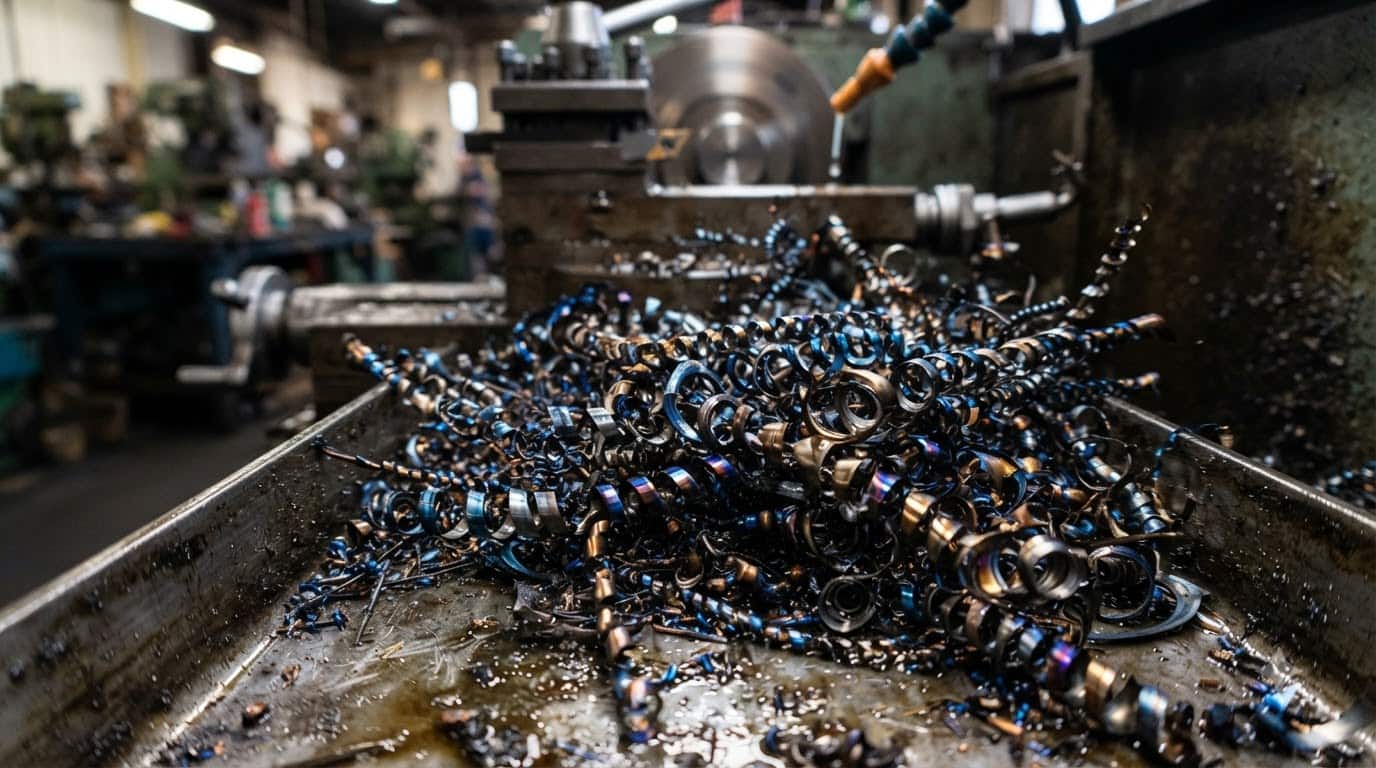
Machining operations from CNC milling and lathe turning to deep boring generate immense volumes of secondary metal scrap daily. Known collectively across shop floors as turnings, borings, swarf, or chips, these manufacturing byproducts represent a major asset recovery opportunity for machine shops, precision fabricators, and OEM component manufacturers.
However, trading machining scrap differs fundamentally from trading heavy structural steel or solid equipment plates. Because turnings and swarf feature high surface-area-to-weight ratios and are frequently saturated with cutting oils and soluble coolants, securing maximum value requires the right handling, accurate grading, and direct access to global buyers.
This comprehensive guide breaks down how machining scrap is classified, what drives its market value, best practices for shop-floor segregation, and how trading on ScrapTrade.com.au helps you unlock top-tier pricing for your turnings and borings.
What are Turnings, Borings & Swarf?
While shop workers often use these terms interchangeably, metal recyclers and secondary smelters define them based on geometry, particle size, and the machining process that produced them:
- Turnings: Long, continuous, ribbon-like or springy coils produced during external lathe turning operations. Raw, un-shredded turnings can tangle into bulky "bird's nests," making them notoriously difficult to handle and transport.
- Borings: Shorter, broken chips generated when enlarging internal holes using boring bars or heavy-duty drilling machinery. Borings generally pack tighter than long turnings, offering higher bulk density.
- Swarf (Chips & Fines): An umbrella term for fine metallic debris, small shavings, and abrasive particle slurry generated by milling, sawing, tapping, or grinding processes.
Why Machining Scrap is Graded Differently
- Unlike solid heavy melt scrap (HMS) or clean structural beams, machining waste carries unique technical characteristics that influence how mills, foundries, and international buyers price and process it:
1. High Surface Area and Melt Oxidation
- Because turnings and swarf consist of thin ribbons or fine granules, their total surface area relative to weight is extraordinarily high. When fed directly into a furnace without pre-processing, exposed turnings burn off rapidly as dross or slag rather than melting into usable liquid metal. This lower melt yield (recovery percentage) directly translates into discounted buyer offers for loose, uncompacted swarf.
2. Moisture and Cutting Fluid Contamination
- During high-speed CNC machining, cutting oils, water-soluble coolants, and synthetic lubricants are continuously flooded over the workpiece. Consequently, raw machining scrap can hold 5% to 20% of its total weight in liquid carryover. Scrap buyers enforce deduction penalties for excess moisture and oil content because wet swarf causes severe furnace pops, safety risks, and environmental emissions during remelting.
3. Cross-Alloy Contamination Risk
- In multi-material job shops machining stainless steel, aluminum, brass, and carbon steel on shared equipment, cross-contamination is a constant risk. A single batch of aluminum turnings contaminated with 2% stainless steel or brass chips loses its premium alloy grading and may be rejected at the buyer's gate.
Major Alloy Grades & Commercial Rates
- Machining scrap pricing tracks raw metal commodity benchmarks such as London Metal Exchange (LME) or Fastmarkets indices adjusted for material cleanliness, geometry, and alloy purity.
- Steel & Cast Iron Turnings/Borings: Cast iron borings are highly sought after by foundries due to their high carbon content and clean fracture geometry. Steel turnings are typically classified under Institute of Scrap Recycling Industries (ISRI) grades (e.g., Short Shoveling Steel Turnings).
- Aluminum Swarf & Turnings (6061 / 7075): Aircraft and automotive aluminum turnings command high value when kept segregated by series. Dry, unmixed 6061 aluminum chips fetch a steep premium over mixed shop turnings.
- Brass & Copper Borings: Free-cutting brass (C36000) turnings generated during high-speed screw machining carry premium market value due to rapid melt turnaround in secondary brass ingot mills.
- Stainless Steel & High-Temp Alloys: Stainless 304/316 turnings, alongside nickel superalloy (Inconel, Titanium) swarf, demand strict metallurgical sorting. Because these metals are difficult to machine, keeping their turnings clean and oil-free yields substantial financial returns.
- To understand live valuation dynamics and market benchmarks across non-ferrous and ferrous commodities, explore our guide to how scrap metal rates work.
How to Collect, Store, and Segregate Machining Scrap
Maximizing the monetary yield of your facility’s machining waste requires dedicated floor procedures before bringing material to market:
Implement Machine-Level Segregation: Dedicate labeled hoppers or self-dumping totes to specific CNC machines or material types (e.g., Aluminum Only, Stainless Steel Only, Carbon Steel Only).
Utilize Drip-Bottom Bins: Store wet swarf in hoppers equipped with perforated drain grates and fluid collection valves at the base. Allowing coolants to gravity-drain overnight reclaims expensive neat oil for shop filtration and reduces scrap weight deductions at point of sale.
Prevent Environmental Contamination: Keep scrap storage bins indoors or under covered awnings. Rainwater combining with cutting fluid residue creates hazardous runoff and leads to rapid oxidation of ferrous turnings.
On-Site Processing: Shredding, Wringing & Briquetting
High-volume machining facilities often invest in automated chip processing technology to maximize scrap value prior to selling on ScrapTrade.com.au:
| Technology | Process Description | Key Benefits |
|---|---|---|
| Chip Shredder / Crusher | Reduces tangled, bushy "bird's nest" turnings into uniform, free-flowing short chips. | Reduces scrap volume by up to 80%, improving container loading density and handling efficiency. |
| Centrifugal Chip Wringer | Spins shredded chips at high speeds to force out liquid lubricants. | Removes up to 98%–99% of surface fluids, producing "clean and dry" turnings while recovering coolant for shop reuse. |
| Hydraulic Briquetting Press | Compresses loose chips, borings, or swarf under extreme hydraulic pressure into dense metal pucks. | Eliminates trapped fluids, minimizes furnace burn-off loss, and commands a 20% to 50% price premium over loose chips. |
For additional operational strategies on upgrading shop-floor scrap efficiency, explore our detailed resource on scrap sourcing for swarf scrap trading.
Why Trade Machining Scrap on ScrapTrade.com.au?
Traditional scrap trading often forces machine shops to accept low, localized spot rates from middleman collectors. ScrapTrade.com.au revolutionizes metal trading by connecting industrial sellers directly to verified secondary smelters, foundries, and accredited scrap buyers across Australia and global markets.
Key Advantages of ScrapTrade
Direct Market Access: Bypass local intermediaries and sell directly to verified buyers competing for your turnings and borings.
Transparent Bidding & Fair Value: Eliminate opaque pricing models. Receive competitive bids backed by real-time market indices and clear grading standards.
Verified Counterparties: Trade with confidence using ScrapTrad network of thoroughly vetted buyers and processors.
Streamlined Logistics: Scale your scrap sales effortlessly, whether you ship in bulk gaylord boxes, steel drums, or full container loads.
FAQs
What is the difference between swarf and turnings?
Turnings are long, coiled strips produced during lathe turning operations. Swarf is a broader term encompassing fine metal shavings, chips, and particulate produced across various cutting, milling, and grinding processes.
Why do buyers deduct weight for wet turnings?
Cutting oils and coolants add artificial weight to scrap containers. Buyers perform moisture tests and deduct the liquid percentage from the gross weight, while also factoring in the cost to process or dry the wet swarf before melting.
Is briquetting machining scrap worth the investment before selling?
For high-volume machine shops, yes. Briquetting reduces storage volume by up to 90%, recovers expensive cutting fluids for reuse, and yields a 20%–50% higher price per ton on platforms like ScrapTrade due to lower furnace oxidation losses.
How does ScrapTrade.com.au help machine shops get better prices for swarf?
ScrapTrade gives manufacturers direct access to competing domestic and international buyers, allowing shops to market dry, segregated turnings directly to smelters and foundries willing to pay top market value.