

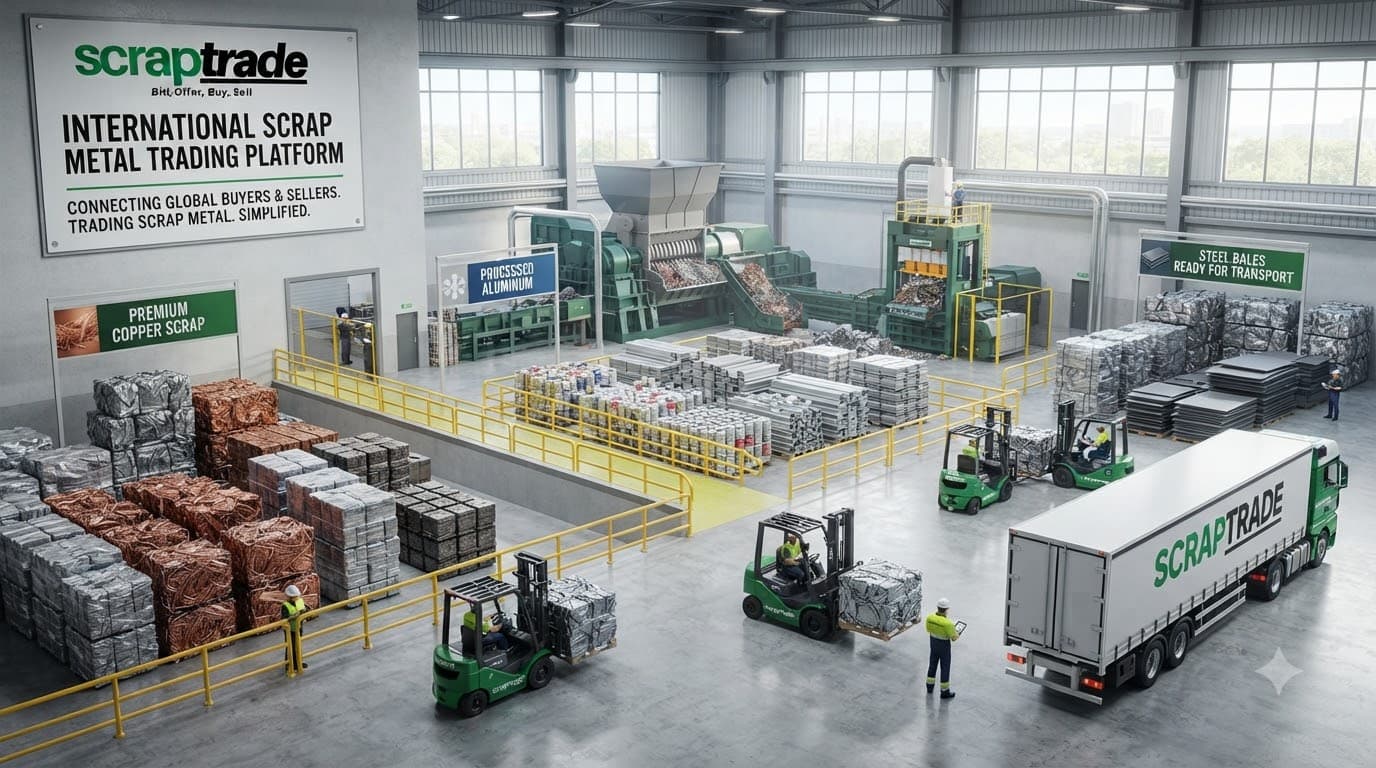
Recyclers and scrap processors sit at an important point in the recycling supply chain. They source recyclable materials, sort and process them, and supply recovered materials to manufacturers, mills, foundries, exporters, and other industrial buyers.
For these businesses, reliable trading relationships are essential.
A recycler needs consistent access to suitable feedstock. At the same time, processed material needs a dependable market so that inventory can keep moving through the business.
Traditional supplier and buyer relationships remain important, but digital marketplaces provide another way to source material and reach potential counterparties.
The Role of Recyclers in the Scrap Supply Chain
Recyclers and processors do more than simply collect scrap.
Depending on their operations, they may sort, grade, clean, dismantle, bale, shear, shred, separate, or otherwise process recyclable materials before selling them to the next buyer.
The material entering a recycling facility can come from many sources, including manufacturers, demolition businesses, scrap yards, commercial operations, distributors, contractors, and other businesses.
After processing, the resulting material may have a different specification from the original feedstock.
For example, mixed metal received by a processor may be sorted into separate ferrous and non-ferrous streams. Copper-containing material may be processed into more defined grades. Plastic, paper, and other recyclable materials can similarly be sorted and prepared according to buyer requirements.
This makes recyclers both buyers and sellers within the broader scrap supply chain.
Why Trading Efficiency Matters
A recycler's profitability can depend on the difference between the cost of acquiring suitable feedstock and the value achieved when processed material is sold.
That means sourcing, inventory management, material quality, logistics, and buyer relationships all matter.
A wider trading network can give recyclers additional options when local supply or demand changes.
Sourcing Feedstock Beyond Local Suppliers
Many recyclers initially build their supply network through local relationships.
Local sourcing can be efficient, particularly when transport distances are short and suppliers provide recurring volumes. However, relying exclusively on a local network can limit the range of materials available.
An online marketplace can provide another sourcing channel.
A recycler can search for listings based on material type, grade, quantity, location, and other relevant specifications. This can make it easier to identify potential supply outside the company's existing supplier network.
Finding the Right Feedstock
More supply is not necessarily better supply.
A recycler should evaluate whether a listing matches its processing capabilities and purchasing requirements.
Important factors can include:
- Material type and grade
- Quantity and expected frequency
- Contamination and attachments
- Preparation and physical form
- Location
- Collection or freight requirements
- Photos and supporting information
The actual requirements depend on the recycler's equipment and downstream customers.
For example, a processor specializing in copper may have very different sourcing requirements from a company processing mixed steel, aluminium, plastics, or e-waste.
Expanding Without Losing Control
Digital sourcing should complement procurement discipline rather than replace it.
Businesses should continue to verify counterparties, confirm material specifications, establish commercial terms, and understand logistics before committing to a purchase.
A larger supplier network is most useful when the recycler can evaluate and manage the additional opportunities effectively.
Selling Processed Material to Wider Markets
The other side of the equation is selling.
After processing incoming scrap, a recycler may produce material that meets a more specific buyer requirement.
Instead of relying only on existing customers, a recycler can use online listings to introduce processed material to potential buyers in additional markets.
A listing can communicate information such as:
Material → Grade → Quantity → Preparation → Location → Availability → Trading terms
The more accurately the material is described, the easier it can be for a potential buyer to determine whether it matches their requirements.
Reaching Industrial Buyers
Processed scrap can be relevant to many types of buyers.
Depending on the material, potential counterparties may include:
- Mills and foundries
- Manufacturers
- Metal processors
- Other recycling companies
- Exporters
- Industrial raw-material buyers
The appropriate buyer depends on the specification and end use of the material.
A recycler that consistently produces a particular grade can also use digital listings to develop relationships with buyers outside its traditional geographic market.
Using RFQs and Bulk Listings
Recyclers often deal in meaningful volumes, making structured procurement particularly useful.
An RFQ allows a buyer to communicate a specific purchasing requirement and invite potential suppliers to respond.
For example, a recycler may need a defined quantity of a particular scrap grade within a certain period. Instead of contacting suppliers individually, an RFQ can provide a structured way to communicate the requirement.
Businesses can use the ScrapTrade RFQ process to create sourcing requirements where applicable.
Bulk Listings
Bulk listings work from the seller side.
A recycler can publish processed material with details about quantity, grade, location, and availability. Potential buyers can then evaluate the listing and submit offers where the platform supports that functionality.
This creates a two-sided trading model:
Buyers can publish requirements → Suppliers can respond
and
Sellers can list material → Potential buyers can submit offers
For recyclers that regularly buy and sell material, having both capabilities can make the platform more useful than a simple classified listing site.
Verified Accounts and Trust Between Counterparties
Trust is particularly important when trading industrial materials online.
A buyer needs confidence that a supplier can provide the stated material. A seller also needs confidence that a potential buyer is a legitimate business capable of completing the transaction.
Verification processes can help establish a stronger foundation for digital B2B trading.
ScrapTrade supports business and account verification processes designed to help buyers and sellers trade with greater confidence.
However, verification should not replace commercial due diligence.
Businesses should still confirm the material specification, quantity, photographs, transaction terms, logistics arrangements, payment conditions, and any documentation relevant to the deal.
Managing Grade Consistency at Scale
Grade consistency becomes increasingly important as a recycling company grows.
A buyer purchasing one small load may evaluate material differently from an industrial customer purchasing recurring bulk quantities.
For a recycler, consistent processing and classification can make it easier to serve repeat customers.
Standardized Specifications
A recycler should establish clear internal specifications for the materials it buys and sells.
These can include material type, grade, acceptable contamination, preparation, dimensions where relevant, moisture requirements where applicable, and other characteristics important to the customer.
The exact specification depends on the material and buyer.
A digital listing should reflect the actual specification rather than using a broad material name that could create confusion.
Photos and Supporting Information
Photos can provide useful visual context, particularly when buyers cannot physically inspect material before making an initial offer.
Where relevant, recyclers can also provide supporting documentation, test results, certificates, or other information that helps establish material characteristics.
Accurate information reduces the risk of disputes caused by a difference between the listed material and the material eventually delivered.
How ScrapTrade Supports Recyclers
ScrapTrade is designed as a global B2B scrap marketplace for buyers and sellers.
For recyclers and processors, the platform can support both sides of the trading cycle.
A recycler can use the marketplace to discover potential feedstock suppliers and explore available material. The same business can list processed scrap and make it visible to potential buyers.
The platform supports digital listings, buyer and seller information, offer workflows, and business verification processes.
This can help recyclers expand beyond a purely local trading model while keeping material specifications and commercial information within a digital workflow.
ScrapTrade does not take ownership of the scrap material as a broker. The buyer and seller remain responsible for agreeing on the material, price, logistics, payment arrangements, and other transaction terms.
Businesses can also learn how digital B2B sourcing works through the B2B scrap trade guide.
For recyclers that want to build a broader online presence, the shift toward digital trading can complement rather than replace established supplier and customer relationships.
FAQs
What is scrap trading for recyclers?
Scrap trading for recyclers involves sourcing recyclable feedstock from suppliers and selling sorted or processed materials to buyers such as mills, manufacturers, foundries, processors, exporters, and other businesses.
How can recyclers source scrap online?
Recyclers can use digital marketplaces to search available listings, review material specifications, identify potential suppliers, publish sourcing requirements, and communicate with potential counterparties.
Can recyclers sell processed scrap online?
Yes. Recyclers can list processed materials with information such as grade, quantity, preparation, location, photographs, and availability, allowing potential buyers to evaluate the material.
What should recyclers check before buying scrap?
They should consider the material type and grade, quantity, contamination, preparation, location, logistics, supplier information, pricing, and any documentation or verification relevant to the transaction.
Conclusion
Recyclers and processors occupy a central position in the scrap supply chain. They need reliable sources of feedstock on one side and dependable markets for processed material on the other.
Digital trading can provide another channel for both activities.
By using online listings, RFQs, detailed material specifications, business verification, and digital offer workflows, recyclers can potentially expand their supplier and buyer networks beyond traditional local relationships.