

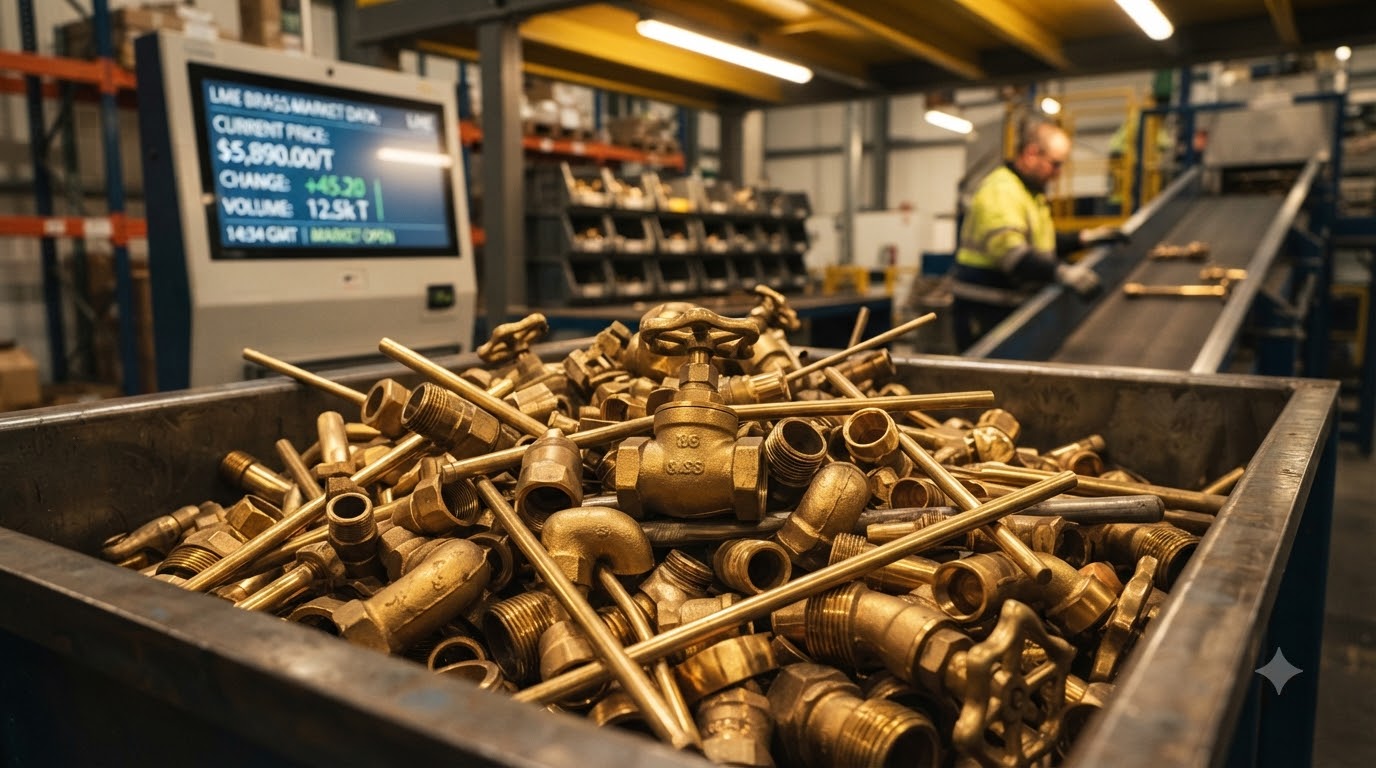
Brass scrap trading involves buying and selling recyclable brass from plumbing, construction, manufacturing, automotive, electrical, industrial, and commercial sources. Brass is widely recycled because it contains valuable copper and zinc and can be recovered and reused in manufacturing.
However, not all brass scrap is the same. Yellow brass, red brass, brass turnings, fittings, valves, and mixed brass can differ in composition, cleanliness, preparation, and buyer requirements. These differences can affect how buyers evaluate the material and what they are willing to offer.
Common Types of Brass Scrap
Brass scrap comes in several forms, and classification depends on its composition, condition, and attachments.
Yellow Brass
Commonly found in plumbing fittings, valves, hardware, and fixtures. Sellers should specify whether it is clean, mixed, or contains iron or other attachments.
Red Brass
Typically contains more copper than yellow brass and may come from valves, fittings, and plumbing components. Known alloy information can help buyers evaluate it accurately.
Brass Turnings
Generated during machining, these may be clean, oily, mixed, or separated by alloy. Moisture and contamination can affect their value.
Brass Fittings and Valves
Often sourced from plumbing and industrial equipment. Steel, rubber, plastic, and seals may be attached, so photos and material details are useful.
Mixed Brass Scrap
Contains different brass products or grades and may include other materials. Sellers should describe the actual composition rather than assigning a high-grade label without verification.
What Affects Brass Scrap Value
Brass scrap value depends on several factors, including:
Brass Composition
Copper, zinc, and other alloy content can affect pricing. Known grades should be stated accurately.
Cleanliness
Clean brass is easier to process. Iron, steel, plastic, rubber, dirt, and coatings can reduce the usable brass content.
Material Form
Fittings, valves, turnings, sheets, cast pieces, and mixed brass may have different buyer requirements.
Quantity
Larger loads or recurring supplies may have different commercial terms than small quantities.
Location & Freight
Pickup location, transportation, loading, customs, and delivery costs can affect the final transaction price.
Market Conditions
Brass scrap prices can change with metal markets and buyer demand. A market reference is useful, but the final price depends on the material and agreed trading terms.
Where Brass Scrap Typically Comes From
Brass scrap is generated across many industries, which creates opportunities for businesses to recover and trade the material.
Plumbing and Construction
Old plumbing fittings, valves, taps, fixtures, and other components can generate brass scrap during renovation, demolition, replacement, and maintenance projects.
Separating brass from other construction materials can help create a more clearly defined scrap load.
Manufacturing
Manufacturing facilities may generate brass offcuts, rejected components, machining turnings, and production residues.
Businesses with recurring production scrap may have an opportunity to create ongoing supply for suitable buyers.
Automotive and Industrial Equipment
Brass components can be found in certain automotive, mechanical, electrical, and industrial applications.
When equipment is dismantled or replaced, brass-containing components may enter the recycling stream.
Demolition and Property Maintenance
Commercial and industrial demolition projects can produce brass fittings, valves, fixtures, and other recyclable components.
Sorting these materials before listing can help buyers better understand what they are purchasing.
How to Sell Brass Scrap Online
Selling brass scrap online can give businesses access to potential buyers beyond their immediate local network. The key is to create a listing that accurately communicates the material and its commercial terms.
Step 1: Identify the Brass Scrap
Determine what type of brass material you have, such as yellow brass, red brass, brass turnings, fittings, valves, or mixed brass.
If the alloy or specification is known, include it. If it is not confirmed, describe the material based on its appearance, source, form, and available documentation without guessing.
Step 2: Check the Material Condition
Separate obvious non-brass materials where practical and identify attachments that remain.
For yellow brass in particular, sellers should be clear about iron or steel attachments rather than describing attached material as clean yellow brass.
Step 3: Prepare Accurate Listing Information
A useful brass scrap listing should include the material type, estimated quantity, location, condition, photographs, and any known grade or composition information.
If the supply is recurring, mention the expected frequency and approximate quantity available.
Step 4: Receive and Compare Buyer Offers
Once the brass scrap is listed on an online marketplace, potential buyers can review the material information and submit offers according to the marketplace process.
Sellers should consider the complete commercial terms when comparing offers. The highest quoted price may not necessarily represent the same overall transaction economics if payment terms, freight, inspection, preparation, or pickup responsibilities differ.
Step 5: Confirm the Deal Terms
Before completing the transaction, both parties should agree on the material specification, quantity, pricing basis, payment terms, inspection requirements, and logistics.
Clear documentation helps establish what material is being sold and what each party is responsible for.
Businesses can use the ScrapTrade marketplace to list brass scrap and connect with potential buyers.
FAQs
What are the common types of brass scrap?
Common types include yellow brass, red brass, brass turnings, brass fittings, valves, and mixed brass. Classification can vary depending on the buyer, market, and material specification.
What affects brass scrap prices?
Brass scrap prices can be affected by alloy composition, copper and zinc content, cleanliness, contamination, attachments, quantity, location, freight, processing requirements, market conditions, and buyer demand.
How do I sell brass scrap online?
Identify the brass type, estimate the quantity, photograph the material, describe its condition and location, and create an accurate listing. Potential buyers can then review the listing and submit offers through an online marketplace.
Is yellow brass the same as red brass?
No. Yellow brass and red brass generally refer to different brass compositions. Red brass typically has a higher copper content, while yellow brass generally has a higher zinc proportion. Exact composition can vary, so buyer specifications should be checked before assigning a grade.
Conclusion
Brass scrap trading depends on accurate material identification, clear specifications, and transparent commercial terms. Yellow brass, red brass, turnings, fittings, valves, and mixed brass can have different characteristics and buyer requirements.
For sellers, the quality of a listing can make a significant difference to the trading process. Providing the brass type, quantity, location, photographs, condition, known composition, and information about attachments gives potential buyers a clearer understanding of the material.