

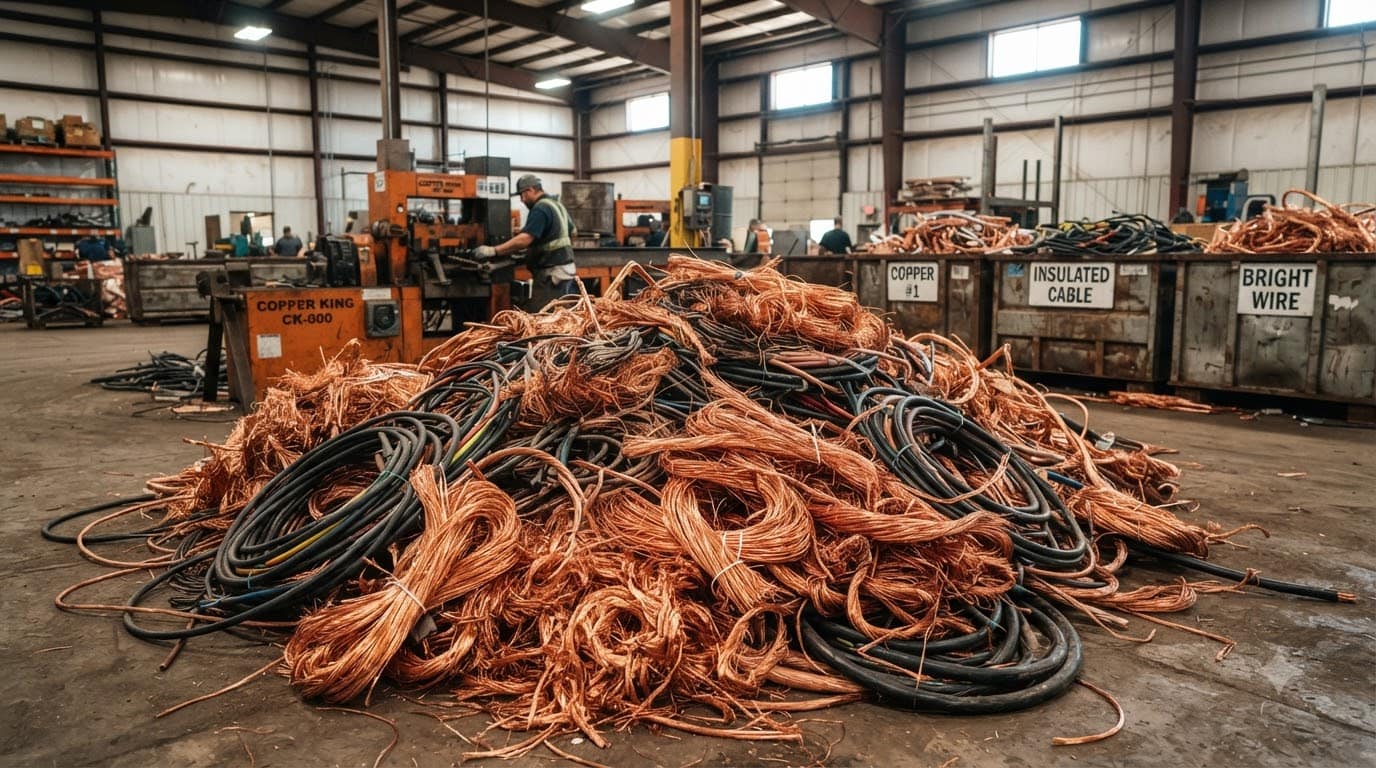
Copper wire and cable scrap is one of the most recognizable categories within the copper recycling trade. It can come from electrical installations, construction projects, manufacturing facilities, telecommunications equipment, machinery, automotive applications, and many other sources.
However, not all copper wire has the same commercial value. Buyers typically consider the copper content, insulation, cleanliness, wire diameter, attachments, preparation, and applicable grade when evaluating a lot.
Terms such as bare bright copper, #1 copper, #2 copper, and insulated copper wire (ICW) are commonly used in scrap trading, but specifications and terminology can vary between buyers and markets.
Why Wire and Cable Scrap Is Graded Separately from Copper
Copper is traded in many physical forms, including sheet, tubing, busbars, pipes, turnings, and wire.
Wire and cable require additional evaluation because the copper conductor may be covered by insulation or combined with other materials.
A length of insulated cable, for example, cannot be evaluated in exactly the same way as clean bare copper wire. The buyer may need to account for insulation removal, copper recovery, processing costs, and the actual copper content.
Wire diameter and conductor type can also matter. A clean, uncoated copper conductor can have very different characteristics from a cable containing plastic insulation, connectors, steel components, or other materials.
This is why sellers should describe wire and cable accurately rather than simply listing everything as "copper scrap."
The condition of the material can also influence how easily it can be processed. Clean, separated material generally provides buyers with more information than mixed cable containing multiple components.
Common Grades: Bare Bright, #1, #2, and ICW
Scrap grading terminology is useful for communicating material characteristics, but exact definitions can differ by market, buyer, specification, or contract.
Bare Bright Copper
Bare bright copper generally refers to clean, uncoated, unalloyed copper wire with a bright appearance and without significant surface contamination.
The wire is typically free from insulation and other materials. Because the material is relatively clean and has high copper content, it can be commercially distinct from insulated or heavily contaminated cable.
Sellers should still confirm the buyer's specification rather than assuming that every clean-looking copper wire automatically qualifies as bare bright.
#1 Copper Wire
#1 copper wire generally describes clean copper wire that meets the applicable specification but may differ from the characteristics required for bare bright material.
The exact requirements can vary, so sellers should provide a clear description and avoid assigning a grade without sufficient information.
#2 Copper
#2 copper generally represents copper material with more allowable impurities, attachments, oxidation, solder, or other characteristics than cleaner copper categories.
Again, exact grading requirements can vary by market and buyer. When in doubt, describe the actual condition of the material and allow the buyer to evaluate it against their specification.
Insulated Copper Wire (ICW)
Insulated copper wire contains a copper conductor surrounded by insulation such as plastic or other covering materials.
The commercial value can depend heavily on the estimated copper recovery, type and amount of insulation, conductor size, and overall composition.
Different types of insulated cable can therefore receive very different offers.
For ICW, sellers should provide photographs and, where possible, information about cable type, conductor size, insulation, estimated quantity, and source.
Stripping, Burning Bans, and Contamination Rules
Preparing copper wire for sale can involve removing insulation, connectors, or other unwanted materials. However, the appropriate preparation method depends on the material, local requirements, equipment, and applicable environmental or safety rules.
Burning insulation from copper wire should not be treated as a standard scrap-preparation method. Open burning can create hazardous emissions and is prohibited or restricted in many jurisdictions.
Because ScrapTrade operates in a global trading environment, sellers and buyers should verify the laws and requirements that apply in the location where the material is collected, processed, stored, transported, or traded.
Mechanical stripping or other appropriate processing methods may be used where permitted and suitable for the material. Businesses should follow applicable environmental, workplace-safety, waste-handling, and fire-safety requirements.
Contamination Matters
Copper wire can contain more than insulation.
Potential unwanted materials can include:
- Steel or other metal attachments
- Connectors and terminals
- Plastic components
- Dirt and debris
- Solder or coatings
- Moisture
The effect of contamination depends on the buyer's specification and the type of cable.
A seller should disclose significant contamination rather than presenting mixed or contaminated material as a cleaner copper grade.
Clear photographs are particularly useful because buyers can assess the physical condition before discussing an offer.
What Affects Pricing
Copper wire and cable pricing depends on more than the current copper market reference.
The material's grade and copper content are major considerations. A clean bare copper wire and heavily insulated cable may contain very different proportions of recoverable copper.
Other factors can include:
Wire type and size: Conductor size, construction, and cable type can influence processing and copper recovery.
Insulation: The type and amount of insulation can affect how much copper is recoverable from insulated wire.
Cleanliness: Dirt, attachments, mixed metals, coatings, and other contamination can influence the buyer's evaluation.
Quantity: Larger commercial lots may have different logistics and purchasing conditions than small quantities.
Location: Transportation, loading, and distance to the buyer can affect the overall economics of the transaction.
Market conditions: Copper reference prices can change, while actual scrap offers depend on the specific material and transaction conditions.
For a broader understanding of copper grades and trading factors, see the Copper Scrap Trading Guide.
For current reference information, sellers and buyers can also review ScrapTrade market prices. A market reference should not automatically be treated as the final price for a particular wire or cable lot.
FAQs
What is copper wire scrap?
Copper wire scrap consists of discarded or recovered electrical and industrial wires and cables containing copper conductors. It can include bare wire, insulated cable, and mixed cable materials.
What is bare bright copper?
Bare bright generally refers to clean, uncoated copper wire meeting the relevant specification. Exact requirements can vary by market and buyer, so the term should be used carefully.
What is ICW in scrap trading?
ICW commonly refers to insulated copper wire. It contains a copper conductor covered by insulation, and its value can depend on copper recovery, insulation type, conductor size, and cleanliness.
Is burning copper wire allowed?
Rules vary by jurisdiction, but open burning of insulated wire is prohibited or restricted in many locations. Businesses should verify and follow applicable environmental, safety, and waste-handling requirements. Burning insulation should not be presented as a standard preparation method.
Conclusion
Copper wire and cable scrap has its own grading and evaluation considerations because the material can range from clean bare copper wire to heavily insulated and mixed cable.
Understanding terms such as bare bright, #1, #2, and insulated copper wire can help buyers and sellers communicate more accurately. However, grade definitions should always be checked against the relevant buyer specification or trading standard.
Preparation also matters. Sellers should use appropriate and permitted processing methods and should never assume that burning insulation is an acceptable way to prepare wire for trade.
When selling online, provide accurate information about the wire or cable, including its type, quantity, condition, insulation, contamination, location, and photographs.