

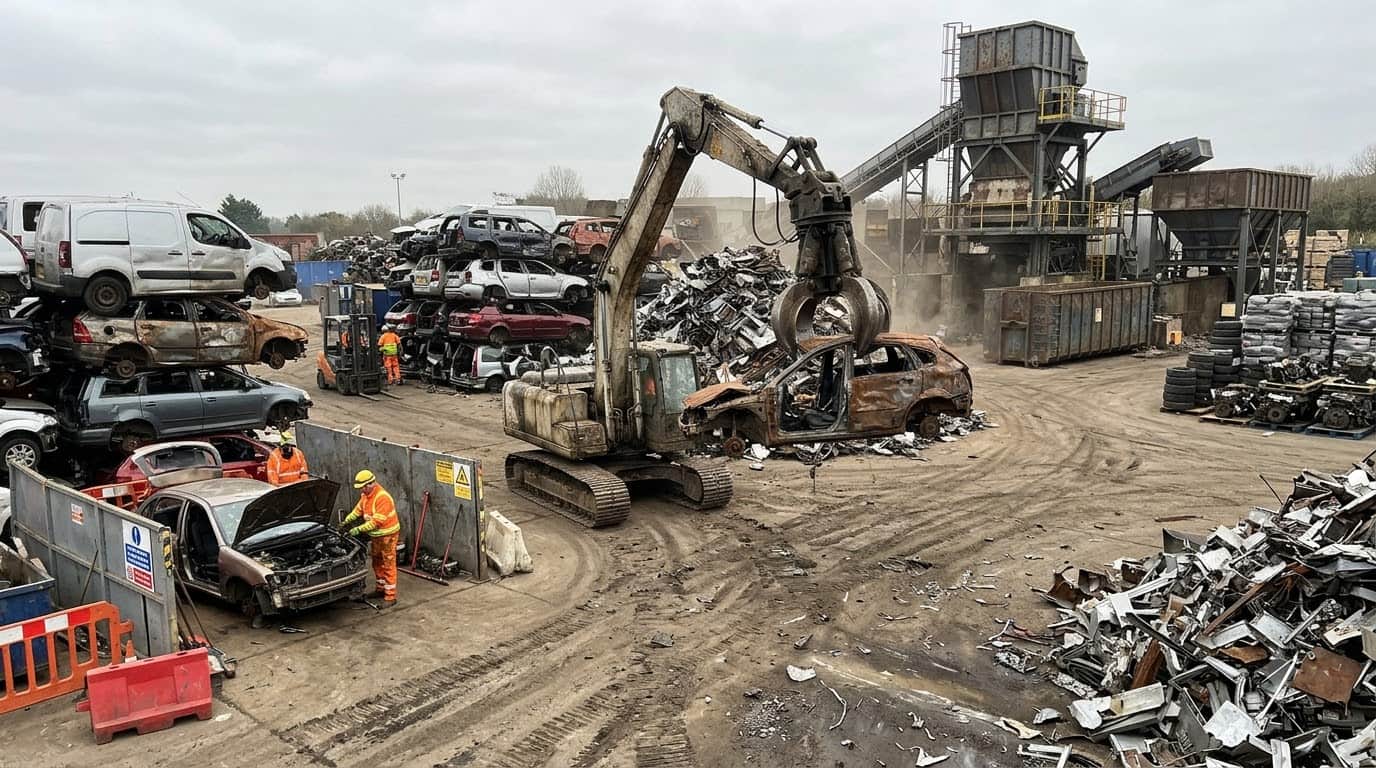
An end-of-life vehicle (ELV) is a car, van, truck, or other vehicle that has reached the point where it is no longer suitable or economical to keep in service. Instead of sending the entire vehicle directly for disposal, specialised recycling facilities process it to recover reusable components, ferrous metals, non-ferrous metals, and other materials.
The vehicle recycling process involves several important stages: depollution, dismantling, shredding, and material separation. Each stage prepares the vehicle for the next step while helping recyclers recover useful resources and manage potentially hazardous substances.
Understanding how end-of-life vehicle recycling works is important for scrap dealers, dismantlers, automotive businesses, recyclers, and metal buyers. This guide explains how vehicles are processed, which metals are recovered, what happens to non-metal residue, and how auto scrap enters the global scrap market.
Why End-of-Life Vehicles Are Recycled
End-of-life vehicle recycling helps recover materials from vehicles that would otherwise occupy storage or disposal space. Cars contain a combination of metals, plastics, glass, rubber, fluids, electronics, and other components. Many of these materials can be reused, recycled, or processed through specialised recovery systems.
There are several reasons why ELV recycling is important.
Metal recovery: Vehicles contain steel, iron, aluminium, copper, and other metals that can become feedstock for manufacturing and metal production.
Reusable components: Engines, gearboxes, alternators, starter motors, wheels, and selected electronic components may be suitable for resale or reuse after inspection.
Environmental management: Vehicles contain oils, coolants, fuels, refrigerants, batteries, and other substances that require appropriate handling before shredding or disposal.
Resource efficiency: Recovering usable metals and components reduces the need to rely entirely on newly extracted raw materials.
Scrap market supply: Vehicle dismantlers and recycling facilities supply different grades of ferrous and non-ferrous scrap to metal processors, foundries, and manufacturers.
The exact recycling route depends on the vehicle's condition, material composition, available processing technology, and applicable local requirements.
The Vehicle Recycling Process
The end-of-life vehicle recycling process generally follows a sequence of inspection, depollution, dismantling, shredding, and material separation.
Not every vehicle follows an identical route. A vehicle with valuable reusable components may undergo more extensive dismantling, while another may move to a shredding facility after essential depollution and removal of selected parts.
Depollution (Removing Fluids and Hazardous Parts)
Depollution is one of the most important stages of vehicle recycling. Before a vehicle is dismantled or shredded, the facility identifies and removes fluids and components that could create safety, environmental, or processing problems.
Common depollution activities include:
Fuel removal: Remaining petrol or diesel is drained and managed using appropriate procedures.
Engine and transmission oil removal: Lubricating oils are collected separately for suitable handling and treatment.
Coolant removal: Engine coolant is drained to prevent uncontrolled release during dismantling or processing.
Brake and hydraulic fluid removal: Relevant fluids are collected and managed according to facility procedures.
Refrigerant recovery: Air-conditioning refrigerants are recovered using suitable equipment rather than released into the atmosphere.
Battery removal: Lead-acid and other vehicle batteries are removed for appropriate storage and recycling routes. Electric and hybrid vehicles require additional high-voltage battery safety procedures.
Other hazardous components: Certain vehicles may contain airbags, mercury switches, or other components requiring specialised handling.
Depollution requirements differ between countries and regions. Facilities must follow applicable rules for hazardous waste, refrigerants, batteries, workplace safety, and vehicle treatment.
This stage is not simply about removing fluids. It prepares the vehicle for safer dismantling and reduces the risk of contamination in recovered materials.
Dismantling and Parts Recovery
After depollution, the vehicle may undergo dismantling to recover components that can be reused, refurbished, or recycled separately.
The dismantling process depends on the vehicle's condition, component demand, labour costs, and the facility's business model.
Commonly recovered components include:
- Engine and gearbox: These may be inspected for resale, rebuilding, or material recovery.
- Alternator and starter motor: These contain metal components and may be sold as automotive parts or processed for metal recovery.
- Wheels and tyres: Alloy wheels can enter aluminium recycling routes, while tyres require separate processing.
- Radiator: Depending on construction, radiators may contain aluminium, copper, brass, and other materials.
- Catalytic converter: This component may contain platinum-group metals and is commonly handled through specialised recovery channels.
- Doors, panels, and body parts: Reusable panels and selected components may be sold as replacement parts.
- Electrical components: Wiring harnesses, motors, and electronic assemblies can enter specialised recycling streams.
The decision to dismantle a component depends on whether its resale or material recovery value justifies the time and processing costs.
For example, a working alternator may be more valuable as a tested replacement part than as mixed metal scrap. A damaged unit may instead be sent to a specialist processor for copper and aluminium recovery.
Dismantling also helps separate materials that should not enter the vehicle shredder together. This improves the quality of downstream scrap streams.
Shredding and Separation
Once depollution and selected dismantling activities are complete, the remaining vehicle shell can be sent to a suitable shredding facility.
Industrial vehicle shredders reduce the vehicle body into smaller fragments. These fragments then pass through separation systems to recover different material categories.
The process commonly includes:
Primary shredding: The vehicle shell is broken into smaller pieces using industrial shredding equipment.
Magnetic separation: Magnets recover ferrous materials, mainly iron and steel, from the shredded mixture.
Eddy current separation: Eddy current systems help separate suitable conductive non-ferrous metals, particularly aluminium, from other materials.
Density separation: Certain facilities use density-based systems to separate materials according to their physical characteristics.
Sensor-based sorting: Advanced systems may use sensors to identify and separate selected material types.
The recovered ferrous fraction can be supplied to steel recycling operations. Non-ferrous fractions may undergo additional sorting to separate aluminium, copper-bearing materials, and other metals.
The quality of recovered scrap depends on the vehicle feedstock, dismantling practices, shredding equipment, and separation technology.
Metals Recovered from a Vehicle
A typical vehicle contains several metal categories. The exact materials and quantities vary according to vehicle design, model, age, manufacturer, and components.
| Metal | Common vehicle sources | Potential recycling route |
|---|---|---|
| Steel | Body panels, chassis, doors, structural components | Ferrous scrap processing and steelmaking |
| Cast iron | Engine blocks and selected components | Foundry and ferrous metal recycling |
| Aluminium | Wheels, engine components, housings, panels | Aluminium sorting and remelting |
| Copper | Wiring, motors, alternators, electrical systems | Copper recovery and refining |
| Brass | Selected fittings and components | Brass scrap processing |
| Lead | Conventional lead-acid batteries and selected components | Specialist lead recycling |
| Stainless steel | Selected exhaust and vehicle components | Grade-specific stainless steel recycling |
| Platinum-group metals | Catalytic converters | Specialist precious-metal re |
Why Metal Separation Matters
Different metals have different properties, processing requirements, and buyer specifications. Mixing them into one scrap category can make quality assessment difficult and may limit the number of buyers willing to accept the material.
For example, aluminium wheels should be separated from steel wheels. Copper wiring should be kept apart from general vehicle shred. Catalytic converters should be identified and handled through suitable specialist channels rather than treated as ordinary mixed metal.
For scrap dealers and dismantlers, identifying these materials creates more opportunities to sell individual grades to relevant buyers.
What Happens to Non-Metal Residue
Not everything recovered from an end-of-life vehicle is metal. After shredding and metal separation, the remaining material can include plastics, rubber, foam, glass, textiles, insulation, dirt, and other mixed residues.
This remaining fraction is often referred to as automotive shredder residue (ASR), although the exact composition depends on the vehicle and processing method.
ASR requires further management because it contains a mixture of materials that may be difficult to separate economically.
Depending on local infrastructure and regulations, possible treatment routes include:
Further material recovery: Additional sorting technologies may recover selected plastics, glass, and other recyclable materials.
Specialised processing: Certain facilities process specific residue fractions to recover materials that were not separated during the initial shredding stage.
Energy recovery: Suitable non-recyclable fractions may be considered for energy recovery where permitted and technically appropriate.
Controlled disposal: Residual materials that cannot be recovered or treated appropriately may require disposal through authorised facilities.
ASR management is an important part of responsible vehicle recycling. Its treatment depends on material characteristics, available technology, environmental requirements, and local waste-management rules.
FAQs
What are the main stages of end-of-life vehicle recycling?
The main stages are vehicle inspection, depollution, dismantling, shredding, and material separation. Recyclers remove fluids and hazardous components, recover reusable parts, process the remaining vehicle shell, and separate ferrous and non-ferrous metals.
What happens during vehicle depollution?
Depollution involves removing fuel, engine oil, coolant, brake fluid, refrigerants, batteries, and other potentially hazardous components. These materials are collected and managed through suitable handling and treatment procedures before further vehicle processing.
Which metals can be recovered from end-of-life vehicles?
Common recovered metals include steel, iron, aluminium, copper, brass, lead, and stainless steel. Catalytic converters may also contain platinum-group metals, which require specialised recovery processes.
What is automotive shredder residue?
Automotive shredder residue (ASR) is the mixed non-metal fraction remaining after a vehicle is shredded and recoverable metals are separated. It may contain plastics, rubber, foam, glass, textiles, and other materials requiring further treatment or controlled disposal.
Conclusion
End-of-life vehicle recycling is a multi-stage process that turns retired vehicles into reusable components and recoverable materials. Depollution prepares the vehicle for safe handling, dismantling recovers valuable parts, and shredding separates the remaining metal-rich material into different scrap streams.
Steel, aluminium, copper, lead, and other metals can re-enter industrial supply chains, while non-metal residue requires separate recovery, treatment, or disposal.
For vehicle dismantlers, scrap dealers, and recycling businesses, understanding these stages helps improve material identification, sorting, and buyer communication.
If your business supplies vehicle shells, dismantled auto parts, shredded metal, or other automotive scrap, list your auto scrap on ScrapTrade and connect with potential buyers through a global scrap trading marketplace.