

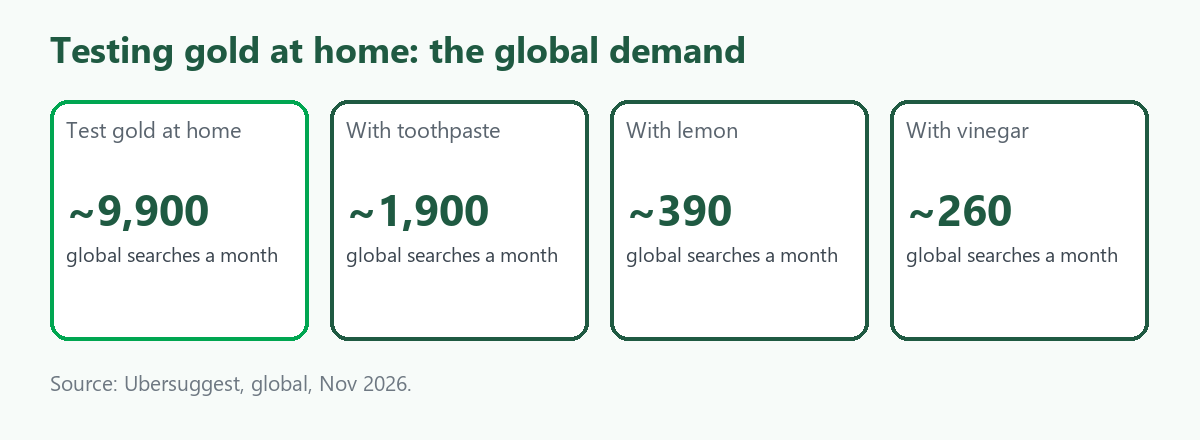
"How to test gold at home" is searched about 9,900 times a month worldwide, according to Ubersuggest, with the toothpaste version about 1,900, the lemon version about 390 and the vinegar version about 260. The cost per click is low, about 13 cents, because the searchers are curious and not buying. They are about to decide whether something is worth selling, and the quality of the answers online is poor. Many of the pages we found were near-duplicates, and some gave accuracy percentages with no basis. This guide says what home checks can do, which is screen out some fakes, and what they cannot do, which is prove a piece is solid gold or tell you its karat. It supports our guide to what the stamps mean and belongs to our guide to selling gold, silver and scrap jewelry worldwide. Disclosure: ScrapTrade is a scrap marketplace with an interest in scrap trading.
What a home check can and cannot do
Sources agree that no single home method is conclusive. A home check is a screen. It can catch an obvious fake, and it cannot confirm purity. The step that decides what a piece is worth, a test by a buyer with proper equipment, has to be done by someone else.
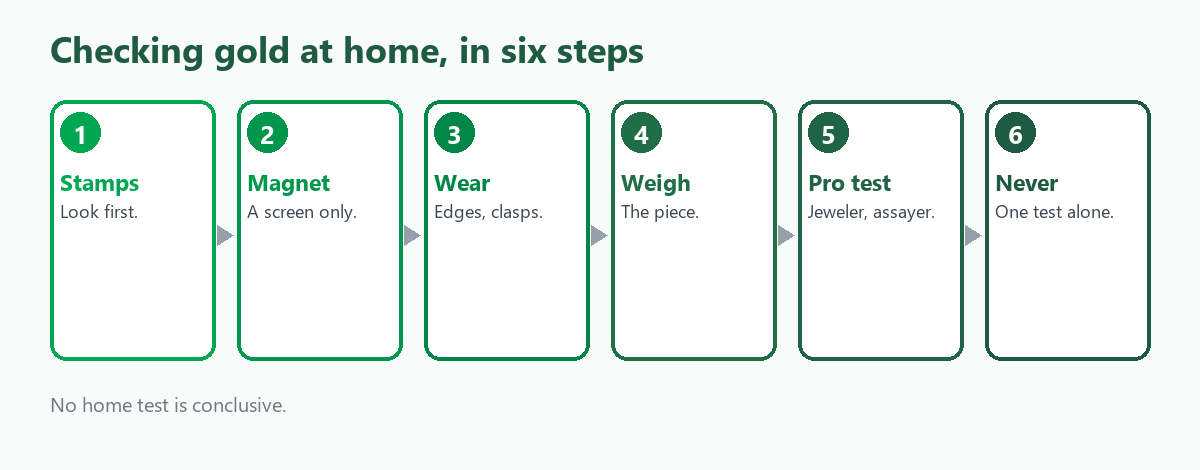
The checks, in order of use
- Look for stamps. A karat stamp or fineness mark is the first clue, and a plated stamp signals a coating, per dealer guides. A stamp is only a claim, as our hallmarks guide explains.
- A magnet. Gold is not magnetic, so a piece that clings strongly is not solid gold. The weakness is that many fakes are not magnetic either, and the sources we found describe the magnet as a first screen, not a verdict.
- Look at wear. Plating can wear to show a different metal at the edges, corners and clasps. Gold-plated items may leave a gold streak on a testing stone at first and show the base metal if scratched deeper, according to one source.
- Weigh it. A weight that looks wrong for the size is a clue and not a result.
- Get a professional test. A jeweler or assayer, with acid, electronic testers or X-ray fluorescence, can tell you the karat. Sources advise this for any piece that matters.
The acid test, and why it is not a home project
Sources call the acid test the most reliable of the home methods. It involves putting a small amount of nitric acid on the metal and watching the reaction. They also give limits: it cannot be used to test gold that is plated with another metal, and some alloys, including ones with platinum, may resist it. Non-magnetic metals such as stainless steel, tungsten and lead can also give confusing results. Acid can damage the piece and is hazardous, and one source advises ventilation, gloves and eye protection. We would not recommend it to anyone who does not already know how, and a jeweler can run it for you.
The kitchen tests
We searched for support for the toothpaste, lemon and vinegar tests that many searches ask about, and we found none we could rely on. We could not find a source for how they work or how often they are right, so we do not recommend them, and we would not sell or discard a piece because of one.
Why plating is the blind spot
A plated piece looks and sometimes streaks like gold, and it has very little scrap value, according to dealer guides. Plating can also defeat a magnet, because the base metal may be non-magnetic. The practical rule is to treat any home result as "possibly gold" at best, and to leave the decision to a professional test.
Where ScrapTrade fits
ScrapTrade neither tests nor buys gold. It is a marketplace for selling scrap to verified traders in over 50 countries, with precious metals among its twelve categories, and it suits sellers with lots that have already been tested and sorted, such as jewelers and estate clearers. There is no listing fee or commission, negotiation happens in real time, and an accepted bid puts the buyer's 5 percent deposit into escrow. Both businesses and individuals can sell once verified. We could not confirm how testing and insurance work for gold lots, so ask cs@scraptrade.com.au first.
What we could not verify
- How reliable any home test is. We found no source that measured it.
- The toothpaste, lemon and vinegar tests. We found no reliable support.
- The cost of a professional test, which varies by buyer.
- Gold-lot handling on ScrapTrade.
Frequently asked questions
How can I tell if gold is real at home?
You can screen with stamps, a magnet and wear, but none of these is conclusive. A professional test is the only way to be sure of the karat.
Is the magnet test reliable?
It screens out magnetic fakes, but many fakes are not magnetic, so it cannot prove a piece is gold.
Is the acid test safe?
It involves nitric acid, which can damage the piece and needs ventilation and protection. Leave it to a jeweler.
Should I test gold before selling a lot?
Sorting and testing first helps you describe a lot accurately. Check with ScrapTrade support on how gold lots are handled.
Sources
- Ubersuggest keyword data, global, queried November 2026.
- Dealer and jeweler guides on magnet, acid and scratch tests and on plated stamps, as summarised in search results.
- ScrapTrade website, accessed November 2026.
Not safety or financial advice. ScrapTrade operates a scrap marketplace.