

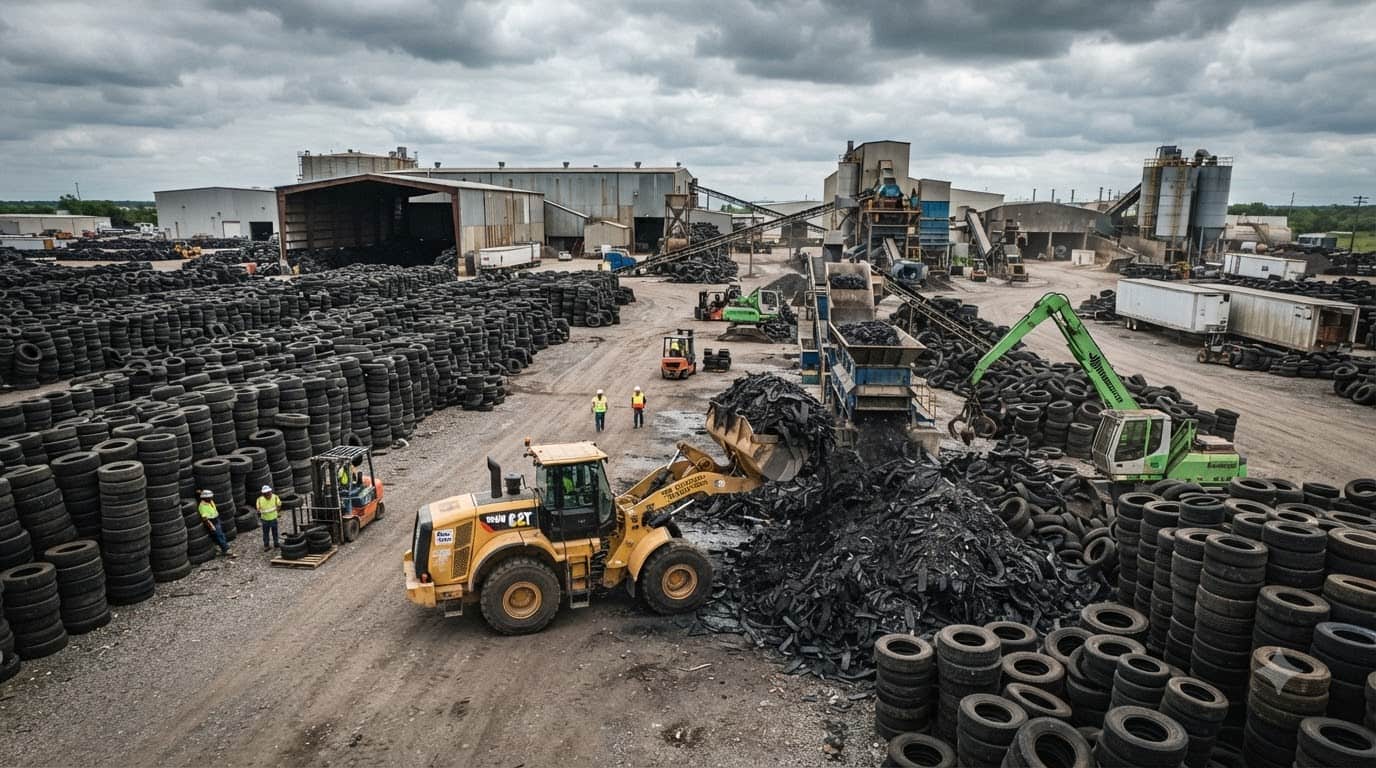
Rubber and tyre scrap is a major recyclable material generated by transport, manufacturing, automotive, construction, and industrial activities. Instead of sending used tyres and rubber products directly to disposal, businesses can sort, process, and trade these materials for recycling and recovery.
Rubber scrap trading includes several forms of material, from whole end-of-life tyres to tyre shred, rubber crumb, and industrial rubber offcuts. The right classification, cleanliness, quantity, and preparation can make a significant difference when buyers evaluate a lot.
For businesses looking to source or sell rubber materials, an online marketplace can provide a more efficient way to present available material, connect with potential buyers, and compare trading opportunities.
What Counts as Rubber and Tyre Scrap?
Rubber and tyre scrap covers discarded or surplus rubber materials that can potentially be recovered, processed, reused, or recycled.
End-of-life tyres are one of the most common sources. These can come from cars, trucks, buses, agricultural equipment, industrial vehicles, and other applications. Rubber scrap can also come from manufacturing operations that generate offcuts, rejected products, conveyor components, seals, hoses, mats, and other rubber-based materials.
Not all rubber scrap has the same commercial characteristics. A buyer may need to know whether the material consists of whole tyres, processed tyre material, rubber production waste, or mixed rubber products.
Tyres are also composite products. They can contain rubber along with steel reinforcement, textile components, and other materials. As a result, the processing method and expected recovered material can vary depending on the type and condition of the scrap.
Common Types: Whole Tyres, Shred, Crumb, Industrial Rubber
Rubber and tyre scrap is commonly traded in several physical forms.
Whole tyres are used or end-of-life tyres that have not yet been mechanically processed. Buyers may source whole tyres for further processing, reuse where permitted, or material recovery.
Tyre shred is produced by mechanically reducing tyres into smaller pieces. Shredded tyre material can be supplied in different sizes depending on the processing equipment and buyer requirements.
Rubber crumb consists of much smaller rubber particles produced through further processing. Depending on the process and specification, crumb rubber can be separated into different particle sizes and may have some steel or textile content removed.
Industrial rubber scrap includes manufacturing offcuts, rejected rubber products, conveyor belt material, hoses, seals, mats, and other rubber-based production waste. Its value and recyclability depend heavily on composition and contamination.
Where Recycled Rubber Is Used
Recovered rubber can enter several downstream applications depending on its quality, processing level, composition, and buyer requirements.
Processed tyre rubber may be used in products such as rubber mats, flooring components, playground surfaces, impact-absorbing products, and other applications where recovered rubber is suitable.
Rubber crumb can also be incorporated into certain manufactured products or used as a feedstock for further processing. The acceptable particle size, cleanliness, and composition depend on the intended application.
Tyre-derived materials can also be processed to recover other components. Tyres may contain steel reinforcement and textile materials that can be separated during recycling operations.
Industrial rubber scrap may have different reuse opportunities depending on its polymer type and original application. Clean production offcuts can be easier to identify and process than mixed or heavily contaminated rubber waste.
What Buyers Look For: Quality and Contamination
Buyers generally need clear information about the physical and commercial characteristics of a rubber or tyre scrap lot before making an offer.
Material type is one of the first considerations. A buyer may want whole tyres, shredded tyres, crumb rubber, conveyor belts, production offcuts, or another specific rubber material.
Size and processing level also matter. Shredded and crumb materials should ideally include information about the approximate particle or shred size and processing condition.
Steel and textile content can be important for tyre-derived materials. Buyers may need to know whether steel wire or textile components have been removed or remain in the material.
Contamination can affect usability and processing costs. Dirt, oils, metals, plastics, chemicals, moisture, and other unwanted materials should be disclosed where relevant.
Quantity and consistency are also important for commercial buyers. A regular supply of consistent material may be more useful to a processor than a mixed one-off lot.
Good photographs, accurate descriptions, quantity information, location, and details about processing can make a rubber scrap listing easier for buyers to evaluate.
Industrial vs Post-Consumer Rubber Scrap
Rubber scrap can broadly be divided into industrial and post-consumer sources.
Industrial rubber scrap is generated during manufacturing or industrial operations. Examples include production offcuts, rejected rubber components, conveyor belt sections, hoses, seals, and other manufacturing residues.
One advantage of industrial scrap is that its composition may be easier to identify when it comes directly from a controlled production process. However, the commercial value still depends on the material specification, cleanliness, quantity, and buyer requirements.
Post-consumer rubber scrap comes from products that have reached the end of their useful life. Used tyres are a major example. Other sources can include discarded rubber products from commercial, automotive, construction, and industrial activities.
Post-consumer material can require more sorting and processing because it may contain multiple components or contaminants.
For international trading, businesses should also verify the applicable requirements for transporting, importing, exporting, and processing used tyres or rubber waste. Requirements can differ significantly between jurisdictions and according to the material classification.
How to Trade Rubber Scrap on ScrapTrade
Trading rubber and tyre scrap online starts with creating a clear and accurate listing.
First, identify the material. State whether you are offering whole tyres, tyre shred, crumb rubber, industrial rubber, conveyor belt scrap, or another specific type.
Next, provide the quantity, location, condition, and processing status. If the material has already been shredded or processed, include the relevant size or specification information available to you.
Photos can help buyers understand the physical condition of the material. Where relevant, include information about steel, textile content, contamination, moisture, packaging, and loading conditions.
Once the listing is available, potential buyers can review the information and assess whether the material matches their requirements. Businesses can use a digital marketplace to reach buyers beyond their immediate local network and explore potential B2B trading opportunities.
For larger transactions, sellers and buyers should agree clearly on material specifications, quantity, inspection requirements, logistics, payment terms, and other commercial conditions before closing the deal.
You can browse rubber and tyre scrap listings on ScrapTrade and connect with potential trading partners through the marketplace.
FAQs
What is rubber scrap trading?
Rubber scrap trading is the buying and selling of recyclable or recoverable rubber materials, including used tyres, tyre shred, crumb rubber, industrial rubber offcuts, and other rubber-based scrap.
What is the difference between tyre shred and crumb rubber?
Tyre shred consists of larger mechanically processed pieces of tyres, while crumb rubber is produced by further processing tyres into smaller rubber particles. Exact sizes and specifications can vary between processors.
Can whole tyres be sold as scrap?
Yes, whole end-of-life tyres can be traded as a recyclable material where permitted and where they meet the buyer's requirements. Sellers should provide accurate information about tyre type, quantity, condition, and location.
What affects the value of rubber and tyre scrap?
Material type, processing level, cleanliness, contamination, steel or textile content, quantity, location, logistics, and buyer requirements can all influence commercial value.
Conclusion
Rubber and tyre scrap trading connects businesses that generate rubber waste with recyclers, processors, manufacturers, and other potential buyers looking for recoverable materials. Whole tyres, tyre shred, crumb rubber, and industrial rubber scrap each have different characteristics and buyer requirements.
Accurate classification is essential. Sellers should provide clear information about the material, processing level, quantity, contamination, steel or textile content, location, and available documentation. Buyers can then evaluate whether a listing matches their processing or manufacturing requirements.