

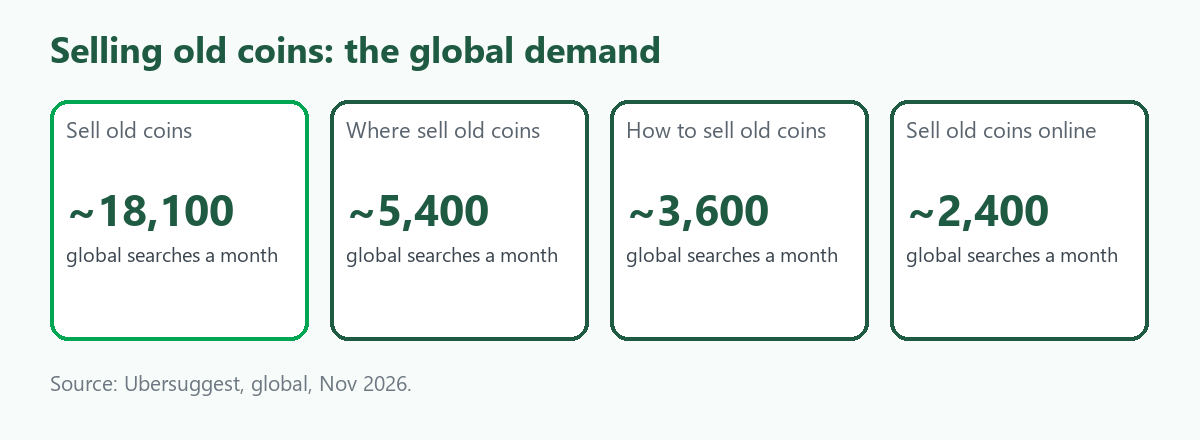
"Sell old coins" is searched about 18,100 times a month worldwide, according to Ubersuggest, with "where sell old coins" about 5,400, "how to sell old coins" about 3,600, "sell old coins online" about 2,400 and "sites to sell old coins" about 1,300. A large part of that volume comes from India and other Asian and African markets, judging by the city-specific searches around it. The searchers have a coin from a relative, a jar of change from abroad or an inherited collection, and the honest answer for most of them is that the coins are worth far less than they hope. This guide compares the places that buy, the fees on each route and the mistakes that cost sellers money. It belongs beside our guide to selling gold, silver and scrap jewelry worldwide, and our Australian companion is Sell Old Coins in Australia. We quote no prices. We run ScrapTrade, a scrap marketplace, and we are not a coin dealer.
Sort before you sell
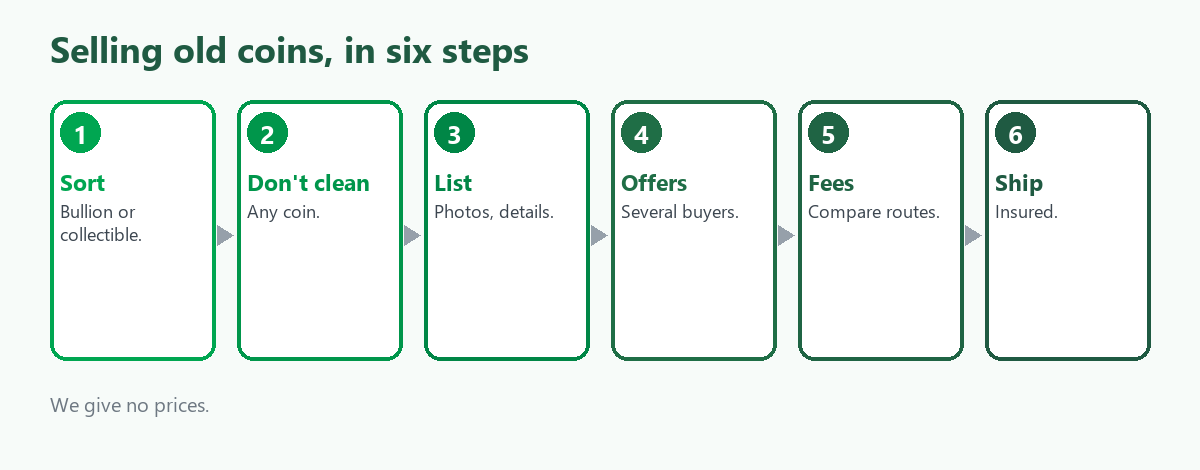
Coins fall into two groups with different buyers. Bullion-type coins, made mainly for their metal, usually trade near melt value, and grade matters less for them. Collectible coins, valued for scarcity, age and condition, depend much more on grade and can be worth several times their metal. In our reading, many common modern and worn circulated coins are worth little beyond face value, though we found no source that states a rule. Our guide to old coin value explains the difference, and our guide to silver coins and junk silver covers silver in bulk. Do not clean anything. Guides we read say cleaning is generally discouraged because it destroys the surface evidence that graders and dealers assess.
The places that buy
- Local dealers. The quickest route, according to the sources we read, though offers may sit below full value. Get offers from more than one dealer.
- Online marketplaces. They reach more buyers, but fees are significant. One Seattle dealer estimates eBay costs at least 13.25 percent plus payment processing and budgets about 16 percent overall. That is one seller's figure, and rates change.
- Auctions. They suit rare or high-demand coins, but they take time and carry seller fees, and common coins often do not justify them.
- Bullion dealers. Bullion usually does best with reputable dealers, according to one guide.
- Coin shows and collectors. Direct sales can avoid fees, and need knowledge and care.
We found no source on what percentage of a coin's value dealers typically offer, so we give none.
Mistakes that cost sellers
- Cleaning coins. It can turn a collectible coin into a lower-value one.
- Accepting the first offer. Offers differ, and a single quote tells you little.
- Ignoring the fees. Listing, selling and payment fees come out of the sale, and so do shipping and insurance, which can be costly for valuable pieces.
- Selling by weight when it may be collectible. Get a dealer's view first, because a coin sold as metal is priced as metal.
- Moving the deal off the platform. A guide advises being wary of anyone who asks, and using tracking and insurance for shipments of value.
If you have inherited a collection
An inherited collection is a different job from a few loose coins. Do not break up sets or remove coins from albums, holders or envelopes, because the packaging and the way coins were grouped can help a dealer identify them. Photograph everything as you found it, list what is there, and keep any notes, receipts or certificates that came with it. Ask relatives what they know about where the coins came from. Take your time, since there is no deadline from the coins themselves, and get offers from more than one buyer. These are our suggestions and not rules from any dealer body.
How to find a buyer you can trust
See our guide to choosing an old coin buyer or dealer for the checks, including the scams that target sellers in some markets.
Where ScrapTrade fits
ScrapTrade is not a coin dealer, grader or auction house, and a collectible coin is better sold through one of those. It becomes relevant for scrap-type lots, such as bags of junk silver or gold coins sold by metal, where verified traders in more than 50 countries can bid. Precious metals is one of its twelve categories. Listing is free with no commission, price and terms are negotiated live, and when you accept a bid the buyer's 5 percent deposit is held in escrow. Businesses and individuals can both sell after verification. We could not confirm that coin lots can be listed or how they are weighed and tested, so ask cs@scraptrade.com.au before you plan around it.
What we could not verify
- What any coin sells for. We give no prices.
- Dealer offer percentages. We found no source.
- The marketplace fee figure. It is one dealer's estimate.
- Whether ScrapTrade accepts coin lots.
Frequently asked questions
Where is the best place to sell old coins?
It depends on the coins. Local dealers are quick, auctions suit rare coins, and bullion dealers suit bullion. Get several offers.
Should I clean old coins before selling?
No. Guides we read say cleaning is generally discouraged because it removes evidence of condition.
Can I sell old coins online?
Yes, but fees are significant. One dealer estimates about 16 percent overall on a large marketplace.
Is it possible to list coins on ScrapTrade?
Precious metals is a category and verified sellers can list. We could not confirm coin lots, so ask support.
Sources
- Ubersuggest keyword data, global, queried November 2026.
- CoinWeek and coin-collecting guides on selling coins and working with dealers, and a Seattle dealer's estimate of marketplace fees, as summarised in search results.
- Bullion-dealer guides on melt value and graded coins, as summarised in search results.
- ScrapTrade website, accessed November 2026.
General information only, not financial advice. Fees and offers vary by buyer.