

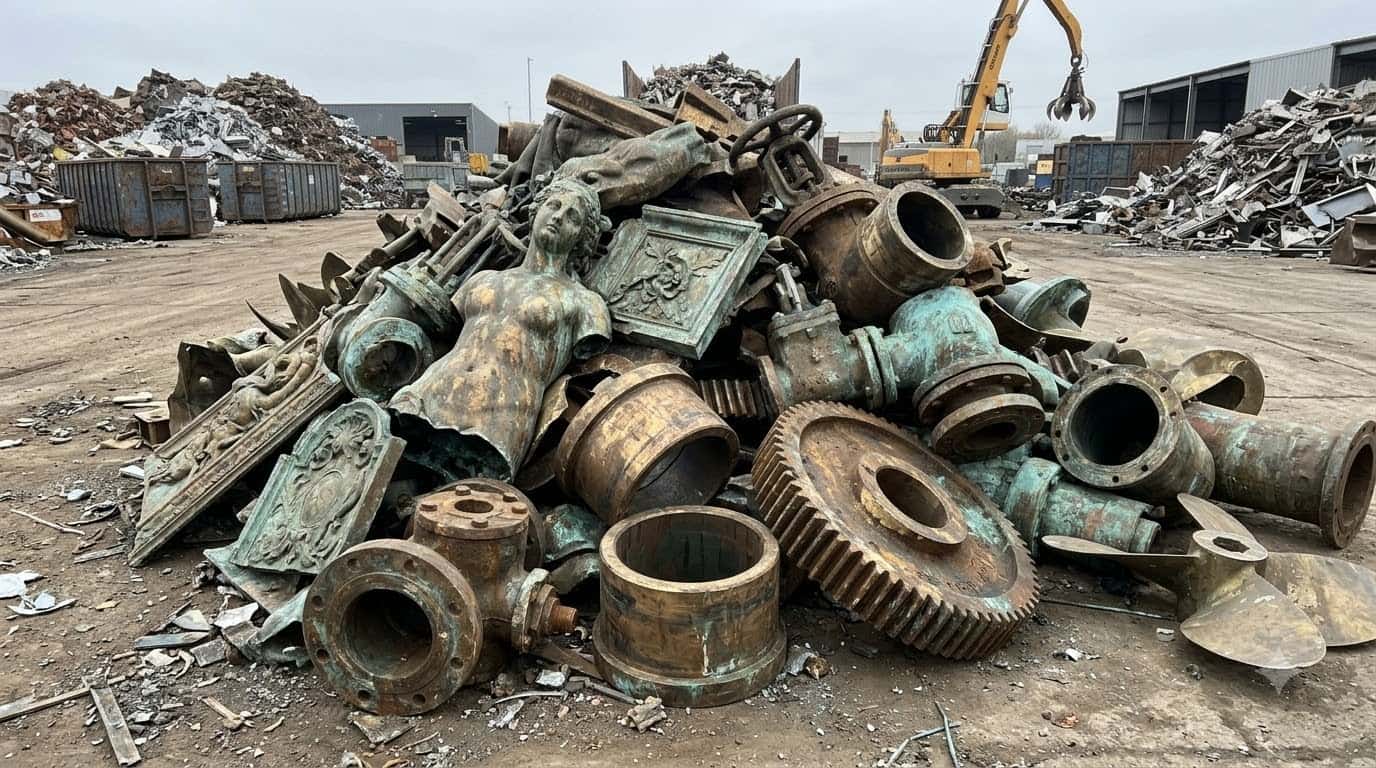
Brass and bronze are valuable copper-based alloys used in plumbing fittings, electrical components, marine equipment, industrial machinery, valves, bearings, and decorative products. When these products reach the end of their useful life, their metal can be recovered and recycled into new alloy products.
Although brass and bronze are both copper alloys, they have different compositions and properties. This distinction matters during recycling because foundries and metal processors need to control the composition of their furnace charge. Mixing unidentified brass and bronze scrap can make quality control more difficult and may reduce the material's suitability for specific applications.
The brass and bronze recycling process generally involves identification, sorting, cleaning, remelting, and casting. This guide explains how copper alloy scrap is recycled, how brass differs from bronze, why separation matters, and where businesses can sell their material.
Why Copper Alloys Are Worth Recycling
Copper alloys are widely used because they combine copper with other elements to achieve specific properties. Depending on the alloy, these properties may include corrosion resistance, machinability, strength, wear resistance, and suitability for electrical or industrial applications.
Recycling brass and bronze helps recover copper and other alloying elements from discarded products and manufacturing waste.
There are several reasons why copper alloy scrap is important to the recycling industry.
Recovering valuable metals: Brass and bronze contain copper, which can be recovered and reused through suitable metal recycling processes.
Supporting manufacturing: Recycled copper alloy material can become part of the raw material supply for foundries and manufacturers.
Reducing material waste: Scrap from old fittings, machinery, industrial components, and production operations can be returned to the metal supply chain.
Maintaining alloy-specific supply: Properly sorted brass and bronze scrap gives processors more control over the material entering their furnaces.
However, not all copper alloy scrap has the same composition or market value. The grade, condition, contamination, and quantity influence whether a buyer can use the material for a particular production requirement.
Brass vs Bronze: Quick Identification
Brass and bronze are both copper alloys, but they are not interchangeable.
Brass is primarily an alloy of copper and zinc. It is commonly used in plumbing fittings, valves, electrical connectors, decorative hardware, and mechanical components.
Bronze is a family of copper alloys that traditionally includes copper and tin, although modern bronze alloys may contain other elements such as aluminium, phosphorus, or silicon.
| Feature | Brass | Bronze |
|---|---|---|
| Main alloying element | Usually zinc | Traditionally tin; other elements may be present |
| Common appearance | Often yellow or golden | Often reddish, brown, or darker |
| Common applications | Fittings, valves, connectors, hardware | Bearings, marine components, bushings, industrial parts |
| Recycling consideration | Zinc content and alloy grade | Alloy type and additional alloying elements |
| Identification | Visual inspection and suitable testing | Visual inspection and suitable testing |
How Copper Alloy Scrap Is Recycled
The recycling process depends on the type of brass or bronze scrap, its condition, and the requirements of the receiving foundry.
In general, copper alloy recycling follows two major stages: preparation and sorting, followed by melting and casting.
Sorting and Cleaning
Before brass and bronze scrap enters a furnace, it needs to be identified and prepared.
The first step is separating different copper alloy categories.
Separate brass from bronze: Keep the two alloy groups in different storage areas or containers. This reduces the risk of mixing materials with different compositions.
Identify alloy grades: Where possible, separate different grades according to the buyer's specifications. Brass fittings, brass turnings, bronze bearings, and aluminium bronze components may require different treatment.
Remove non-metal attachments: Separate plastic, rubber, wood, insulation, and other unwanted materials where practical.
Check for iron contamination: Remove attached steel parts, screws, and unrelated ferrous components when required by the buyer.
Manage oils and residues: Industrial components and machining scrap may contain cutting fluids, grease, or other residues. These materials may require cleaning or specialised handling before acceptance.
Prepare suitable sizes: Oversized components may need size reduction to meet handling and furnace charging requirements.
Testing equipment such as X-ray fluorescence (XRF) analysers can help identify alloying elements in suitable materials. This can be useful when visual identification is unreliable or when a buyer requires confirmation of the grade.
Clean, correctly identified scrap is generally easier for processors to evaluate than mixed, unidentified copper alloy material.
Remelting and Casting
After sorting and preparation, suitable brass and bronze scrap can be supplied to foundries for remelting.
The furnace and processing route depend on the alloy type, production volume, and final casting requirements.
The general process includes:
Furnace charging: Prepared scrap is loaded into a suitable furnace along with other approved charge materials. The foundry selects the charge based on the required alloy composition.
Melting: Heat is applied until the metal becomes molten. The furnace operator manages the process according to the alloy's characteristics and production requirements.
Composition control: The molten metal may be sampled and analysed. Additional metals or other approved charge materials may be introduced to achieve the required composition.
Metal treatment: The foundry may use suitable treatment procedures to manage impurities and prepare the molten alloy for casting.
Casting: The molten metal is poured into moulds to produce billets, ingots, or finished components, depending on the manufacturing process.
Finishing and inspection: After solidification, cast products may undergo cleaning, machining, dimensional checks, and quality inspection.
The recycled alloy can then be used in manufacturing products such as valves, fittings, bearings, bushings, connectors, and industrial components.
Not every facility performs all these stages. Some scrap dealers specialise in collection and sorting, while foundries and specialist processors handle melting and casting.
Why Mixing Alloys Lowers Value
Keeping brass and bronze separate is one of the most important steps in copper alloy scrap preparation.
The reason is straightforward: each alloy has a different chemical composition and may be intended for a different manufacturing application.
When different alloy types are mixed, the buyer may not know the exact composition of the load. This creates additional testing, sorting, and processing requirements.
For example, a batch of clean brass fittings is easier to assess than a mixed container containing brass valves, bronze bearings, aluminium bronze components, and steel attachments.
Mixing alloys can create several problems:
Uncertain composition: Different alloying elements may affect the final molten metal composition.
Additional sorting costs: Buyers may need to spend more time separating the material before processing.
Limited buyer suitability: A foundry looking for a particular brass grade may not accept a mixed copper alloy load.
Quality control challenges: Unidentified materials make it harder to prepare a consistent furnace charge.
Different price offers: Buyers may value mixed material differently from clean, identified alloy grades because of the additional processing and uncertainty.
Sellers should therefore separate brass, bronze, and other copper alloy categories whenever practical. Correct identification can help protect the commercial value of the scrap and make buyer evaluation easier.
Common Sources of Brass and Bronze Scrap
Brass and bronze scrap comes from manufacturing operations, industrial maintenance, demolition, vehicle components, and discarded equipment.
| Scrap source | Common material | Examples |
|---|---|---|
| Plumbing and construction | Brass | Taps, valves, fittings, connectors |
| Electrical equipment | Brass | Terminals, connectors, selected hardware |
| Marine equipment | Bronze and brass | Marine fittings, propeller components, valves |
| Industrial machinery | Bronze | Bearings, bushes, wear components |
| Manufacturing facilities | Brass and bronze | Machining scrap, rejected components, production offcuts |
| Automotive and transport | Copper alloys | Selected fittings and mechanical components |
| Decorative products | Brass and bronze | Hardware, ornaments, fixtures |
Machining operations can also generate brass and bronze turnings. These may require separate handling because of their size, shape, and possible contamination with cutting fluids.
The source of the scrap can help buyers understand the likely material type, but it does not replace grade identification or testing where required.
Where to Sell Copper Alloy Scrap
Brass and bronze scrap can be sold to copper alloy recyclers, non-ferrous scrap dealers, foundries, metal processors, and industrial buyers.
The most suitable buyer depends on the material grade, quantity, condition, and location.
Before selling, prepare the following information:
- Whether the material is brass, bronze, or another copper alloy.
- The known alloy grade, if available.
- Estimated or verified weight.
- Photographs showing the material clearly.
- Details of contamination, attachments, or surface condition.
- Whether the material is solid scrap, turnings, fittings, or mixed components.
- Collection or delivery location.
Compare buyer offers based on accepted specifications, inspection requirements, transport costs, payment terms, and the final payable weight.
You can also list your brass or bronze scrap on ScrapTrade to present your material to potential buyers through a global online scrap marketplace.
Sellers can provide material descriptions, quantities, photographs, and pricing terms. Interested buyers can review the listings and submit offers according to their requirements. ScrapTrade operates as a marketplace and does not take ownership of the listed material.
For more guidance, explore the brass scrap trading guide and the bronze scrap trading guide.
FAQs
Can brass and bronze be recycled together?
Both materials can be recycled, but they should generally be sorted separately before sale and processing. Their alloy compositions differ, and foundries may require specific grades to control the composition of new castings.
How is brass scrap recycled?
Brass scrap is identified, sorted, cleaned, and prepared before being charged into a suitable furnace. The molten alloy is checked and adjusted according to the required composition, then cast into ingots or new components.
How is bronze scrap recycled?
Bronze scrap is sorted according to its alloy type, cleaned, and prepared for remelting. Foundries control the molten metal composition before casting it into products such as bearings, bushings, fittings, and industrial components.
Why should brass and bronze scrap be separated?
Brass and bronze have different alloying elements and manufacturing applications. Mixing them can create uncertainty about the material composition, increase sorting costs, and make the scrap less suitable for buyers seeking a specific grade.
Conclusion
Brass and bronze recycling helps recover copper and other alloying elements from discarded fittings, industrial components, machinery, and manufacturing scrap. The process involves identifying and sorting the alloys, removing contamination, remelting suitable material, controlling its composition, and casting it into new products.
The most important preparation step for sellers is keeping brass and bronze separate. Their compositions differ, and foundries need suitable material to produce consistent alloy products.
If your business collects or supplies brass fittings, bronze bearings, industrial copper alloys, or machining scrap, list your brass or bronze scrap on ScrapTrade and connect with potential buyers in the global scrap market.