

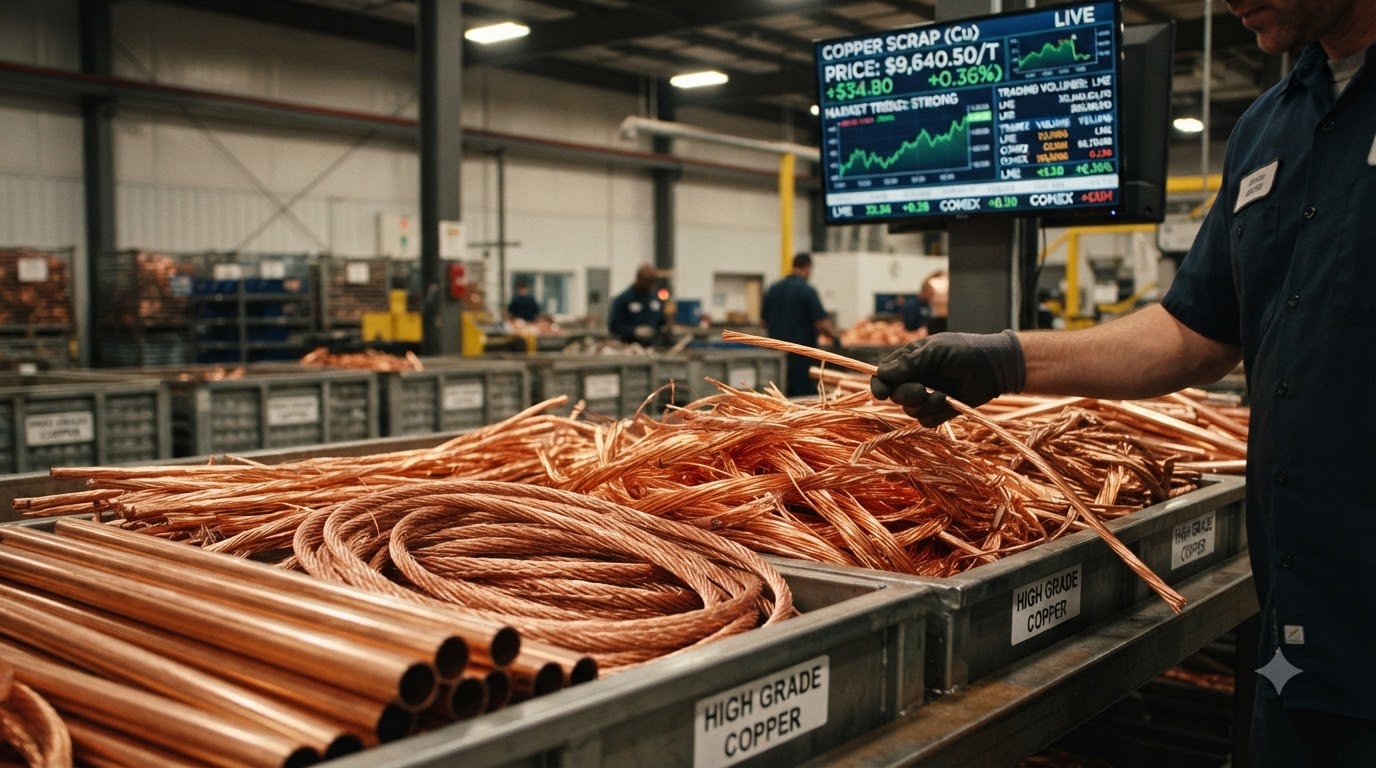
Copper scrap trading is the buying and selling of recyclable copper materials between businesses, scrap dealers, recyclers, processors, manufacturers, and other commercial buyers and sellers. Because copper retains significant material value and can be recovered and reused, it is one of the most actively traded non-ferrous scrap materials.
However, not all copper scrap has the same value. The type of copper, purity, form, contamination, quantity, location, and current market conditions can all affect the price offered by a buyer.
Why Copper Scrap Is Highly Traded
Copper is widely used in electrical wiring, construction, plumbing, electronics, machinery, and industrial equipment, creating a steady supply of recoverable copper scrap.
Copper scrap can come from cable, wire, tubing, motors, transformers, manufacturing offcuts, and demolition materials. Its value depends heavily on the material's grade, purity, condition, and contamination.
Clean copper generally has different pricing characteristics from insulated wire or mixed copper scrap. Accurate grading helps sellers attract suitable buyers and enables buyers to assess value, processing costs, and recovery potential more accurately.
Common Copper Scrap Grades Explained
Copper scrap is classified based on purity, condition, form, and contamination. Grade names can vary between markets, so sellers should always confirm the buyer's specifications.
Berry and Candy Copper Scrap
Berry and Candy are trade terms often used for certain clean copper wire, cable, tubing, or similar materials. Exact specifications can vary, making photos, descriptions, and material details important.
No. 1 Copper
No. 1 copper generally refers to clean, high-quality unalloyed copper with limited contamination. The material must meet the buyer's specific grade requirements.
No. 2 Copper
No. 2 copper generally allows more oxidation, solder, coatings, attachments, or impurities than higher-grade copper. Its value depends on quality and processing requirements.
Other Copper Scrap
Other forms include insulated wire, copper cable, motors, mixed components, and manufacturing scrap. Buyers may assess these based on copper content, recovery potential, and processing costs.
What Affects Copper Scrap Pricing
There is no single universal price for all copper scrap. The value of a particular load depends on the material specification and the commercial conditions surrounding the transaction.
Copper Content and Grade
The grade is one of the most important factors. Clean, high-quality copper generally has different pricing characteristics from lower-grade or mixed material.
A buyer will consider the expected copper recovery, processing requirements, and potential losses when evaluating an offer.
Market Reference Prices
Copper prices in broader commodity markets can influence scrap pricing. Changes in supply, demand, industrial activity, inventories, currency movements, and broader economic conditions can affect market expectations.
Scrap buyers may use market references as one input when calculating their offer, but a scrap transaction price is not necessarily identical to a published commodity-market price.
For current reference information, sellers and buyers can check ScrapTrade market prices before negotiating a transaction.
Quantity
The size of the shipment can influence the economics of a deal. Larger commercial quantities may support different logistics and processing economics than small loads.
A copper seller should therefore specify the available quantity and unit of measurement clearly.
Cleanliness and Contamination
Insulation, plastic, solder, coatings, dirt, attachments, mixed metals, and other contaminants can affect the value of copper scrap.
Two loads with similar gross weights can therefore produce different buyer offers if their recoverable copper content differs.
Location and Logistics
The location of the material matters because transportation is part of the overall transaction economics.
A buyer considering copper scrap may evaluate pickup distance, freight availability, loading requirements, export or import considerations, and delivery terms before making a final offer.
Supply and Demand
Regional availability and buyer demand can also influence offers. A material that is readily available in one market may have different trading conditions in another.
This is particularly relevant for businesses trading copper internationally, where logistics, market access, currency, and local regulations can affect the transaction.
How to Sell Copper Scrap Online
To sell copper scrap online, create a clear listing with the grade, quantity, location, condition, photos, packaging, and any contamination or attachments. Accurate descriptions help buyers evaluate the material and make relevant offers.
Create a Detailed Listing
Include clear photos and material details. If available, add inspection reports, test results, or other documentation to support the listing.
Set a Reasonable Price
Consider current market references along with the copper's grade, quantity, location, and condition. You can list copper scrap and connect with potential buyers through the ScrapTrade marketplace.
Compare Buyer Offers
Review offers based on more than price. Consider payment terms, inspection, pickup, shipping, and delivery responsibilities before accepting a deal.
For more guidance, see how to sell scrap online.
How to Buy Copper Scrap Online
Buying copper scrap online starts with defining the required grade, quantity, quality, and location. Buyers can then review listings and compare available materials from different sellers.
Verify the Material
Check photos, descriptions, specifications, and available documentation. Depending on the transaction, inspection, sampling, or testing may be required to confirm quality and copper content.
Compare Total Costs
Look beyond the quoted price. Consider freight, loading, processing, inspection, taxes, duties, and other transaction costs. For international purchases, calculate the total landed cost.
Agree on Commercial Terms
Before purchasing, confirm the material specification, quantity, price, payment terms, inspection, pickup or delivery arrangements, and required documentation. Clear terms help reduce disputes and support long-term B2B trading.
FAQs
What is copper scrap trading?
Copper scrap trading is the commercial buying and selling of recyclable copper materials. Transactions can involve clean copper, copper wire, tubing, cable, industrial scrap, manufacturing offcuts, and other copper-bearing materials.
What are the main copper scrap grades?
Commonly referenced copper scrap categories include Berry, Candy, No. 1 copper, and No. 2 copper, along with various forms of copper wire, tubing, cable, and industrial copper scrap. Exact specifications can vary by market and buyer.
What determines the price of copper scrap?
Copper scrap pricing can be affected by grade, copper content, cleanliness, contamination, quantity, market reference prices, location, logistics, supply and demand, and the commercial terms of the transaction.
How can I sell copper scrap online?
Start by identifying the material and grade, estimating the available quantity, taking clear photographs, documenting the location and condition, and creating a detailed listing. You can then receive and compare offers from potential buyers.
Conclusion
Copper scrap trading depends on more than simply knowing the current copper market price. The grade, purity, physical condition, quantity, contamination, location, logistics, and transaction terms all influence how a particular load is valued.
For sellers, accurate descriptions and clear material specifications can help attract relevant buyers and improve the quality of offers. For buyers, understanding copper grades and verifying the material can make sourcing more predictable.