

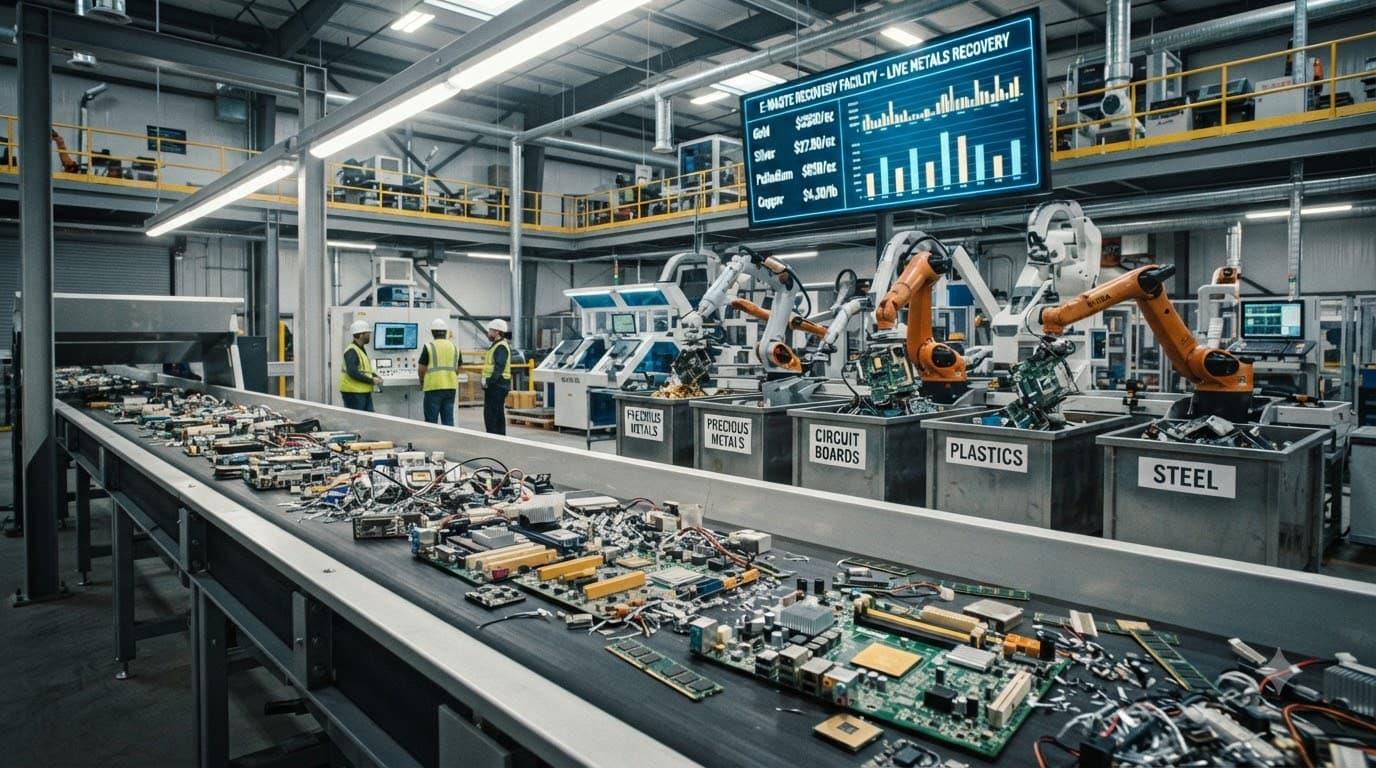
E-waste trading involves the buying and selling of discarded electrical and electronic equipment, components, and materials that can potentially be reused, refurbished, recovered, or recycled. As businesses replace computers, machinery, communication equipment, appliances, and other electronic products, the amount of electronic scrap entering the recycling stream continues to create both operational challenges and material recovery opportunities.
E-waste is different from ordinary scrap because electronic products can contain a mixture of recoverable metals, plastics, components, and other materials. Some equipment may also contain substances that require controlled handling.
What Counts as E-Waste?
E-waste includes discarded electrical and electronic equipment, components, and devices that are no longer wanted or useful. The category can vary by country and recycling program.
Common examples include:
- Computers, laptops, and servers
- Monitors and printers
- Circuit boards and electronic components
- Cables and wiring
- Televisions and consumer electronics
- Telecommunications equipment
- Industrial and commercial electronics
Computers and IT Equipment
Old computers, servers, networking equipment, monitors, and peripherals may be reused, refurbished, dismantled, or recycled depending on condition.
Circuit Boards
Circuit boards contain a mixture of metals and other materials. Their recovery potential depends on the board type and equipment source.
Cables and Wiring
Cable value can depend on conductor material, insulation, size, and cleanliness. Sellers should state whether cables are insulated, stripped, or mixed.
Consumer Electronics
Televisions, cameras, audio equipment, game systems, and small appliances can enter the e-waste stream. Some may have reuse value, while others require recycling.
Industrial and Commercial Electronics
Businesses can generate larger quantities of obsolete control systems, communication equipment, electrical components, and machinery electronics.
Why E-Waste Requires Specialized Handling
E-waste needs careful handling because electronic products contain a mix of metals, plastics, glass, batteries, and other components.
Complex Material Composition
Electronic equipment may require specialized dismantling, sorting, and processing to separate recoverable materials efficiently.
Valuable and Problematic Materials
Some e-waste contains recoverable metals, while certain components may require controlled handling. Composition varies by equipment type, age, and manufacturer.
Data Security
Computers, phones, servers, and storage devices may contain sensitive information. Businesses should follow proper data-erasure and security procedures before resale, reuse, or recycling.
Sorting and Identification
Separating e-waste into categories such as circuit boards, cables, computers, monitors, and mobile devices can help buyers evaluate material more accurately and determine suitable processing methods.
What's Recoverable from E-Waste
E-waste can contain valuable materials and reusable components. Recovery potential depends on the equipment, condition, composition, and processing method.
Copper
Found in cables, wiring, motors, transformers, and circuit boards. Copper-rich material can be valuable to specialized recyclers.
Aluminium
Common in housings, heat sinks, and structural parts. Separating aluminium can improve sorting and processing.
Precious Metals
Some electronics contain small amounts of gold, silver, palladium, and other precious metals. Content varies, so testing or reliable material information is important.
Plastics
Electronic housings, insulation, and internal components may contain recyclable plastics. Recovery depends on type, contamination, and separation.
Reusable Components
Working or repairable computers, networking equipment, industrial electronics, and other devices may be reused, refurbished, resold, or dismantled for parts. Sellers should state whether equipment is tested, working, damaged, incomplete, or sold for parts.
How to Trade E-Waste Through a Verified Marketplace
Businesses can use a digital marketplace to present e-waste opportunities to potential commercial buyers. The quality of the listing is particularly important because buyers need to understand what is included before evaluating a transaction.
Step 1: Identify and Sort the Material
Start by determining what type of e-waste is available.
Separate different material categories where practical and identify complete equipment, components, cables, circuit boards, batteries, or other items separately when their characteristics are substantially different.
Step 2: Describe the Condition
Condition is important for e-waste because the same equipment can have different commercial uses depending on whether it is working, repairable, damaged, obsolete, or intended purely for recycling.
Include relevant details such as tested status, missing components, visible damage, age where known, and whether the material is being sold for reuse or recycling.
Step 3: Provide Quantity and Photos
Give an estimated quantity or weight and explain whether the material is a one-time lot or recurring supply.
Clear photographs can help buyers understand the equipment type, condition, sorting level, and visible contamination. For larger loads, photographs of the overall material as well as representative individual items can be useful.
Step 4: Disclose Relevant Information
Include information that could affect the buyer's assessment.
This may include the source of the material, equipment category, known composition, working status, battery presence, data-storage devices, packaging, contamination, and any available documentation.
Sellers should distinguish between verified information and estimates.
Step 5: Connect With Potential Buyers
Once the material is listed, potential buyers can review the available information and determine whether the e-waste fits their requirements.
A verified marketplace can help businesses discover potential trading partners rather than relying only on a single local buyer.
Businesses can explore the ScrapTrade marketplace to list e-waste materials and connect with potential buyers.
Step 6: Agree on Commercial and Handling Terms
Before completing a transaction, buyers and sellers should clarify the material description, quantity, pricing basis, inspection process, payment terms, pickup or delivery arrangements, and responsibilities for handling.
For cross-border transactions, the parties should also independently verify the applicable requirements in the countries involved. E-waste rules can differ significantly between jurisdictions and material categories.
FAQs
What is considered e-waste?
E-waste generally includes discarded electrical and electronic equipment, components, and devices. Examples include computers, circuit boards, cables, monitors, telecommunications equipment, consumer electronics, and industrial electronic equipment.
What materials can be recovered from e-waste?
Depending on the equipment, e-waste can contain copper, aluminium, plastics, circuit-board materials, and smaller quantities of precious metals. Recovery depends on the material composition and available processing methods.
Why is e-waste different from ordinary scrap?
E-waste can contain many different materials and components within a single product. It may also contain batteries, data-storage devices, or other components requiring particular handling. This makes identification, sorting, and specialized processing important.
How can I sell e-waste?
Identify and sort the material, describe its type and condition, provide the quantity and location, add clear photographs, and disclose relevant information. You can then list the material on an online marketplace and connect with potential buyers.
Conclusion
E-waste recycling and trading connects electronic waste with opportunities for reuse, refurbishment, component recovery, and material recycling. Computers, circuit boards, cables, industrial electronics, consumer devices, and other electronic equipment can contain recoverable materials, but their composition and handling requirements can vary considerably.
For businesses, the first step is accurate identification. A useful e-waste listing should explain what the material is, its condition, quantity, location, photographs, and any known information about its composition or components.