

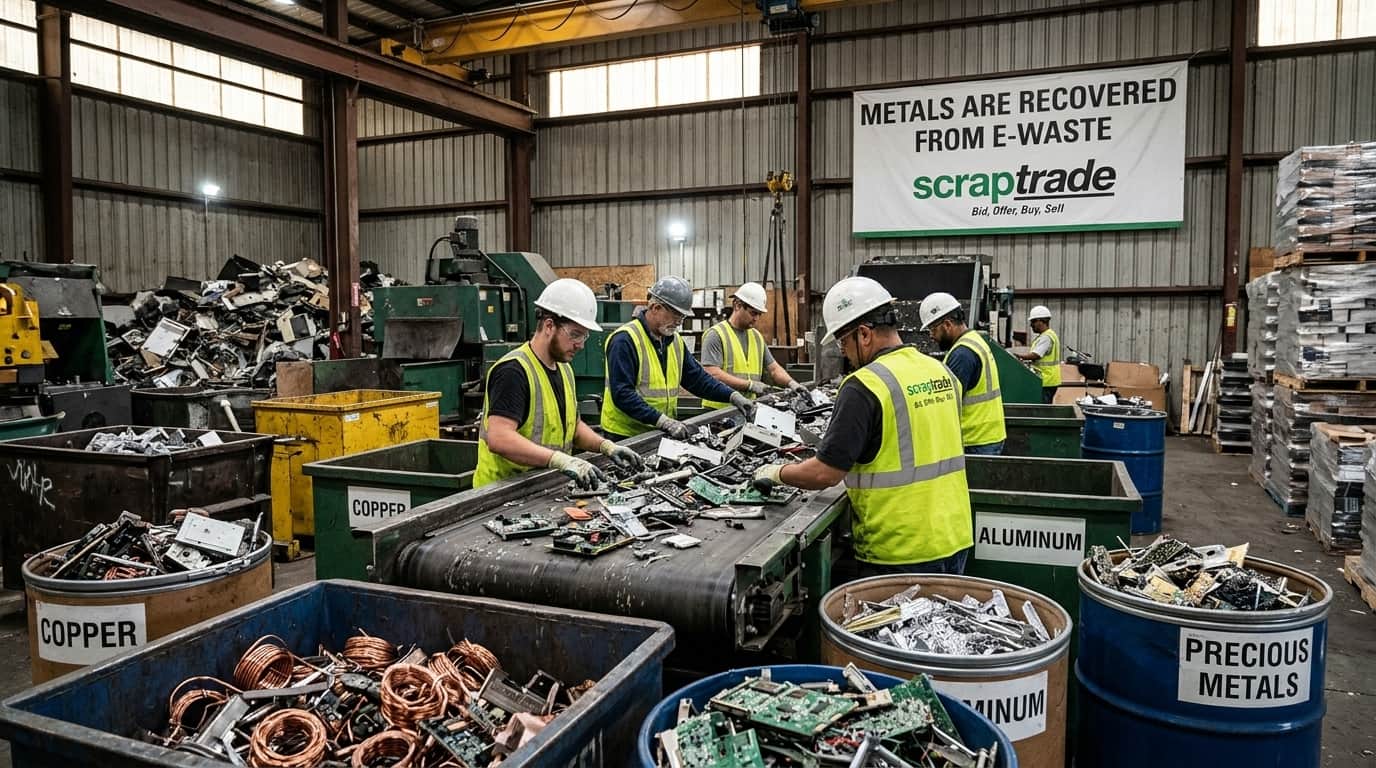
Discarded computers, mobile phones, circuit boards, televisions, cables, and other electronic equipment contain more than plastic and electronic components. Many also contain recoverable metals, including copper, aluminium, iron, nickel, and small quantities of precious metals.
However, recovering these materials is not as simple as collecting old electronics and melting everything together. E-waste contains different components, mixed materials, and potentially hazardous substances. Recycling facilities must follow controlled processes to separate useful materials while managing environmental and workplace risks.
The e-waste metal recovery process generally involves collection, dismantling, shredding, mechanical separation, and specialised metallurgical treatment. Each stage helps recover materials that can return to industrial supply chains.
Why E-Waste Is a Source of Valuable Metals
Electronic waste, commonly called e-waste, includes discarded electrical and electronic equipment and its components. It comes from households, offices, factories, telecommunications infrastructure, data centres, and electronic manufacturing operations.
Many electronic products contain metals because they are needed for electrical conductivity, structural strength, heat management, corrosion resistance, and electronic connections.
Common examples include:
- Printed circuit boards (PCBs): May contain copper, gold, silver, palladium, and other metals.
- Electrical cables: Often contain copper or aluminium conductors.
- Computer equipment: May contain steel, aluminium, copper, and electronic components with recoverable metals.
- Mobile phones: Contain small quantities of several metals in circuit boards, connectors, batteries, and other components.
- Power supplies and motors: Can contain copper windings, steel, aluminium, and other materials.
- Connectors and electronic contacts: May contain copper alloys and precious-metal coatings.
The commercial value of e-waste depends on its composition, product category, condition, quantity, and the recovery technology available.
Not all electronic waste has the same metal content. A high-grade circuit board is different from a mixed load of plastic computer housings and damaged accessories. Proper identification and sorting are therefore important before processing or selling.
The E-Waste Recycling Process
Metal recovery from e-waste generally involves several stages. The exact route depends on the equipment type, the materials present, the facility's capabilities, and applicable environmental requirements.
Collection and Dismantling
The process begins with collecting electronic waste from suitable sources.
Common collection sources include businesses replacing computers, telecommunications operators upgrading equipment, electronic manufacturers, repair centres, data centres, and household collection programmes.
After collection, recyclers inspect and categorise the equipment. Devices may be sorted into groups such as computers, mobile phones, circuit boards, cables, batteries, and electrical equipment.
Dismantling follows. Workers or automated systems separate components that require different recovery routes.
Typical dismantling activities include:
Removing batteries: Batteries are separated because they require dedicated handling and recycling processes. Lithium-ion batteries need particular attention due to fire and thermal runaway risks.
Removing circuit boards: PCBs are separated from plastic housings, metal frames, and other components. Different board categories may have different material compositions.
Recovering cables: Power cables, data cables, and wiring harnesses may be separated for copper or aluminium recovery.
Separating metal housings: Steel and aluminium parts can be collected as individual material streams.
Removing reusable components: Some equipment or parts may be suitable for repair, refurbishment, or resale rather than immediate material processing.
Managing hazardous components: Certain electronic products may contain substances or components requiring specialised handling.
Dismantling improves material identification and prevents components with different processing requirements from entering the same recycling stream.
Data security is also important when processing computers, storage devices, and mobile phones. Businesses should ensure that data-bearing equipment is handled through appropriate data destruction or sanitisation procedures before reuse or recycling.
Shredding and Separation
After dismantling and removal of components that require separate treatment, suitable e-waste fractions may be sent for mechanical processing.
Shredding reduces electronic materials into smaller pieces, making it easier to separate metals from plastics and other materials.
The shredded material may pass through several separation systems.
Magnetic separation: Magnets recover suitable ferrous metals, such as iron and steel, from mixed material streams.
Eddy current separation: This technology helps separate conductive non-ferrous metals, particularly aluminium, from other materials.
Density separation: Differences in material density can be used to separate selected metal and non-metal fractions.
Screening: Screens separate material according to particle size, helping prepare fractions for further processing.
Sensor-based sorting: Optical, X-ray, and other identification technologies may be used to distinguish selected materials.
Manual sorting: Workers may inspect and separate components or material fractions that require additional identification.
The objective is to create more concentrated material streams for further recovery.
For example, copper-rich fractions can be directed towards suitable copper recovery operations, while aluminium and ferrous fractions can enter their respective recycling routes.
However, shredding is not suitable for every electronic component. Batteries, certain displays, lamps, and other specialised items may need separate treatment before mechanical processing.
Smelting and Refining
Mechanical separation does not recover every metal in a pure or usable form. Some e-waste fractions require additional metallurgical processing.
Smelting and refining are important methods used to recover metals from selected electronic scrap streams, particularly metal-rich circuit boards and concentrates.
Smelting: Prepared material is processed at high temperatures in a suitable furnace. Depending on the process, metals are separated into molten phases, while other substances form slag or other process residues.
Metal collection: Valuable metals may be concentrated into a metal phase or intermediate material for further treatment.
Refining: Additional processing separates and purifies individual metals to meet the required specifications.
Copper smelting and refining routes can also help recover associated precious metals from suitable electronic materials. Gold, silver, and palladium may require specialised downstream recovery and refining operations.
Not every recycling facility performs all these stages. Some dismantle and sort e-waste before supplying concentrated fractions to specialist metal processors.
Hydrometallurgical methods may also be used for selected materials. These involve chemical solutions to dissolve and recover specific metals under controlled industrial conditions.
The choice of technology depends on the material composition, target metals, process economics, environmental controls, and facility capabilities.
Which Metals Can Be Recovered
E-waste can contain several commercially useful metals. The actual recovery potential depends on the equipment category and the components being processed.
| Metal | Common e-waste sources | Potential recovery route |
|---|---|---|
| Copper | Circuit boards, cables, motors, wiring | Mechanical separation, smelting, and refining |
| Aluminium | Computer housings, heat sinks, frames | Sorting and remelting |
| Iron and steel | Computer cases, equipment frames, brackets | Magnetic separation and steel recycling |
| Gold | Selected circuit boards, connectors, contacts | Specialist precious-metal recovery |
| Silver | Circuit boards, contacts, selected electronic components | Refining and precious-metal recovery |
| Palladium | Certain circuit boards and electronic components | Specialist metal refining |
| Nickel | Batteries, connectors, and selected components | Dedicated material recovery routes |
| Tin | Solder and selected electronic assemblies | Specialist recovery and refining |
Copper Recovery
Copper is one of the important metals recovered from electronic waste because it is used extensively in electrical and electronic systems.
It can be found in cables, printed circuit boards, motors, transformers, connectors, and wiring assemblies.
Cable processing may involve removing insulation and separating the copper conductor. Circuit board processing generally requires more complex mechanical and metallurgical methods.
Precious Metal Recovery
Gold, silver, and palladium can be present in selected electronic components, especially circuit boards and electrical contacts.
Their recovery requires specialised processing because the metals may be present in small quantities and mixed with other materials.
Sellers should not assume that every circuit board contains the same precious-metal content. Board type, age, design, and component mix can influence its recovery potential.
Aluminium and Ferrous Metal Recovery
Aluminium is commonly recovered from electronic housings, heat sinks, frames, and selected components. Steel and iron may come from equipment cases, structural frames, and internal components.
These materials can often be separated through mechanical and magnetic processes before being supplied to metal recyclers.
Safety and Compliance Considerations
E-waste recycling requires careful handling because electronic products may contain hazardous substances, stored electrical energy, sharp components, and materials that create risks during dismantling or processing.
Important considerations include:
Battery safety: Damaged or incorrectly handled batteries, particularly lithium-ion batteries, can create fire and thermal runaway hazards. Batteries should be separated and handled through suitable procedures.
Hazardous substances: Certain electronic products may contain lead, mercury, cadmium, and other substances requiring controlled management.
Dust and fumes: Shredding, cutting, heating, and metallurgical processing can generate dust or fumes. Appropriate ventilation, filtration, protective equipment, and process controls are essential.
Refrigerants and other fluids: Selected electrical equipment, such as cooling appliances, may contain refrigerants or other substances requiring specialist recovery.
Worker protection: Dismantling and processing operations require suitable training, handling equipment, and workplace safety procedures.
Environmental management: Facilities need appropriate systems for managing wastewater, residues, emissions, and hazardous fractions.
International E-Waste Movement
Cross-border movement of electronic waste can involve additional regulatory requirements. The Basel Convention provides an international framework concerning the control of transboundary movements of hazardous wastes and their disposal. Its scope and relevant requirements depend on the material, classification, destination, and applicable rules.
Businesses involved in importing or exporting electronic scrap should verify the current requirements in the exporting and importing countries before arranging shipment.
Do not assume that all used electronics or e-waste can be shipped under the same classification. Material descriptions, condition, intended reuse or recovery, and applicable customs and environmental rules can affect the required documentation and permissions.
Where to Sell E-Waste Scrap
E-waste can be sold to specialised electronic waste recyclers, circuit board processors, metal recovery companies, and industrial scrap buyers.
The right buyer depends on the material category. A circuit board processor may accept selected PCB grades, while another buyer may specialise in copper cables, computer scrap, or dismantled electronic components.
Sellers should compare offers based on material specifications, accepted quantities, collection or delivery arrangements, inspection requirements, and payment terms.
You can also list your e-waste scrap on ScrapTrade to present your material to potential buyers through a global online scrap marketplace.
When creating a listing, include the material category, quantity, condition, location, photographs, and relevant processing details. Buyers can review the information and submit offers based on their requirements.
FAQs
How are metals recovered from e-waste?
Metals are recovered through collection, dismantling, shredding, mechanical separation, and specialised metallurgical processing. Magnetic separators recover suitable ferrous metals, eddy current systems help separate non-ferrous metals, and smelting or refining processes recover metals from selected material fractions.
Which metals can be recovered from electronic waste?
Common recoverable metals include copper, aluminium, iron, steel, nickel, tin, gold, silver, and palladium. The metals present depend on the type of electronic equipment and its internal components.
How is gold recovered from electronic scrap?
Gold can be recovered from selected circuit boards and electronic contacts through specialised industrial processing and refining. The material is first prepared and concentrated, followed by controlled recovery methods designed to separate precious metals from other substances.
Why should batteries be removed before e-waste shredding?
Batteries require separate handling because some types, especially lithium-ion batteries, can create fire and thermal runaway risks if damaged or improperly processed. Removing them before suitable mechanical treatment helps reduce these risks.
Conclusion
E-waste metal recovery transforms discarded electronics into useful industrial raw materials. The process begins with collection and dismantling, followed by shredding and mechanical separation where suitable. Selected metal-rich fractions then undergo smelting, refining, or other specialised recovery methods.
Copper, aluminium, iron, steel, nickel, and precious metals can enter different recycling routes depending on their source and composition. However, batteries, hazardous components, and non-metal residues require separate handling and appropriate controls.
For sellers, accurate material identification, sorting, photographs, quantity details, and compliance checks are essential when preparing electronic scrap for sale.
If your business supplies circuit boards, computer scrap, copper cables, electronic components, or mixed e-waste, list your e-waste scrap on ScrapTrade and connect with potential buyers in the global scrap market.