

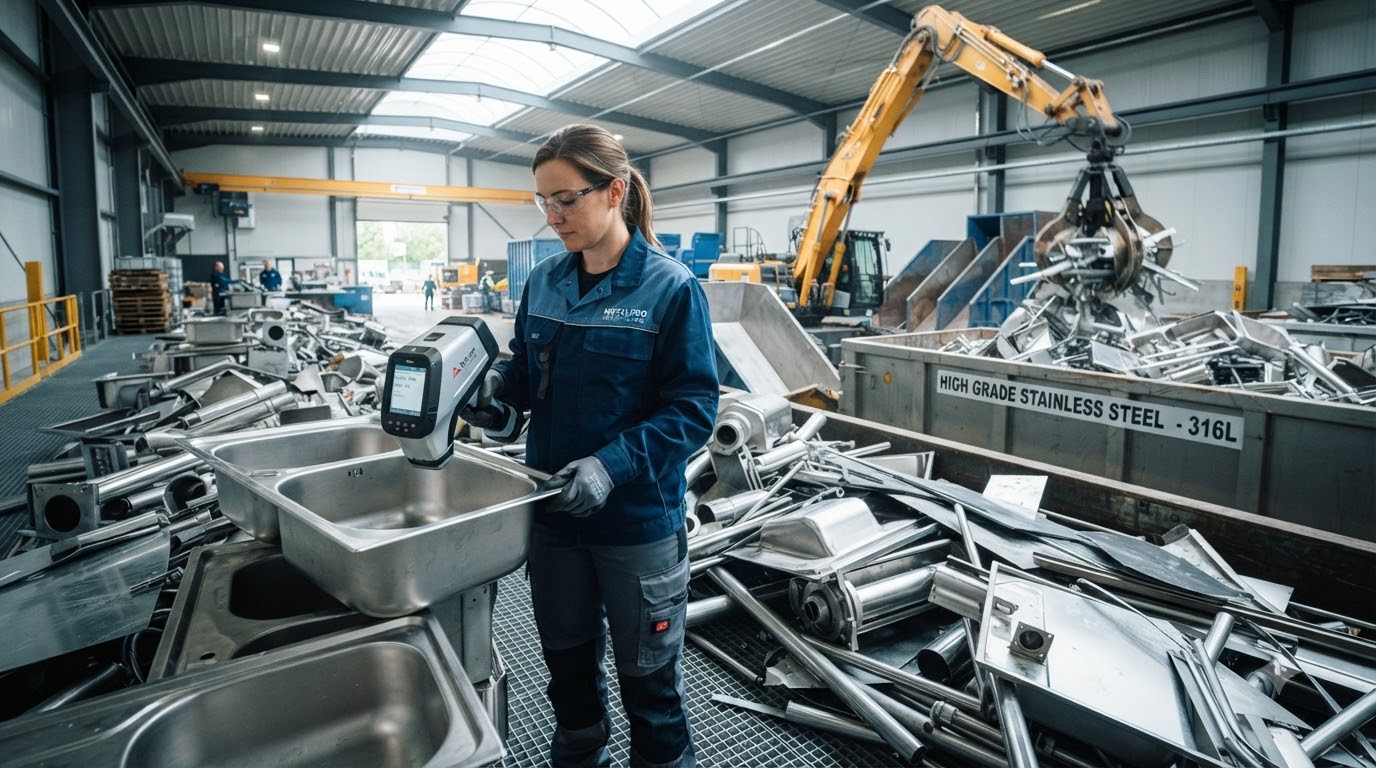
Stainless steel scrap is recyclable metal recovered from manufacturing, construction, food processing, automotive, industrial equipment, commercial facilities, and everyday products. Because stainless steel contains valuable alloying elements and can be recycled into new steel products, it has an established market among recyclers, processors, mills, and industrial buyers.
However, stainless steel scrap is not all the same. Grades such as 304 and 316 have different compositions and applications, while other grades may have different commercial characteristics. Identifying the grade, condition, quantity, and source of the material can help sellers create more accurate listings and help buyers evaluate available scrap.
What Makes Stainless Steel Scrap Different
Stainless steel contains chromium and other alloying elements that provide corrosion resistance. Depending on the grade, it may also contain nickel, molybdenum, manganese, and other elements.
These alloy differences can affect the recycling value, processing, and buyer requirements of stainless steel scrap.
Stainless scrap can include sheets, pipes, tubes, bars, fabrication offcuts, kitchen equipment, tanks, machinery parts, and production scrap. Visual appearance alone does not always confirm the grade; markings, documentation, or material testing may be required.
Stainless Steel vs Carbon Steel
Carbon steel and stainless steel have different compositions and commercial characteristics. Stainless steel contains sufficient chromium for enhanced corrosion resistance, while carbon steel does not have the same chromium-based composition.
For scrap trading, proper separation and grade identification help buyers evaluate mixed or individual loads more accurately.
Common Stainless Steel Grades: 304, 316, and Others
Stainless steel has many grades, with 304 and 316 among the most commonly encountered in commercial and industrial scrap.
304 Stainless Steel
304 is widely used in kitchen equipment, tanks, piping, architectural components, and general fabrication. Scrap may include sheets, tubes, fittings, offcuts, and equipment.
316 Stainless Steel
316 is commonly used where higher corrosion resistance is required, including marine, chemical-processing, pharmaceutical, and food-processing applications. Its molybdenum content makes accurate identification important.
Other Stainless Steel Grades
Other grades include 301, 309, 310, 321, 410, and 430, each with different compositions and applications.
Sellers should provide the known grade and disclose the condition, contamination, attachments, markings, or documentation. If the grade is unknown, avoid guessing and provide enough information for appropriate verification.
Industrial vs Commercial Sources
Stainless steel scrap can originate from both industrial operations and commercial products.
Industrial Stainless Steel Scrap
Industrial sources can generate relatively consistent stainless scrap streams.
Examples include manufacturing plants, fabrication facilities, food-processing equipment, chemical-processing equipment, pharmaceutical operations, engineering businesses, and industrial maintenance.
Industrial scrap may include:
- Production offcuts and trimmings
- Stainless steel sheet and plate
- Pipes and tubes
- Fabrication remnants
- Tanks and vessels
- Machinery components
- Process equipment
Where a business generates stainless scrap regularly, recurring supply information can make the material more useful to commercial buyers.
Commercial Stainless Steel Scrap
Commercial sources can include restaurants, kitchens, commercial buildings, workshops, construction projects, retail facilities, and equipment replacement programs.
Examples include stainless sinks, counters, appliances, fixtures, shelving, commercial kitchen equipment, and other stainless components.
Commercial scrap may contain attached plastic, rubber, electrical components, fasteners, or other materials. These should be disclosed when preparing a listing.
How to List and Sell Stainless Scrap Online
Selling stainless steel scrap online starts with accurate grade identification and a detailed listing.
Identify the Grade and Material
Specify whether the scrap is 304, 316, another grade, or unidentified stainless steel. Include certificates, markings, records, or test results when available. Avoid guessing an unknown grade.
Describe the Material Condition
Explain whether the scrap is clean, mixed, coated, oily, painted, or contaminated. Use clear photos of the actual material.
Add Quantity and Location
Provide the estimated quantity, measurement unit, location, and recurring supply availability if applicable. Location helps buyers calculate transportation costs.
Create the Online Listing
Combine the grade, material type, quantity, location, photos, condition, and supporting documentation. Businesses can use the ScrapTrade product listing page to list stainless steel scrap.
Review and Compare Offers
Compare offers based on the complete terms, including price, payment, inspection, freight, pickup, and delivery conditions. Confirm the grade, quantity, pricing, inspection, payment, and logistics before closing the deal.
FAQs
What is stainless steel scrap?
Stainless steel scrap is discarded or surplus stainless steel material that can be collected, processed, and recycled. It can come from manufacturing, construction, commercial equipment, industrial facilities, appliances, and other sources.
What are the common stainless steel scrap grades?
304 and 316 are two commonly encountered stainless steel grades. Other grades include 301, 309, 310, 321, 410, and 430. The appropriate classification depends on the material's composition and applicable specification.
Is 304 stainless steel scrap valuable?
304 stainless steel scrap has an established recycling market, but the value of a particular load depends on factors such as grade verification, alloy composition, cleanliness, quantity, location, market conditions, and commercial terms.
How can I sell stainless steel scrap?
Identify the grade and material type where possible, determine the quantity, photograph the scrap, describe its condition and location, and create an accurate online listing. Potential buyers can then evaluate the material and submit offers.
Conclusion
Stainless steel scrap differs from ordinary steel because its alloy composition can include chromium, nickel, molybdenum, and other elements. Grades such as 304 and 316 are commonly traded, alongside many other grades.
Accurate identification is important because grade and composition can affect buyer requirements, processing, and commercial value. Sellers should provide the grade, form, quantity, condition, location, photos, and any known contamination or attachments.
Online marketplaces can help businesses list stainless steel scrap, reach potential buyers, and compare offers based on the material and agreed trading terms.