

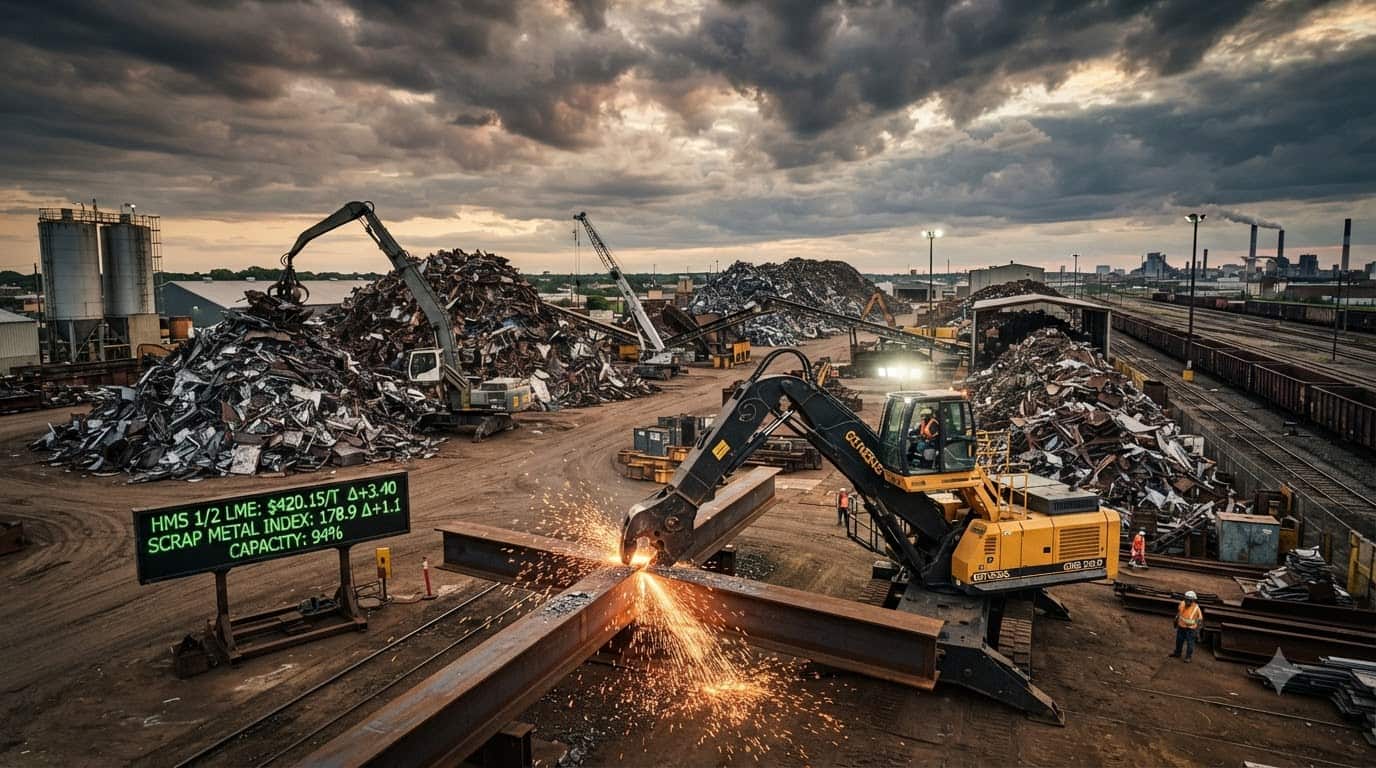
Steel scrap trading involves the buying and selling of recyclable steel from construction, manufacturing, demolition, automotive, industrial, and other commercial sources. Within the broader steel scrap market, HMS scrap is one of the commonly traded categories, particularly in bulk and international transactions.
Understanding the difference between HMS 1 and HMS 2, along with other structural and industrial steel scrap types, helps buyers and sellers communicate more accurately. Grade, thickness, preparation, contamination, quantity, location, and logistics can all influence how a load is evaluated.
What Is HMS Scrap?
HMS stands for Heavy Melting Steel. The term is commonly used in the scrap industry to describe heavier steel scrap suitable for recycling and melting.
HMS can come from sources such as structural steel, machinery, industrial equipment, demolition projects, fabricated steel components, and other heavy steel products.
HMS is generally discussed in terms of grades, with HMS 1 and HMS 2 being widely recognized categories. The exact specification can depend on the applicable industry standard and buyer requirements, so sellers should verify the specification rather than relying only on the grade name.
The physical characteristics of the scrap matter. Thickness, dimensions, preparation, attachments, and contamination can all affect whether a load meets a buyer's specification.
For current reference information on HMS 1, see the dedicated HMS 1 scrap price page rather than treating this guide as a replacement for live market-price information.
HMS 1 vs HMS 2 Explained
HMS 1 and HMS 2 are both categories of heavy steel scrap, but their specifications differ.
HMS 1
HMS 1 generally refers to heavier, cleaner steel scrap that meets the applicable HMS 1 specification. It is typically associated with substantial steel pieces such as structural sections, heavier plate, beams, and other suitable steel components.
The exact acceptance criteria can vary according to the buyer and specification being used. Sellers should therefore provide details about thickness, dimensions, attachments, and condition.
HMS 2
HMS 2 generally permits a broader range of steel scrap characteristics than HMS 1. Depending on the specification, it can include thinner steel and certain prepared or unprepared steel items that do not qualify for the higher HMS 1 category.
HMS 2 can still be an important commercial scrap category, but buyers may evaluate it differently because of its composition, preparation, and expected processing requirements.
Why the Difference Matters
The distinction between HMS 1 and HMS 2 is important because buyers use grade information to estimate how the material will perform during handling, processing, and melting.
A seller should not upgrade a material's description simply to attract a higher offer. If the specification is uncertain, providing photographs, dimensions, thickness information, and a detailed description gives buyers a better basis for evaluation.
Structural and Industrial Steel Scrap
Steel scrap is not limited to HMS and can come in various forms from construction, demolition, manufacturing, and industrial operations.
Structural Steel Scrap
Includes beams, columns, channels, angles, plates, and pipes from buildings, bridges, warehouses, and demolition projects. Dimensions and thickness can affect the applicable specification.
Industrial Steel Scrap
Comes from factories, machinery, engineering facilities, and industrial equipment. Listings should disclose attachments such as rubber, plastic, electrical components, or non-ferrous metals.
Steel Manufacturing Scrap
Includes offcuts, trimmings, cuttings, and plate remnants from manufacturing and fabrication. Consistent material and recurring quantities can support ongoing B2B supply arrangements.
How Steel Scrap Is Priced and Graded
Steel scrap pricing depends on grade, dimensions, preparation, contamination, quantity, location, and market conditions.
Grade and Material Specification
The material should meet the stated specification, such as HMS 1. Accurate grading helps buyers compare loads and reduces disputes.
Thickness and Dimensions
Piece size and thickness can affect handling and whether material meets a particular specification. Sellers should provide approximate dimensions where possible.
Preparation
Cutting, sorting, bundling, and other preparation can influence loading, transport, handling, and processing costs.
Contamination and Attachments
Materials such as plastic, rubber, wood, concrete, insulation, and non-ferrous metals can affect value. Significant contamination should be disclosed.
Quantity and Location
Shipment size and location influence freight and processing economics, particularly for large industrial loads.
Market Conditions
Buyer offers can change with supply, demand, mill requirements, regional availability, and freight conditions. For current HMS 1 information, see the ScrapTrade HMS 1 market-price page.
Trading Steel Scrap Online
Digital marketplaces can help businesses list steel scrap and connect with potential buyers beyond their local network.
Create an Accurate Steel Scrap Listing
Include the steel type, grade, quantity, location, condition, dimensions, preparation, and contamination. For HMS, specify whether it is HMS 1, HMS 2, or another category. Use clear photos of the actual material.
Provide Quantity and Logistics Information
State the estimated weight, one-time or recurring supply, loading conditions, and location. This helps buyers assess freight and purchasing requirements.
Compare Buyer Offers
Review offers based on more than price. Consider payment terms, inspection, freight, pickup, delivery, and other commercial conditions.
Confirm Specifications Before Closing
Before accepting an offer, confirm the grade, quantity, pricing basis, inspection, payment, and logistics terms. This is especially important for bulk and international transactions.
Businesses can use the ScrapTrade marketplace to list steel scrap and connect with potential commercial buyers.
FAQs
What does HMS mean in scrap metal?
HMS means Heavy Melting Steel. It is a commonly used scrap-industry classification for heavier steel scrap suitable for recycling and melting. HMS is commonly divided into categories such as HMS 1 and HMS 2.
What is the difference between HMS 1 and HMS 2?
HMS 1 generally represents heavier and cleaner steel scrap meeting its applicable specification, while HMS 2 generally permits a broader range of steel scrap characteristics. Exact requirements can vary by specification and buyer.
What types of steel can be traded as scrap?
Steel scrap can include structural beams, plates, channels, machinery components, manufacturing offcuts, fabricated steel, demolition scrap, and other ferrous steel materials. The appropriate grade depends on the material's characteristics.
What affects steel scrap prices?
Steel scrap prices can be influenced by grade, thickness, preparation, contamination, quantity, location, freight, regional supply and demand, and broader scrap and steel market conditions.
Conclusion
Steel and HMS scrap trading depends on accurate material identification and clear commercial information. HMS 1 and HMS 2 are important categories, but structural steel, industrial steel, manufacturing offcuts, and other steel scrap can also be traded according to their individual characteristics and buyer specifications.
For sellers, the most useful listings clearly explain the grade, thickness, dimensions, quantity, preparation, location, and condition of the material. For buyers, checking these details helps determine whether a load matches the required specification and whether the overall transaction economics make sense.