

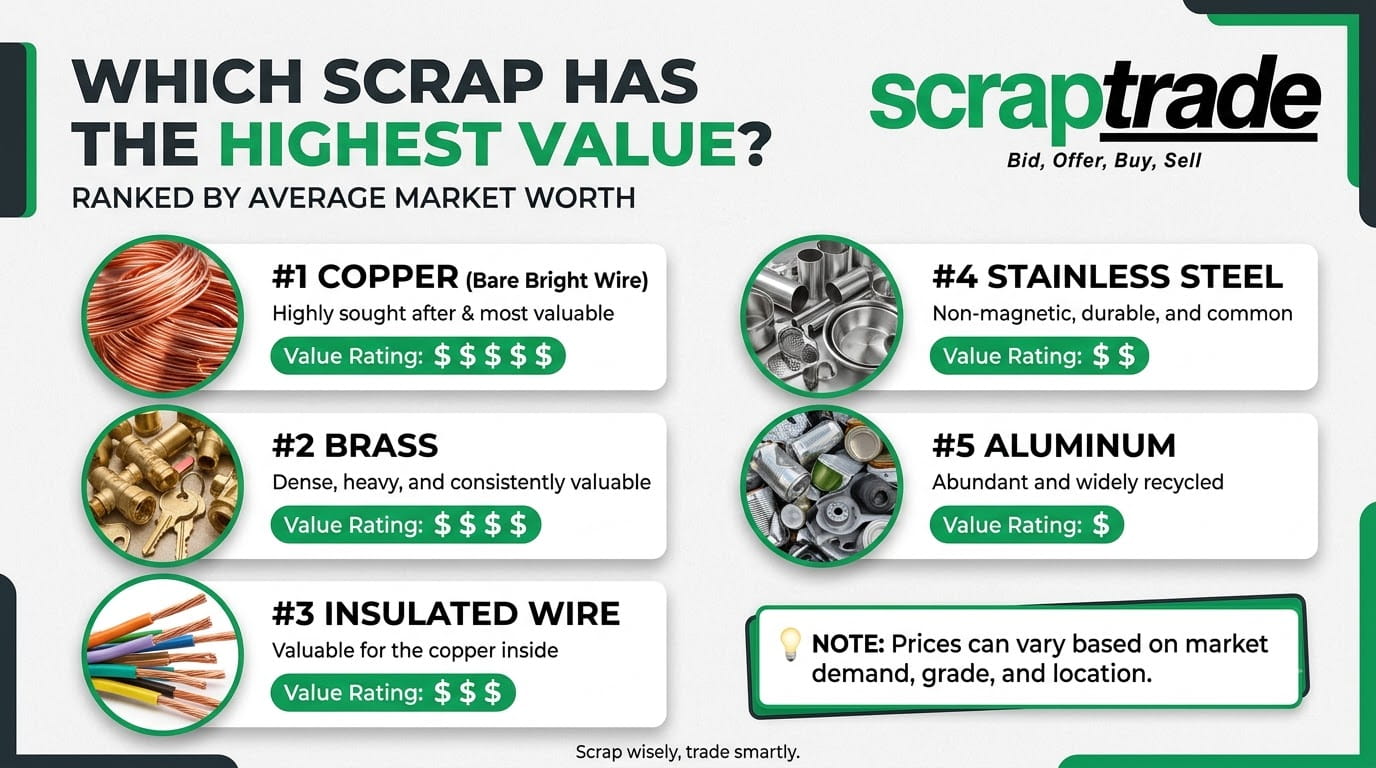
Not all scrap materials have the same market value. Some metals can command higher prices per kilogram because of their metal content, industrial demand, and processing requirements. Other materials may have a lower price per kilogram but generate substantial revenue when sold in bulk.
For scrap dealers, recyclers, manufacturers, and businesses handling recyclable materials, knowing which scrap has the highest value can help improve sourcing, sorting, and selling decisions.
Copper wire, brass, aluminium, stainless steel, lead, electronic scrap, and precious-metal-bearing components all offer different trading opportunities. However, the most profitable material depends on its grade, condition, quantity, local demand, and the costs involved in collecting and processing it.
This guide explains the main types of valuable scrap, what influences their prices, and how businesses can compare offers through a global marketplace such as ScrapTrade.
1. Copper Scrap: One of the Most Valuable Common Metals
Copper is widely used in electrical wiring, motors, transformers, plumbing systems, industrial equipment, and electronic products. Its conductivity and industrial applications make it an important material in the scrap trading market.
Different copper grades can have significantly different values.
Bare bright copper: Clean, uncoated, unalloyed copper wire that meets the buyer's grade specification can command a premium over lower-grade copper scrap.
No. 1 copper: This category commonly includes clean copper pipe, busbars, and suitable copper solids that meet the relevant grade requirements.
No. 2 copper: This can include copper with certain coatings, solder, oxidation, or other characteristics that prevent it from qualifying for a higher grade.
Insulated copper wire: Its value depends on the amount and type of recoverable copper, insulation, wire size, and the buyer's processing requirements.
To improve the value of a copper load, keep different grades separate, remove unrelated materials where appropriate, and describe the material accurately. Do not burn cable insulation to recover copper; use lawful and safe processing methods.
Copper is often a strong starting point for traders seeking higher-value common scrap, but actual offers depend on current market conditions and material specifications.
2. Precious-Metal-Bearing Scrap: Gold, Silver, and Platinum Group Metals
Certain scrap materials contain precious metals that can be valuable when recovered through specialised processing. These materials should not be priced like ordinary mixed metal scrap.
Electronic scrap
Circuit boards, telecommunications equipment, connectors, and selected electronic components may contain gold, silver, copper, and other recoverable metals. The recoverable value depends on the equipment type, component mix, metal concentration, and the processing technology available to the buyer.
Not every electronic item contains the same amount of valuable metal. A circuit board's appearance alone cannot reliably determine its precious-metal content.
Catalytic converters
Vehicle catalytic converters can contain platinum-group metals, including platinum, palladium, and rhodium. Their value depends on the particular unit, its composition, condition, and the recovery market.
Identification and testing may be required to assess a converter accurately. Ownership documentation and restrictions on buying or selling these components also vary by jurisdiction.
Precious-metal industrial scrap
Certain manufacturing residues, specialist electrical contacts, and industrial components may contain recoverable precious metals. These materials are usually best assessed by buyers with the appropriate testing and refining capabilities.
Precious-metal-bearing scrap can have substantial value, but it requires reliable identification, lawful sourcing, and specialist assessment. ScrapTrade's marketplace can help businesses explore trading opportunities, but a listing does not replace material testing or a buyer's valuation.
3. Brass and Bronze Scrap
Brass and bronze are copper-based alloys used in plumbing fittings, valves, bearings, industrial equipment, decorative products, and machinery.
Brass contains copper and zinc, while bronze commonly contains copper with tin or other alloying elements. Their composition affects their suitability for different recycling processes.
Clean, well-sorted brass fittings and solid pieces can be easier for buyers to evaluate than mixed materials. Bronze should be kept separate from brass because the two alloys have different compositions and market specifications.
Before selling, separate identifiable brass and bronze grades where practical. Remove unrelated attachments when safe and appropriate, and disclose any coatings, contamination, or mixed components.
The value of these materials depends on their composition, condition, and the buyer's requirements. Do not assume every yellow-coloured metal object is brass or that all copper alloys receive the same price.
4. Aluminium Scrap
Aluminium is used in transport, construction, packaging, electrical applications, and manufacturing. Although its price per kilogram is often lower than clean copper, its availability and recoverability make it an important scrap category.
Common aluminium scrap includes:
- Clean aluminium extrusion from suitable frames and profiles.
- Aluminium sheet and other identified aluminium products.
- Used beverage cans, commonly traded as UBC scrap.
- Aluminium wheels and selected automotive components.
- Aluminium castings, including suitable engine components.
- Aluminium-containing cables and mixed processed scrap.
Grade and contamination matter. Clean, sorted aluminium that meets a buyer's specification may receive a better offer than material containing steel attachments, rubber, plastic, or other metals.
For example, alloy wheels should be identified correctly and prepared according to buyer requirements. Tyres, valves, wheel weights, and other attachments can affect the accepted grade.
5. Stainless Steel and Nickel-Bearing Scrap
Stainless steel is used in industrial equipment, food-processing facilities, commercial kitchens, construction, and manufacturing. Its scrap value depends partly on its alloy composition.
Grades such as 304 and 316 are common examples, but they should not be treated as interchangeable. Nickel and chromium content, and in some grades molybdenum content, influence the material's properties and market value.
Keep stainless steel separate from ordinary carbon steel whenever possible. Mixed or unidentified material may require further testing before a buyer can make a firm offer.
Where the grade is uncertain, buyers may use material documentation or suitable alloy-identification equipment. Avoid relying on appearance alone.
Nickel-bearing scrap can offer opportunities for specialised traders, but correct grade identification is essential to avoid selling higher-value material as a lower-grade mixed load.
6. Lead, Zinc, and Other Specialised Metal Scrap
Lead and zinc are used in batteries, industrial products, protective coatings, die-cast components, and other applications.
Lead-acid batteries are a recognised recycling stream, while zinc may be recovered from suitable die-cast parts and other identified sources. These materials need separate handling and appropriate recycling channels.
Battery scrap can be commercially valuable, but it presents hazards involving heavy metals, corrosive electrolyte, and possible leakage. Follow applicable storage, transport, and recycling requirements rather than dismantling batteries without suitable facilities.
Other specialised materials, including nickel alloys, tin-bearing scrap, and selected industrial metal residues, may attract specialist buyers. Their value is usually determined by composition, recoverability, and the availability of a suitable processing route.
7. Steel and Iron Scrap: Lower Price Per Kilogram, High Volume
Steel and iron scrap typically have a lower price per kilogram than many non-ferrous metals. However, they account for substantial volumes of recyclable material from construction, demolition, manufacturing, machinery, and end-of-life vehicles.
Common categories include heavy melting steel, structural steel offcuts, cast iron, and other ferrous scrap grades.
For steel and iron, the economics often depend on volume, loading efficiency, transport distance, and the buyer's grade specifications. A large, clean shipment may be commercially attractive even when the unit price is relatively low.
Keep stainless steel separate from ordinary carbon steel and avoid mixing unrelated materials into a ferrous load. Clear descriptions and accurate weights help buyers assess the material more confidently.
8. What Determines the Value of Scrap?
Knowing the metal category is only the first step. The actual price offered for a load depends on several factors.
Grade and composition: Buyers pay according to the material specifications they can accept and process. Identified, higher-grade material may receive a better offer than mixed or uncertain scrap.
Cleanliness and contamination: Plastic, rubber, dirt, coatings, moisture, and unrelated metals can affect the accepted weight, grade, and processing cost.
Quantity: Bulk loads may attract different offers from small quantities because transport, handling, and processing costs vary with shipment size.
Market demand: Commodity markets, industrial demand, local supply, currency movements, and buyer capacity can influence offers over time.
Location and logistics: Transport, loading, storage, and delivery costs affect the net amount a seller receives.
Testing and documentation: Material certificates, photographs, accurate descriptions, and suitable test results can help buyers assess specialised grades.
Because these factors change, there is no single ranking that guarantees the highest price in every location or at every point in time.
9. How to Make More From High-Value Scrap
A practical selling process can help businesses make better decisions without assuming that every high-value material will be profitable.
First, identify the material and separate different grades where practical. Second, estimate the quantity and document its condition with clear photographs. Third, obtain current offers from buyers who handle that specific material. Finally, compare the net return after accounting for transport, processing, handling, and other transaction costs.
For example, suppose one buyer offers $1,000 for a load but transport and handling cost $150. Another offers $950 with transport costing $50. Before other costs, the first offer leaves $850, while the second leaves $900. These are illustrative figures, but they show why the highest quoted price is not always the best deal.
Avoid spending heavily on processing before confirming that a buyer accepts the resulting grade. For specialist scrap, ask about testing requirements, minimum quantities, accepted specifications, and payment terms before committing to a sale.
10. Find Potential Buyers Through ScrapTrade
Businesses that source, collect, or process scrap may need access to more buyers than their local network provides. A global online marketplace offers another channel for presenting available materials and exploring trading opportunities.
Through ScrapTrade, buyers and sellers can explore scrap listings and connect around suitable trading opportunities. Businesses can list relevant materials such as copper, aluminium, brass, steel, and other scrap categories, depending on their requirements and available supply.
To make a listing more useful, include the material grade, quantity, location, photographs, condition, and preferred transaction terms. For mixed loads, clearly identify the known materials and disclose any uncertainties.
Compare buyer offers on price, accepted specifications, logistics, payment terms, and any possible deductions. Verify counterparties and confirm the transaction details before dispatching material.
ScrapTrade provides a marketplace for buyers and sellers; it does not take ownership of listed scrap or guarantee that a transaction will be completed.
FAQs
Which scrap metal usually has the highest value?
Clean copper is often among the highest-value common scrap metals per kilogram. Precious-metal-bearing materials, such as certain electronic components and catalytic converters, can have specialised value, but their worth depends on composition and testing.
Is copper scrap more valuable than aluminium scrap?
Copper commonly commands a higher price per kilogram than aluminium, but the exact difference changes with market conditions, grade, and location. Compare current offers for the actual material you have.
Does clean scrap sell for more than mixed scrap?
Often, yes. Clean, correctly identified material can be easier to process and may qualify for a better grade. The improvement depends on the buyer's specifications and the cost of sorting.
Is steel scrap worth collecting?
Steel scrap can be worthwhile when collected in suitable quantities and handled efficiently. Its lower unit price means transport, loading, and shipment size can have a significant impact on the economics
Conclusion
The most valuable scrap depends on what you are selling, its grade, and the buyers available to process it. Copper, precious-metal-bearing components, brass, bronze, aluminium, and nickel-bearing stainless steel can offer attractive opportunities, while steel and iron may generate returns through efficient bulk trading.
The best approach is to identify materials accurately, keep grades separate, obtain current buyer offers, and calculate the net return after costs. With better material information and buyer comparisons, scrap businesses can make more informed trading decisions and build stronger supply relationships.