

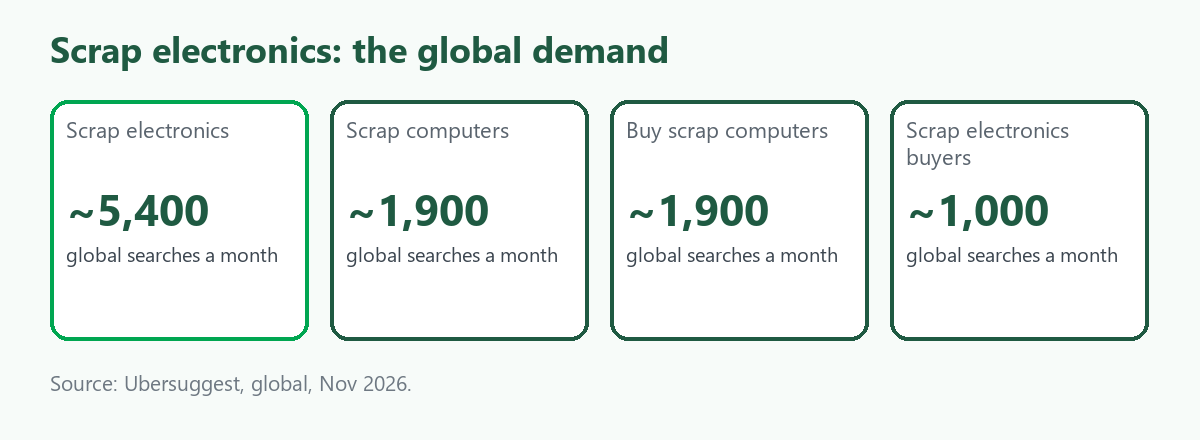
"Scrap electronics" is searched about 5,400 times a month worldwide, according to Ubersuggest, with "scrap computers" and "buy scrap computers" about 1,900 each, "scrap electronics buyers" about 1,000 and "e waste buyers near me" about 720. The cost per click is low, about 1 to 3 dollars, and the searchers range from people with a drawer of old machines to small dealers wondering what is worth keeping. This guide explains where the value in scrap electronics sits, which parts are weak, who buys and what to check. The source quality is poor, so we say so throughout, and we give no prices. It follows how e-waste recycling works, and it belongs beside our guide to selling used and broken electronics worldwide. ScrapTrade runs a scrap marketplace and has a commercial interest in the scrap trade.
Where the value sits
The sources we found are mostly hobbyist refining forums and vendor pages, so treat them as leads and not as measurements. They agree on a few points:
- Copper, by weight. One forum poster says the copper in most circuit boards, even motherboards, is worth more than the gold in them by weight. A dated source adds that copper recovered from boards has not risen in value as fast as other metals.
- Gold, on contacts. Gold is described as concentrated on pins, contacts and edge connectors, including the pins of removable processors and memory, and not spread through the board.
- Larger and multilayer boards. Motherboards are described as a better source than small boards because there is more of them, and multilayer boards as carrying more embedded copper and precious metal than single-layer ones.
- Servers and mainframes. They contain several drives, boards and motherboards in one unit.
- Hard drives. Their contacts and circuit boards are described as often gold-plated, and they contain aluminum and copper.
- The weak end. One forum says optical drives are mostly steel with a little gold.
We found no laptop-specific figures. Laptops are small, so a buyer will probably treat their boards much as it treats motherboards, which is our inference and not a sourced fact.
Why you cannot read a price off the type
A board's value depends on its grade, how much of it there is, whether the gold-bearing parts are still on it and what the refiner finds, as our guide to e-waste recycling explains. Two machines of the same make can differ. Scrap buyers therefore grade and sample. A seller who strips the processors, memory and drives for separate sale, or who mixes boards of different grades in one bag, changes what a buyer will pay in ways we cannot quantify.
Who buys
- Local scrap yards. Some take computers and boards, and may pay by weight for the metal parts. We did not review individual yards.
- E-waste recyclers and processors. They take whole devices, often at a fee for items with no metal value, and are the usual outlet for mixed loads.
- Board and e-scrap dealers. They grade boards, drives and processors and sell on to refiners.
- Refiners. They buy graded boards in volume.
- Online marketplaces and brokers. Exporters list e-scrap lots for sale, mostly marketing, which we did not review.
Used-versus-waste matters for sellers who ship across borders, because working equipment and waste follow different rules, as our guide to selling used and broken electronics worldwide explains.
What to check before you sell
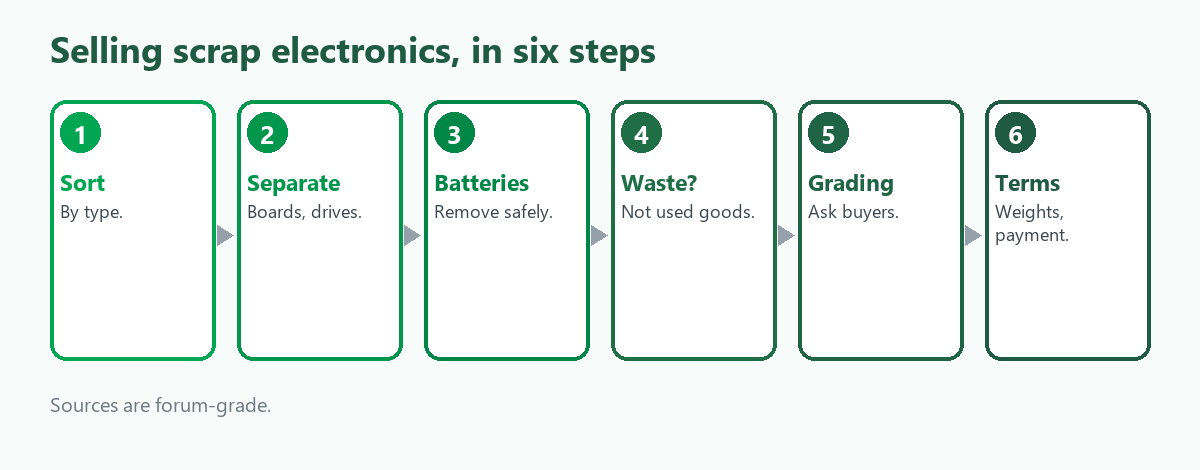
- Sort by type. Boards, drives, whole machines, cables, power supplies, housings.
- Separate the housing. Metal and plastic cases are lower grade than boards.
- Remove batteries. Handle them separately, as our sources did not cover battery rules for shipping.
- Wipe or destroy storage. Devices carry personal and business data, and buyers may not.
- Ask how the buyer grades and weighs. And whether the quote is by weight or by grade.
- Handle boards with care. One source warns that scrap boards can contain small amounts of hazardous elements such as beryllium and barium.
Where ScrapTrade fits
One old computer is usually a recycling drop-off and not a sale, and ScrapTrade is not the right route for it. The sellers it suits are IT resellers, repairers, recyclers and businesses clearing retired stock, who hold boards, drives or machines in volume. E-waste is one of its twelve categories, and its verified traders are in more than 50 countries. Listing is free with no commission, you negotiate in real time, and an accepted bid puts the buyer's 5 percent deposit in escrow. Verified businesses and individuals can sell. How grading, testing and data security are handled for e-waste is unconfirmed, so email cs@scraptrade.com.au first.
What we could not verify
- What any scrap electronics sell for. We give no prices.
- Anything quantitative about gold or copper content. The sources are forums and vendors.
- Laptop boards, and battery shipping rules.
- How ScrapTrade grades or tests e-waste lots.
Frequently asked questions
Are scrap computers worth anything?
Some parts have scrap value, such as boards, drives and copper, but we found no reliable figures. A buyer grades and quotes.
Where is the gold in a computer?
Forum sources say mainly on pins, contacts and edge connectors, such as those on processors, memory and drives.
Who buys scrap electronics?
Scrap yards, e-waste recyclers, board dealers and refiners. Mixed loads usually go to a recycler.
Can I list scrap electronics on ScrapTrade?
E-waste is a category, and verified businesses and individuals can sell. We could not confirm how lots are graded, so ask support.
Sources
- Ubersuggest keyword data, global, queried November 2026.
- Gold-refining and electronics-salvage forums and e-scrap vendor pages on circuit board value, as summarised in search results.
- ScrapTrade website, accessed November 2026.
Not financial advice. Sources are forum-grade, so use them as leads.