

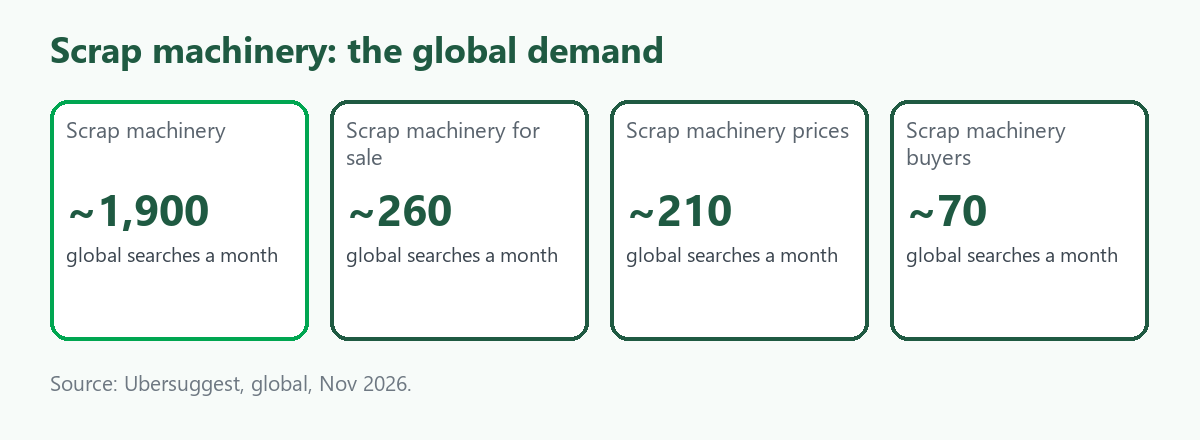
"Scrap machinery" is searched about 1,900 times a month worldwide, according to Ubersuggest, with "scrap machinery for sale" about 260, "scrap machinery prices" about 210 and "scrap machinery buyers" about 70. It is the one equipment term with real seller-side demand, and it costs only about 1 dollar a click, because the buyers are scrap dealers and not retailers. The searchers hold a machine that no longer earns its place, and they want to know what it is worth and who will take it. This guide explains how a scrap value is worked out, when a machine is worth more as equipment, who buys, what has to be cleared before it leaves and how to hand it over. It belongs to our guide to selling used machinery and equipment worldwide. We give no prices. ScrapTrade runs a scrap marketplace and has a commercial interest in the scrap trade.
The scrap value is a floor
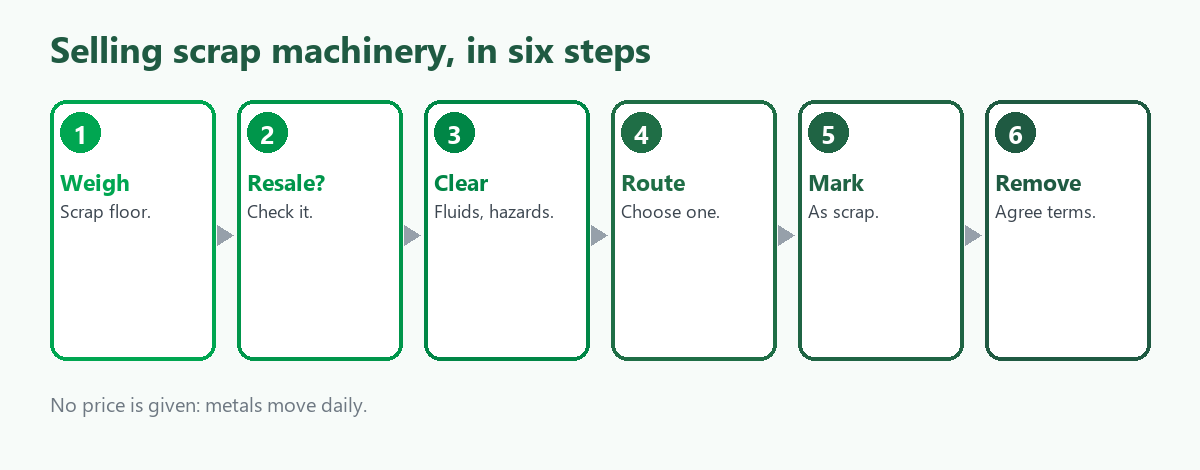
A recycler's guide we read says the first step is to weigh the machine and value it as scrap, because that number sets a floor under any other offer. In symbols, the floor is the machine's weight times the scrap price per unit for its metal, less the cost of getting it out. The weight is the easy part. The price depends on the metal: one equipment seller notes that stainless scrap prices can be lower than those of nickel alloys such as Hastelloy, so a machine of mixed metals is worth more once it is sorted. Cast iron frames, steel plate, copper motor windings and aluminum housings each have their own price, which we do not give because we found no reliable current source.
When it is worth more than scrap
Equipment guides and forum threads say a working or repairable machine can be worth more than its metal, and that cleaning and testing it changes the figure. That is plausible but anecdotal, and we found no systematic data. A machine sold as equipment carries duties that a scrap sale does not, as our worldwide guide explains. So the decision is: if the machine runs or can be repaired, get a resale view from a dealer or broker as well as a scrap quote, and compare. If it is beyond repair, sell it as scrap, and sell the valuable parts separately if you can: motors, controllers, drives, gearboxes and tooling.
Clear the hazards before it goes
Sources agree on a sequence: survey the equipment, isolate its energy, drain and recover fluids, deal with hazardous materials, then dismantle. They are mostly vendor and facility documents, so check the actual rules where you are.
- Oils, coolants and other fluids. Drain them and dispose of them properly before demolition.
- PCBs. One university procedure treats equipment as PCB material if labeled so and requires testing, and a data-center guide says transformers made before 1979 may contain PCB-contaminated oil, which is one reason their resale value is low.
- Refrigerants. A guide says recovery is required in the United States under Clean Air Act section 608 and must be done by certified technicians. We did not verify the details.
- Asbestos and lead. Older furnaces and insulation may contain asbestos, and suspect material should be checked before it is cleaned or cut.
- Mercury. Switches and instruments can contain it.
An Australian university procedure adds a point for sellers: when equipment goes out as scrap, tell the buyer in writing, or mark the item, that it cannot be used as equipment in its current form.
Who buys and how to choose
- Scrap yards and recyclers. The fallback when a machine has no resale value, usually sold by weight and metal type, with removal often a separate cost.
- Brokers and dealers. They connect sellers with buyers, and a forum seller doubted a dealer would pay more than scrap plus parts value for a worn machine.
- Auction. It reaches more buyers, and a recycler says a seller can set a reserve based on the scrap price, as our guide to selling equipment at auction explains.
- Consignment. A dealer sells for you and you keep control of price.
- A trade marketplace. For lots of scrap or spares.
Removal and records
Large machines cost money to move, and the buyer or the seller may pay. Agree who dismantles, who loads, who has the rigging and insurance and when payment is made. Keep a record of the weight, the metals, the hazards you cleared and the written scrap designation. If the machine was financed or leased, make sure it is yours to sell.
Where ScrapTrade fits
For one machine, a local recycler or broker is the simplest answer. ScrapTrade is relevant for volume: a factory clearing several machines, a demolition contractor with scrap and spares or a dealer with stock that failed resale. It is a scrap marketplace with verified traders in more than 50 countries. Listing is free with no commission, you negotiate in real time, and when you accept a bid the buyer's 5 percent deposit is held in escrow. Businesses and individuals can sell once verified. We could not confirm that machinery lots can be listed or how weights and removal are handled, so ask cs@scraptrade.com.au before you plan around it.
What we could not verify
- Current scrap prices by metal. We found no reliable source, and one forum figure per pound is an anecdote.
- How often resale beats scrap. The evidence is forum posts and vendor guides.
- The rules on PCBs, refrigerants and asbestos in each place.
- Whether ScrapTrade accepts machinery lots.
Frequently asked questions
How is scrap machinery valued?
By weight and metal type, less removal costs. That scrap value is a floor, and a working machine may be worth more as equipment.
Who buys scrap machinery?
Scrap yards and recyclers, brokers and dealers, and auctions. Removal terms vary.
What should I do before scrapping a machine?
Drain fluids, check for PCBs, refrigerants and asbestos, and tell the buyer in writing that it is scrap.
Can I list scrap machinery on ScrapTrade?
Verified sellers can list scrap, and we could not confirm that machinery lots are accepted, so ask support.
Sources
- Ubersuggest keyword data, global, queried November 2026.
- Recycler and equipment-seller guides on scrap value, resale and channels, and a hobby-machinist forum thread, as summarised in search results.
- University and facility procedures on PCBs, refrigerants, asbestos and fluids, and a data-center decommissioning guide, as summarised in search results.
- ScrapTrade website, accessed November 2026.
General information only, not legal or safety advice. Hazard rules differ by place.