

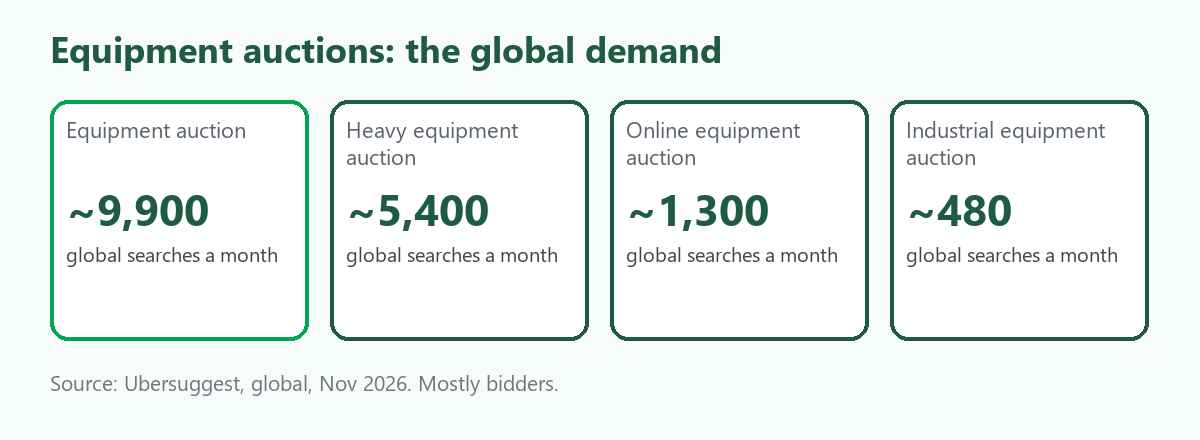
"Equipment auction" is searched about 9,900 times a month worldwide, according to Ubersuggest, with "heavy equipment auction" about 5,400, "online equipment auction" about 1,300 and "industrial equipment auction" about 480. Nearly all of that is bidders looking for an auction to attend, and many are local, so this guide does not try to be a listing. It is for the smaller group who want to sell equipment through one and need to know how reserves, fees, consignment and payment timing work. The seller-side terms are tiny, "sell used equipment" and "sell used machinery" about 110 each, but they cost 8 to 10 dollars a click, which says something about what a lead is worth. It belongs to our guide to selling used machinery and equipment worldwide, and it feeds the guides on restaurant equipment and scrap machinery. A disclosure: ScrapTrade is a scrap marketplace and profits from scrap trading.
Reserves
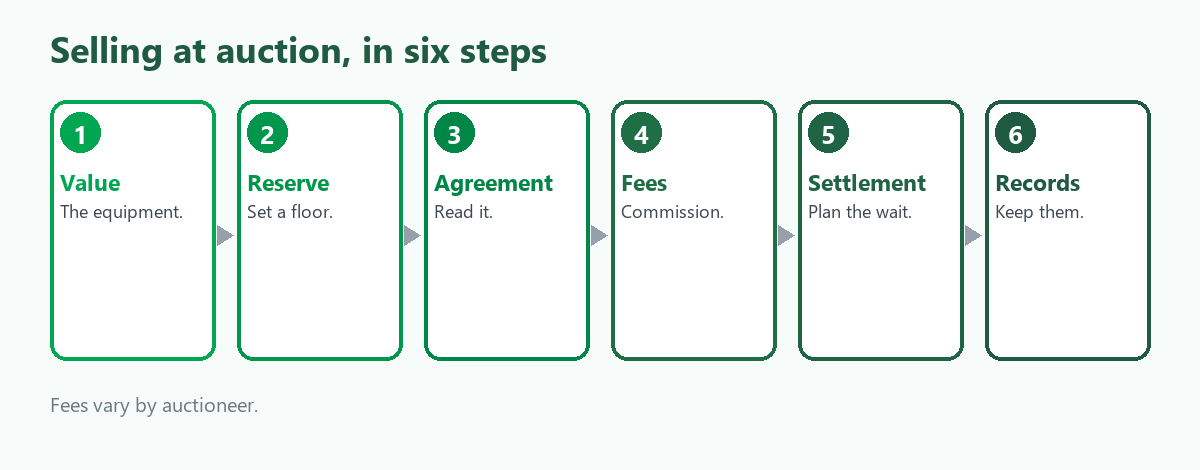
A reserve is a hidden minimum. If bidding stops below it, the item is typically bought in and withdrawn. The sources we found, which are auction-industry explainers, add that a seller may later accept a lower bid after the sale, "on a call" or "if" the buyer agrees, and that it is the seller's choice whether to take a below-reserve bid. A recycler's guide gives a practical way to set one for machinery: tie it to the scrap price, so that the reserve never falls below what the machine is worth as metal, as our scrap machinery guide explains.
What it costs
Sellers and buyers usually pay separate charges:
- Seller commission. The auction house's cut. Figures conflict across sources: Sotheby's and Christie's, which sell art and not equipment, are cited at 10 to 15 percent, another source says houses typically keep 15 to 35 percent of the hammer price, and an equipment dealer lists a 4.5 percent seller fee and a 2.5 percent buyer fee for its auction sales. We found no reliable range for equipment auctions in general.
- Buyer's premium. A fee added on top of the winning bid, paid by the buyer. A 10 percent premium on a 10,000 dollar bid costs the buyer 11,000, and it does not come out of your proceeds, but it can reduce what bidders are willing to bid.
- Seller's premium and expenses. Some contracts add a separate seller-side fee, and auction companies typically charge expenses such as advertising and handling. Read the consignment agreement for how each charge is calculated and when it applies.
Consignment
Consignment means a dealer or auction house sells the equipment for you. One dealer describes it as access to its customer network while you keep control of the final price. Terms matter: the same dealer lists consignment periods of 60, 120 or 180 days, with the option of moving the equipment to its auction if the target price is not reached. We did not find general data on how long consignment takes, so ask for the period, the price floor, who stores and insures the equipment and what happens if it does not sell.
Timing and payment
Online auctions usually run a week or two, according to the restaurant-equipment guides we read. Settlement is often slow: one source says terms commonly run 14 to 30 days after the sale, so plan your cash around that. If the auction is a business closure, ask when equipment must be removed, who removes it and who is liable for damage.
What to ask before you consign
- What is the commission, and what other charges apply? In writing.
- Can I set a reserve, and what happens if it is not met?
- How will it be marketed? Photos, appraisal, buyer lists and timing.
- When do I get paid? Settlement terms and how disputes are handled.
- Who handles removal? And who carries the risk until it is collected.
- Is the equipment yours to sell? Leased and financed equipment needs the lender's release, as our worldwide guide explains.
What auctions do not do
An auction sets a price among the bidders who show up on the day, and does not guarantee one. A rare, in-demand machine can do well, and a common or worn one can sell for little, which is why the reserve and the scrap floor matter. Auctions also do not change a seller's safety duties, which in some countries apply to second-hand plant, as our worldwide guide explains.
Where ScrapTrade fits
ScrapTrade is not an auction house, and a dealer or auctioneer is the right route for working equipment. It becomes relevant for the scrap end: metal, spares and machines beyond use, in lots that verified traders in more than 50 countries may bid on. Sellers pay no listing fee or commission, negotiate in real time, and rely on the buyer's 5 percent deposit being held in escrow once a bid is accepted. Businesses and individuals can sell after verification. Whether working equipment can be listed is unconfirmed, so email cs@scraptrade.com.au first.
What we could not verify
- Equipment auction commission ranges. The figures we found are mostly art-auction sources and one dealer's schedule.
- Net returns from auctions versus other routes.
- How consignment periods work in general.
- Whether ScrapTrade accepts working equipment.
Frequently asked questions
What is a reserve price at an auction?
A hidden minimum. If bidding stays below it, the item is usually bought in, though a seller may accept a lower offer later.
How much commission does an equipment auction take?
Sources conflict, from about 4.5 percent for one equipment dealer to 15 to 35 percent for general auction houses. Ask for the schedule in writing.
How long until I am paid?
One source says settlement commonly runs 14 to 30 days after the sale.
Is an auction better than selling to a dealer?
It reaches more buyers and the price is uncertain, while a dealer is faster and often pays less. We found no net-return comparison.
Sources
- Ubersuggest keyword data, global, queried November 2026.
- Auction-industry explainers on reserves, commissions and buyer's premiums, and Titan Machinery's consignment and auction fee pages, as summarised in search results.
- Restaurant-equipment auction and broker guides on timing, as summarised in search results.
- ScrapTrade website, accessed November 2026.
General information only, not legal or financial advice. Fees vary by auctioneer.