

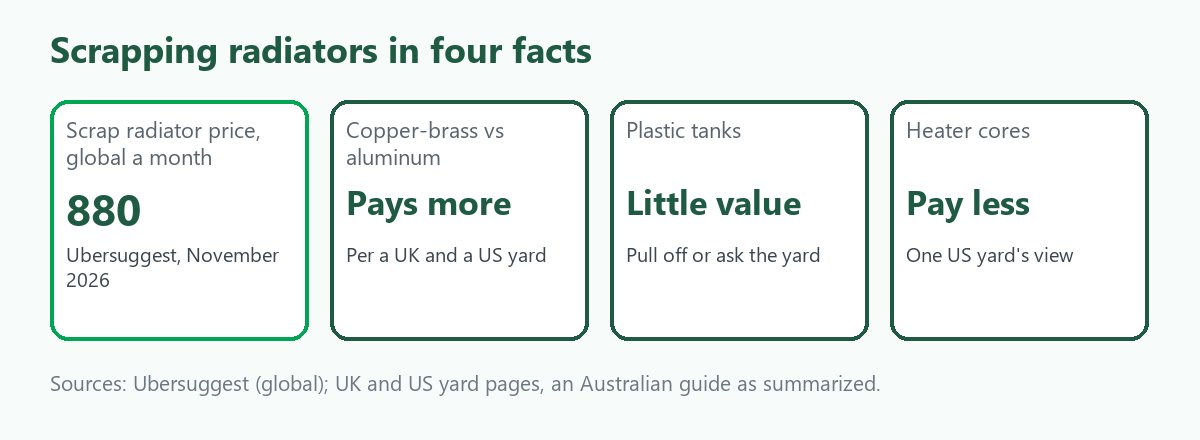
To most sellers a radiator is a radiator. To the yard it is one of three different commodities, and the price follows the commodity. Around 880 people a month worldwide search "scrap radiator price", according to Ubersuggest, and what they need is a way to tell which kind they are holding. This guide separates the types, covers plastic tanks and heater cores, and explains how to prepare a load. Our sources are a UK scrap buyer, a US yard and an Australian guide, and none gave a price we trust, so there are none here. ScrapTrade runs a scrap marketplace and has a commercial interest in the scrap trade.
Which radiator do you have?
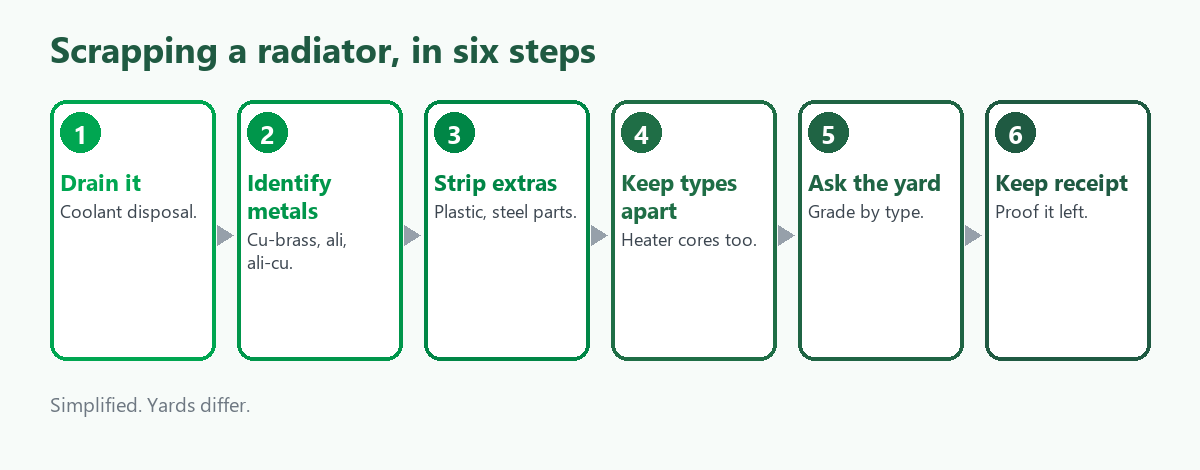
A copper-brass radiator earns more than an aluminum one, says a UK scrap buyer, because it holds two valuable metals, and a US yard concurs. Aluminum units are sold as aluminum, at a lower rate. In between are combination radiators of aluminum and copper, which the US yard says are worth more than plain aluminum thanks to the copper; they are common in air conditioner coils, and a Perth yard names aluminum-copper radiators among what it takes. In our reading, color is the fast test: reddish or yellow metal points to copper or brass, silver to aluminum. Because yards name these types differently, describe yours and ask what it is called there.
Tanks, trim and coolant
Plastic end tanks are common on newer radiators and usually worth little to a metal buyer, so detach them or confirm with the yard. The US yard also recommends stripping magnetic steel pieces to raise the rate per pound, and the Australian guide says to separate metals and remove non-metal attachments. Empty the coolant first. None of our sources covered coolant disposal, so ask the yard and your local waste authority what to do with it.
Heater cores are a different line
A heater core resembles a small radiator but is priced lower; one US yard says it holds more lead, which is a single yard's opinion. Check what your own yard pays, and keep cores out of the radiator pile.
Air conditioner coils
Many air conditioner and refrigeration coils are the same aluminum-copper material. In a number of countries the refrigerant must be recovered by a certified person before the equipment goes to a yard, which is covered in our guides to scrapping an air conditioner and refrigerant rules. Household heating panels and industrial coolers were outside our research; tell the yard what you have.
Radiators that come with a car
A car's radiator travels with the car, and whole vehicles are usually sold by weight to a yard or wrecker. Our guide to how a scrap car's value is worked out shows how yards price the vehicle. A radiator pulled first becomes its own item with its own rate. Whether that pays depends on the yard, and we found no figures, so ask before dismantling.
What the yard will pay
An Australian guide ranks copper first among common metals, then brass and high-grade aluminum, and notes that rates depend on location. The radiator figures we found were overseas, dated or inconsistent, so we omit them. Ring two or three yards with a photo or description and a rough weight, and ask for a rate per type. Many places also regulate dealers through ID and records rules; see our guide to scrapping copper cable for the examples we found.
Before you load the truck
Weigh or estimate what you have, sort the three types into separate piles and photograph each with any label visible. Radiators that are leaking or full of coolant should be handled carefully and drained before they are moved. Keep copper-brass units dry and apart from steel, so they are not contaminated by rust or oil. None of this is required by the sources we read; it is how we would prepare a load so the yard has little reason to mark it down.
Ask the yard
- Which radiator types do you take, and how are they graded?
- Do plastic tanks and steel parts need to come off?
- What do you do about coolant?
- Are heater cores paid at a different rate?
- What ID or records do you need?
Where ScrapTrade fits
A single radiator goes to a local yard or a wrecker. The marketplace is more useful to a radiator shop, a mechanic, a wrecker or an HVAC contractor with a quantity of sorted radiators and coils: buyers in more than 50 countries bid, there are no listing fees or commission, terms are agreed in chat and the buyer's 5 percent deposit sits in escrow after acceptance. Businesses and individuals can sell once verified. How radiator lots are graded on the platform is not something we could confirm, so write to cs@scraptrade.com.au first. Australian readers can see Scrap Radiators: Copper, Brass or Aluminium.
Open questions
- Payouts for any radiator type: none found, none given.
- Whether heater cores sell for less in your market.
- How to dispose of coolant.
- Grade names beyond those in our sources.
- Whether ScrapTrade lists radiator lots.
Quick answers
Is copper worth more than aluminum in a radiator?
Yes, per a UK buyer and a US yard, because of the copper and brass. We found no price.
Do plastic tanks need removing?
Generally, since plastic is worth little to a metal buyer. Or ask the yard.
Are heater cores paid like radiators?
One US yard says they sell for less. Keep them separate.
Must I drain the radiator?
Yes. Ask the yard and your waste authority about coolant.
Does ScrapTrade accept radiators?
Verified sellers can list scrap. Ask support about radiator lots.
Sources
- Ubersuggest keyword data, global, queried November 2026.
- UK and US scrap buyer pages and an Australian scrap guide on radiators, as summarized in search results.
- ScrapTrade website, accessed November 2026.
General information only, not legal or financial advice. Yards and rules differ by country.