

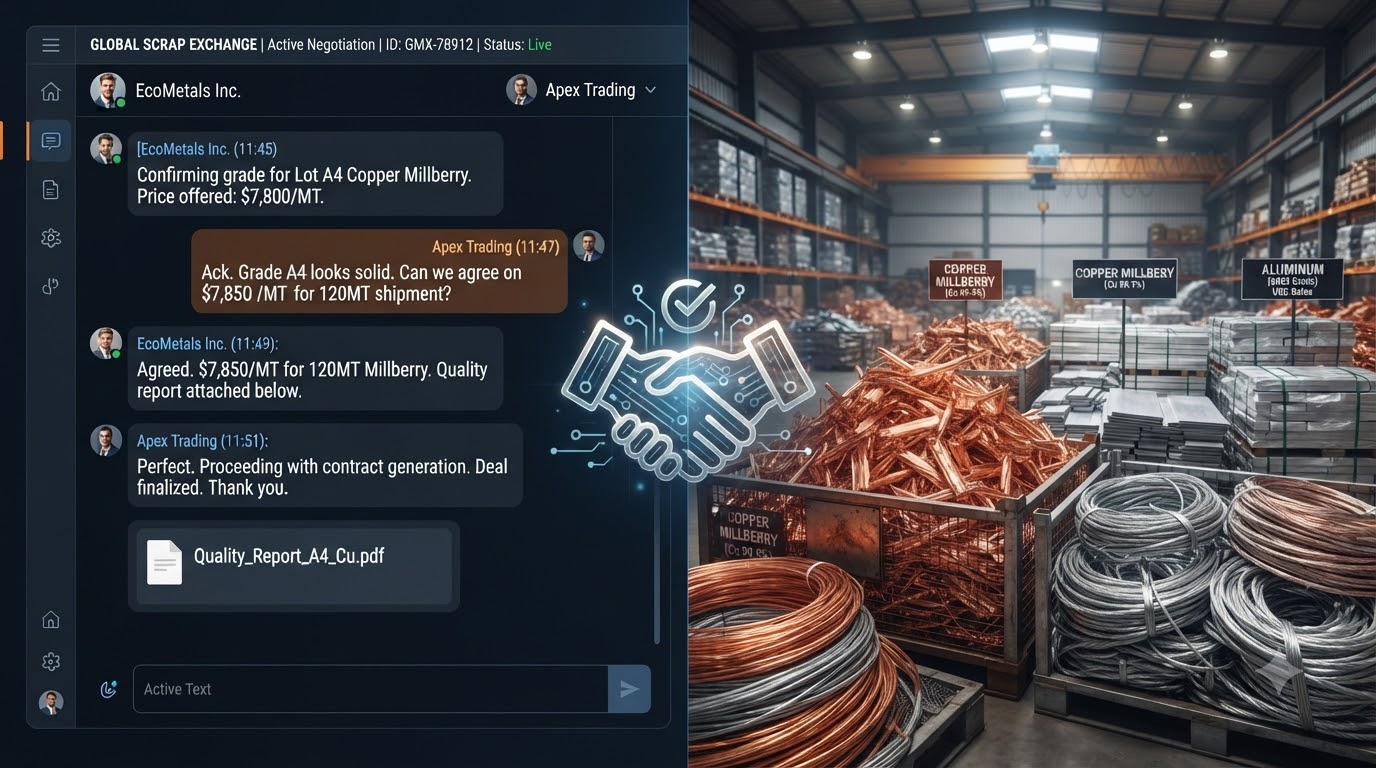
Negotiating a scrap metal deal online is different from simply asking a buyer for the highest price or accepting the first offer that arrives. A successful deal depends on understanding the material, setting realistic expectations, comparing offers, and agreeing on clear commercial terms.
Whether you are selling copper, aluminium, steel, brass, stainless steel, e-waste, or another recyclable material, online negotiation gives both sides an opportunity to discuss price and transaction conditions before finalizing a deal.
A well-prepared listing gives sellers a stronger starting point, while buyers can use detailed material information to make more informed offers.
Setting a Realistic Starting Price
The starting price can influence the entire negotiation.
A seller should avoid choosing a price without considering the actual characteristics of the material. The relevant grade, purity, contamination, quantity, preparation, location, logistics, and current market conditions can all affect the commercial value of a scrap lot.
A useful starting point is to check a current market reference for the relevant material and then consider how the actual scrap differs from that reference.
A reference price should not automatically be treated as the final transaction price. The price a buyer is prepared to offer may depend on the specific material and the complete deal conditions.
For sellers, a scrap value calculator or market reference can provide an initial benchmark before entering negotiations. For buyers, understanding the material specification can help determine whether an offer is commercially realistic.
Reading Buyer or Seller Signals in a Listing
Online negotiation does not provide all the information available during a face-to-face conversation. However, listings and offers can still provide useful signals.
A buyer who asks detailed questions about grade, quantity, contamination, loading, or documentation may be seriously evaluating the material.
A seller who provides clear specifications, recent photographs, quantity information, and transaction details is giving potential buyers more information to work with.
The quality of the listing itself can therefore influence the negotiation.
Look Beyond the Headline Price
A buyer's offer should not always be evaluated by price alone.
Consider the complete transaction, including:
- Quantity and material specifications
- Pickup or delivery arrangements
- Inspection requirements
- Payment terms
- Timing
- Other conditions attached to the offer
For example, two offers may have different prices but also different logistics or transaction requirements. Comparing the complete terms provides a more useful picture of the deal.
Ask Specific Questions
Online negotiations work better when questions are specific.
Instead of asking, “Can you offer more?” a seller can ask whether the buyer's offer assumes a particular grade, quantity, contamination level, or delivery arrangement.
Similarly, a buyer can ask whether the listed quantity is immediately available, whether the material has been sorted, or whether supporting documentation is available.
Specific questions reduce misunderstandings and help move the negotiation toward concrete terms.
Common Negotiation Mistakes
One of the most common mistakes is focusing exclusively on price.
Price is important, but a scrap transaction also involves quality, quantity, logistics, payment, timing, and other commercial conditions.
Another mistake is making assumptions about the material. If the grade, composition, or condition is unclear, both sides should clarify the information before finalizing the deal.
Poor communication can also slow down negotiations. Short messages without important details may result in multiple rounds of questions and delays.
Other Mistakes to Avoid
Avoid changing the material description during negotiation unless new information has been discovered and clearly communicated.
Sellers should also avoid promising a grade or purity level that has not been verified. Buyers should avoid making assumptions based only on photographs when material characteristics require inspection or testing.
Another common problem is negotiating without defining the quantity. A price can have a very different meaning depending on whether the transaction involves a small lot, a truckload, or recurring bulk supply.
Finally, both parties should make sure that important agreed terms are clearly documented before the deal is completed.
How Digital Negotiation Differs from In-Person Deals
Face-to-face scrap trading often involves physical inspection, direct conversations, and immediate discussion of commercial terms.
Online negotiation changes the process because much of the initial evaluation happens through digital information.
Photos, descriptions, specifications, quantities, messages, offers, and other listing information become important parts of the negotiation.
This can make preparation more important.
A seller who creates a detailed listing can answer many initial buyer questions before negotiations begin. A buyer can review the available information and identify exactly what needs clarification.
Digital trading can also make it easier to compare different opportunities. Instead of discussing one material opportunity at a time through separate offline conversations, buyers can review multiple listings and evaluate which ones match their requirements.
FAQs
How do you negotiate a scrap metal deal online?
Start by understanding the material's grade, quantity, condition, and market reference. Set realistic expectations, ask specific questions, compare complete offers, and confirm all important transaction terms before closing.
Should sellers negotiate the price of scrap metal?
Negotiation can be part of a scrap transaction. Sellers can evaluate offers against the material's characteristics, current market conditions, quantity, logistics, and other deal terms.
Should buyers make their first offer below the seller's asking price?
There is no universal rule. An appropriate offer depends on the material specification, quality, quantity, market conditions, logistics, and the seller's stated terms.
What should I check before accepting a scrap buyer's offer?
Check the material specification, quantity, price, logistics, inspection arrangements, payment terms, timing, and any other conditions attached to the offer.
Conclusion
Successful online scrap metal negotiation starts before the first offer is made.
Sellers should prepare accurate listings, understand the characteristics of their material, and establish a realistic starting point. Buyers should review the complete material description and ask specific questions before making an offer.
During negotiation, look beyond the headline price. Quantity, grade, purity, contamination, logistics, inspection, payment, and timing can all affect the overall transaction.
Digital trading makes it possible to communicate and compare opportunities without relying entirely on face-to-face negotiations. With clear information and professional communication, buyers and sellers can make the negotiation process more structured.