

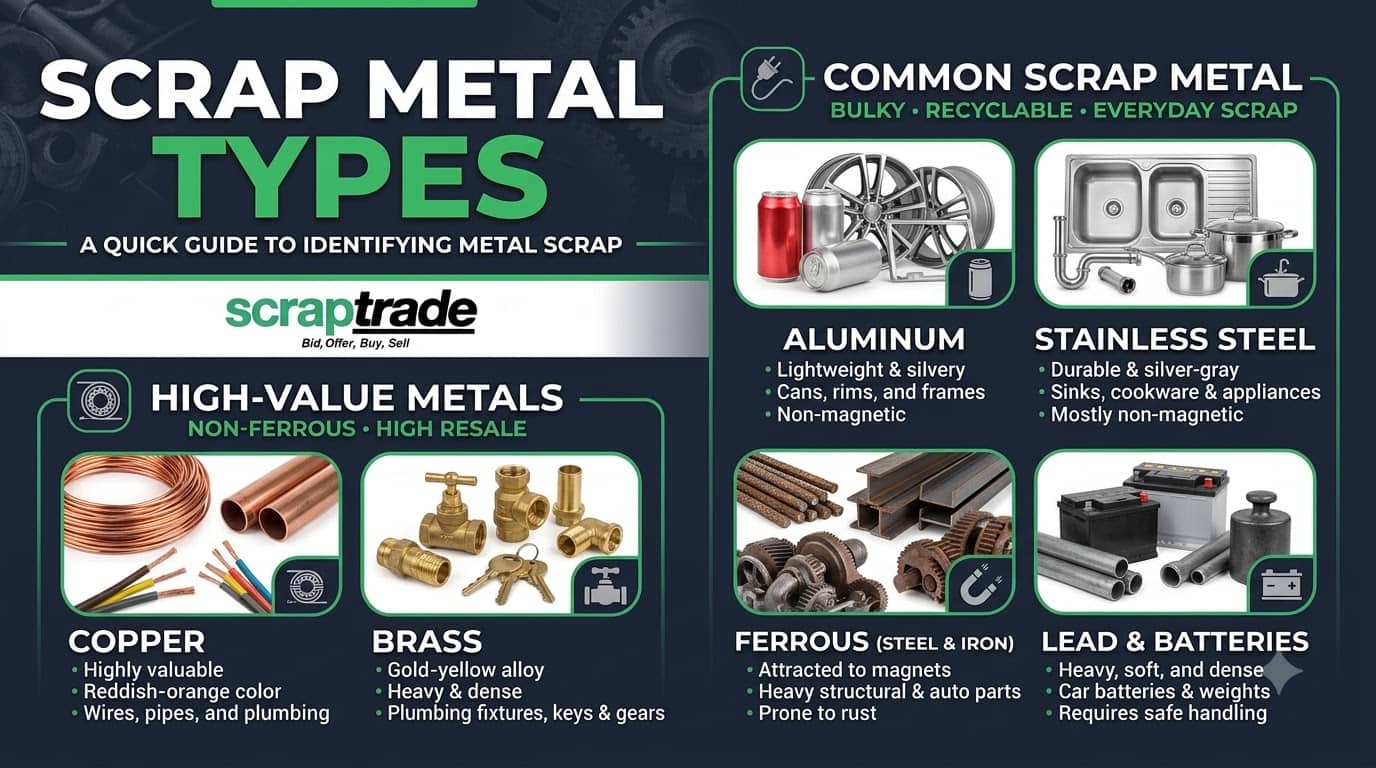
Scrap metal comes in many forms, from copper wire and aluminium cans to stainless steel, heavy melting steel, and mixed metal components. Understanding scrap metal types and grades helps recyclers, scrap dealers, manufacturers, and industrial businesses identify materials, compare buyer offers, and prepare scrap for sale.
Different metals have different recycling characteristics and commercial values. Even within the same metal category, the grade, purity, contamination, quantity, and condition can influence the price a buyer is willing to offer.
For businesses involved in scrap trading, correct material identification is an important step towards more transparent transactions. Online marketplaces such as ScrapTrade can help buyers and sellers connect and explore opportunities across different scrap categories.
What Are Scrap Metal Types and Grades?
Scrap metal types refer to the broad categories of recyclable metals, such as ferrous metals, non-ferrous metals, and specific materials including copper, aluminium, brass, and stainless steel.
Scrap metal grades describe more specific classifications based on factors such as composition, cleanliness, dimensions, condition, and preparation. Buyers use grade specifications to determine whether a material is suitable for their recycling or manufacturing requirements.
For example, copper scrap can include clean bare wire, copper pipes, insulated cable, and mixed copper. These materials differ in condition and processing requirements, so they should not automatically be treated as one grade.
Likewise, steel scrap may be classified according to thickness, size, density, composition, and preparation requirements. Grade names and acceptance criteria can vary between buyers and applicable industry specifications.
1. Ferrous Scrap Metal Types and Grades
Ferrous metals contain iron as their principal component. Common examples include steel, cast iron, and many types of industrial metal scrap.
Ferrous scrap is generated by construction, manufacturing, demolition, vehicle dismantling, machinery replacement, and other industrial activities.
Heavy Melting Steel (HMS)
Heavy melting steel, commonly known as HMS, is a category of prepared ferrous scrap used in steel recycling. HMS specifications may define requirements for thickness, dimensions, and the exclusion of unsuitable materials.
HMS is commonly discussed in grades such as HMS 1 and HMS 2. The exact distinction depends on the applicable specification and buyer requirements, so sellers should confirm the accepted grade before listing or shipping material.
Mild Steel Scrap
Mild steel scrap can come from structural sections, sheet metal, pipes, fabrication offcuts, and manufacturing waste. Its commercial suitability depends on dimensions, thickness, cleanliness, and whether the load contains coatings or unwanted attachments.
Separating heavier steel pieces from thin sheet material may help buyers assess the load more accurately.
Cast Iron Scrap
Cast iron scrap may originate from engine components, machinery housings, pipes, industrial equipment, and other cast products. It differs from many forms of steel in composition and material characteristics.
Because not all ferrous scrap is interchangeable, sellers should identify cast iron separately when possible and confirm the buyer's specifications.
Stainless Steel Scrap
Stainless steel contains chromium and may include other alloying elements, depending on the grade. Commonly traded categories include stainless steel grades such as 304 and 316.
Different stainless steel grades have different compositions and commercial characteristics. Identification may require documentation, material markings, or testing, particularly when the grade is uncertain.
2. Non-Ferrous Scrap Metal Types and Grades
Non-ferrous metals do not have iron as their principal component. Common examples include copper, aluminium, brass, lead, zinc, and certain nickel-based alloys.
These materials are widely used in electrical equipment, construction, transportation, manufacturing, and industrial applications.
Copper Scrap
Copper is widely used in electrical wiring, motors, plumbing systems, transformers, and industrial components. Common copper scrap categories include:
- Bare bright copper wire
- No. 1 copper
- No. 2 copper
- Copper pipes and tubes
- Insulated copper cable
- Mixed copper scrap
Each category has different acceptance requirements. Clean copper wire, for example, should not be confused with insulated cable, which contains non-copper material.
Learn more in the copper scrap trading guide.
Aluminium Scrap
Aluminium scrap is generated by manufacturing, construction, transport, packaging, and vehicle dismantling. Common categories include aluminium extrusions, sheet, cast aluminium, beverage cans, and alloy wheels.
The alloy composition, coatings, attachments, contamination, and preparation method can affect buyer acceptance. Aluminium cans, for example, are often traded as used beverage can scrap, while clean extrusion scrap may require a different grade specification.
Read the aluminium scrap trading guide for more information.
Brass Scrap
Brass is a copper-zinc alloy commonly found in plumbing fittings, valves, taps, decorative components, and industrial parts.
Brass scrap may be classified according to its composition, form, and cleanliness. Yellow brass, red brass, and other brass categories should be identified according to the buyer's specification rather than assumed to be interchangeable.
Sellers should also separate brass from bronze when the material can be identified reliably.
Lead and Zinc Scrap
Lead scrap can come from certain batteries, industrial components, and other applications, while zinc scrap may originate from die-cast parts, galvanising operations, and manufacturing waste.
These materials require appropriate identification and handling. Battery scrap and other potentially hazardous materials should be managed according to applicable safety, storage, transport, and recycling requirements.
3. Scrap Metal Grades Used in Recycling
Scrap grades help buyers understand the material they are purchasing. The grading system depends on the metal category and the specification being used.
Grade Based on Material Composition
Composition-based grades distinguish materials according to their metal content or alloy. Stainless steel grades, aluminium alloys, and certain copper categories may require careful identification.
Where the composition is uncertain, sellers should avoid making unsupported grade claims. Buyers may request certificates, markings, or testing before accepting higher-specification material.
Grade Based on Cleanliness
Cleanliness grades consider whether material contains dirt, plastic, rubber, coatings, moisture, or other unwanted substances.
Contamination may reduce the accepted value or make additional sorting necessary. Keeping different materials separate helps reduce confusion and improves the accuracy of a listing.
Grade Based on Size and Preparation
Some specifications set requirements for dimensions, thickness, shape, or preparation. For example, buyers of prepared steel scrap may specify acceptable piece sizes, while buyers of baled materials may require particular preparation standards.
Always confirm the relevant requirements before cutting, baling, or shipping scrap.
Grade Based on Processing Requirements
Certain materials are sold in their original form, while others may be dismantled, shredded, sorted, or processed before sale. The degree of preparation can affect handling, transport, and the buyer's ability to use the material.
Processing does not automatically improve profitability. Businesses should consider labour, equipment, and other costs before deciding how to prepare scrap.
4. How Scrap Metal Grades Affect Value
Scrap metal value depends on more than the name of the material. Buyers assess the grade, quality, quantity, location, current market conditions, and costs involved in processing and transporting the load.
Clean, correctly identified material may attract more suitable offers because buyers can evaluate it more confidently. Mixed or poorly described scrap may require additional inspection and sorting.
For example, a load described as clean copper wire should meet the buyer's stated specification. If the material contains insulation or other unwanted components, the buyer may reclassify it or revise the offer according to the agreed terms.
Transportation also matters. A competitive price can become less attractive when freight, loading, handling, and other expenses are included.
Sellers should therefore compare quotations for the same grade, quantity, location, and delivery conditions rather than relying on a single general scrap price.
5. How to Identify and Sort Scrap Metal Correctly
Correct identification starts with checking the material's source, appearance, markings, and known composition. Visual inspection can help distinguish some materials, but it cannot reliably establish every alloy or grade.
Businesses can improve sorting practices by separating ferrous from non-ferrous metals, keeping different copper categories apart, and avoiding the mixing of stainless steel grades when the distinction is known.
Magnets can help identify many iron-based materials, but a magnet test alone cannot determine the exact metal or grade. Some stainless steels are weakly magnetic or non-magnetic, while other factors can complicate identification.
Where accurate composition is commercially important, material documentation or suitable testing may be necessary. Recyclers should also remove or manage unsafe attachments and contamination in accordance with the relevant handling requirements.
Clear photographs, representative samples where appropriate, and accurate weight records can help reduce misunderstandings between buyers and sellers.
6. Sell Different Scrap Metal Types Through ScrapTrade
Finding the right buyer is an important part of scrap trading. A buyer specialising in copper may have different requirements from a buyer sourcing HMS, aluminium, stainless steel, or electronic scrap.
ScrapTrade is a global online marketplace that connects scrap buyers and sellers and helps businesses discover trading opportunities across different material categories.
When listing scrap, provide the material type, grade where known, approximate quantity, location, condition, and clear photographs. Include relevant information about contamination, packaging, collection, and delivery.
Accurate descriptions help potential buyers assess whether the material meets their requirements. Sellers can review available offers and consider the complete commercial terms before accepting a deal.
ScrapTrade facilitates connections between buyers and sellers; it does not take ownership of listed materials. Both parties should confirm the grade, inspection arrangements, payment terms, and logistics before proceeding.
FAQs
What are the main types of scrap metal?
The main categories are ferrous metals, such as steel and cast iron, and non-ferrous metals, such as copper, aluminium, brass, lead, and zinc. Electronic scrap and mixed industrial scrap may contain several material types.
What is the difference between scrap metal type and grade?
A type identifies the broad material category, such as copper or steel. A grade provides a more specific classification based on characteristics such as composition, cleanliness, dimensions, or preparation.
Which scrap metal grades are most valuable?
There is no universally highest-value grade across all materials and markets. Value depends on the metal, its grade, current market conditions, buyer specifications, quantity, and transaction costs.
How can I check a scrap metal grade?
Start with the material's source, markings, condition, and available documentation. If composition is uncertain, suitable testing or buyer inspection may be necessary. Confirm the buyer's grading specification before agreeing on a price.
Conclusion
Understanding scrap metal types and grades helps recyclers, dealers, and industrial businesses identify materials, prepare accurate listings, and compare buyer offers. From HMS and stainless steel to copper wire, aluminium cans, and brass, each category has specific grading and acceptance requirements.
Accurate sorting, clear documentation, and realistic pricing expectations can make scrap transactions more transparent. Businesses looking to reach potential buyers across different markets can use ScrapTrade to list recyclable materials and explore global scrap trading opportunities.